Imagine you were asked to make a fruit cake with a severe shortage of dried fruit. That was the sort of challenge facing winemakers in the southern Rhône in 2013. But the results are really rather delicious, and I suspect that many wine lovers will find the 2013s more to their taste than other recent vintages.
The problem was how badly the dominant Grenache grape was affected by coulure throughout southern Europe in 2013. The weather when the susceptible Grenache vines flowered was so unsettled – cold, wet and windy – that the fruit set was horribly uneven, and many of the baby grapes simply fell to the ground. On average the 2013 Grenache crop was down about 30% in the southern Rhône (Spain’s Garnacha, the same grape variety, was also badly affected) but some vineyards lost up to 90% of their potential production.
In Gigondas, Louis Barruol of Château Sainte-Cosme (currently flying a kite to have white Gigondas officially recognised, thereby crowning Gigondas the kingdom of the Clairette grape) described the losses as ‘apocalyptic’ and reported that the youngest vines were the worst hit. One of the young vineyards from which he usually harvests 6,000 kilos of grapes yielded just 700. His father, a veteran of 50 vintages, had never seen anything like it. Yet for me, Gigondas was one of the more successful appellations of the southern Rhône in 2013 – definitely better, or perhaps better-made, than Vacqueyras down the road (although I gave six Vacqueyras 2013s a score of 17/20) and more harmonious than most of the Côtes du Rhône-Villages.
The southern Rhône is famous for the number of different grape varieties officially allowed there, up to 18 in its most famous appellation Châteauneuf-du-Pape, but Grenache has always been by far the most planted. While Grenache usually makes up a good 80% of the blend in a typical vintage, it is often less than half the assemblage in 2013 – and this can be a very good thing. The problem with Grenache is that it needs to reach very high alcohol levels to produce interesting wine. Together with climate change, this has meant that the alcoholic strength of southern Rhône reds has been rising alarmingly, with some wines breaking the 16% barrier with ease and 14.5% usually being at the lower end of the range.
For 2013 Châteauneufs, on the other hand, the average was closer to 14% and there was even the odd wine such as Cuvée de l’Hospice that was only 13.5%, thanks partly perhaps to the Grenache component in the blend being only 30%. Even at Clos des Papes, which has never been shy of high alcohols, the 2013, already assembled before being put into large oak foudres for once because there was so little of it, is ‘only’ 14.5%. Vincent Avril commented delightedly, ‘2013 is not a lesser vintage, just small in volume – again. It takes us back to the style of twentieth-century vintages. Perhaps there is a little less weight and colour, but there are beautiful tannins. Are we ready to accept a burgundian Châteauneuf?’ Surely we are.
After the unusually cold, wet, prolonged spring, the 2013 growing season was very late, with the much-reduced quantities of Grenache picked much later than usual, well into October in an autumn that was benign enough to save the vintage. But Grenache’s chief blending partners Syrah and the increasingly popular Mourvèdre planted in the most favoured sites were of generally very high quality and in many wines it is these much less obviously sweet grapes that have shaped the wines. (Mourvèdre is now ripening earlier and earlier, according to Avril.)
The result is that the wines are generally very much lighter and fresher than usual. But the balance of ripeness and freshness is critical, with the odd wine being simply skinny and tart. The colours are all good and deep (perhaps partly because Syrah and Mourvèdre are generally much more deeply coloured than the generally pale Grenache). Thanks to there having been no shortage of rain in 2013, there are none of the drying, drought-induced tannins that can plague ambitious young reds from the southern Rhône. In fact the tannins are generally attractively ripe, or merely moderate.
I enjoyed many of the wines produced in Châteauneuf-du-Pape, where many 2013s tasted as though the producers were almost enjoying taking a break from the usual recipe and revelling in fruitier, juicier wines than usual. On the other hand, to judge from their wines, many of their counterparts in the lesser villages of the Côtes du Rhône felt they had to produce ‘serious’ wines. (Long face.)
Such white wines as I tasted in the southern Rhône seemed to have benefited from the reduced influence of often-fat Grenache Blanc grapes and the relatively high acidities. White wines such as Condrieu and some stunning Hermitage Blanc are the undoubted stars of the 2013 vintage in the northern Rhône – although St-Péray has emerged recently as a perennial source of interesting crisp white. The cool nights of late September and early October helped retain acidities in this very late harvest.
At the end of August, many growers in the northern Rhône feared there may be no 2013 grape harvest at all. The Guigals, the dominant producers based in Ampuis, came back from holiday and took a refractometer out to the vineyard to find to their horror that the potential alcohol was a mere 8%. But, thanks to an Indian summer in September, levels had risen to 14% in many vineyards by the end of the month. The Guigals felt pleased with themselves that they had picked everything by 6 October before 80 mm of rain fell, but October rains were even heavier in 2014 – and disastrous in Hermitage in particular. Buy 2013 or 2012 if your cellar lacks red Hermitage.
There are some fine Côte Rôtie wines but the appellation has become hugely varied, with some wines revelling in their pale fragrant elegance while others rival Hermitage for their deep purple colour and unashamed concentration. I will be reporting in more detail on Hermitage and Crozes-Hermitage early next year. Meanwhile, St-Joseph, of which there are now as many as 60 serious producers, continues to offer more and more seriously interesting Syrah-based reds at much more affordable prices than the two great names of the northern Rhône. Cornas managed to avoid extremes of weather and was described by Mark Haisma, a relatively new recruit to the appellation, as ‘spectacularly boring’. Not something that could be said in the Rhône’s other wine districts in 2013.
See my tasting notes on about 650 Rhône 2013s. Retailers can be found on wine-searcher.com: click on 'See prices and stockists' after drilling down to the full details of any one wine in the tasting notes.
SOME RHÔNE 2013 FAVOURITES
These are my Rhône top scorers from my mainly blind tastings, although there were many other excellent wines.
CHÂTEAUNEUF-DU-PAPE ROUGE
Ch de BeaucastelClos des Papes
Clos du Caillou, Réserve
Isabel Ferrando, Colombis
Ch Jas de Bressy
Dom Porte Rouge
Le Vieux Donjon (great value from Yapp Bros – see wine of the week)
GIGONDAS
Pierre Amadieu, Romane Machotte
Dom de la Mavette, Cuvée Traditionelle
Les Semelles de Vent
Tardieu Laurent, Vieilles Vignes
CÔTE RÔTIE
Clusel-Roch, Les Grandes Places
Guigal's singel-vineyard La La’s
Paul Jaboulet Aîné, Dom des Pierrelles
HERMITAGE
Chapoutier, Sélections Parcellaires (red and white)
Yann Chave
Delas, Dom des Tourettes
Ferraton, Les Miaux (white)
Tardieu Laurent
Les Vins de Vienne, La Bachole (white)
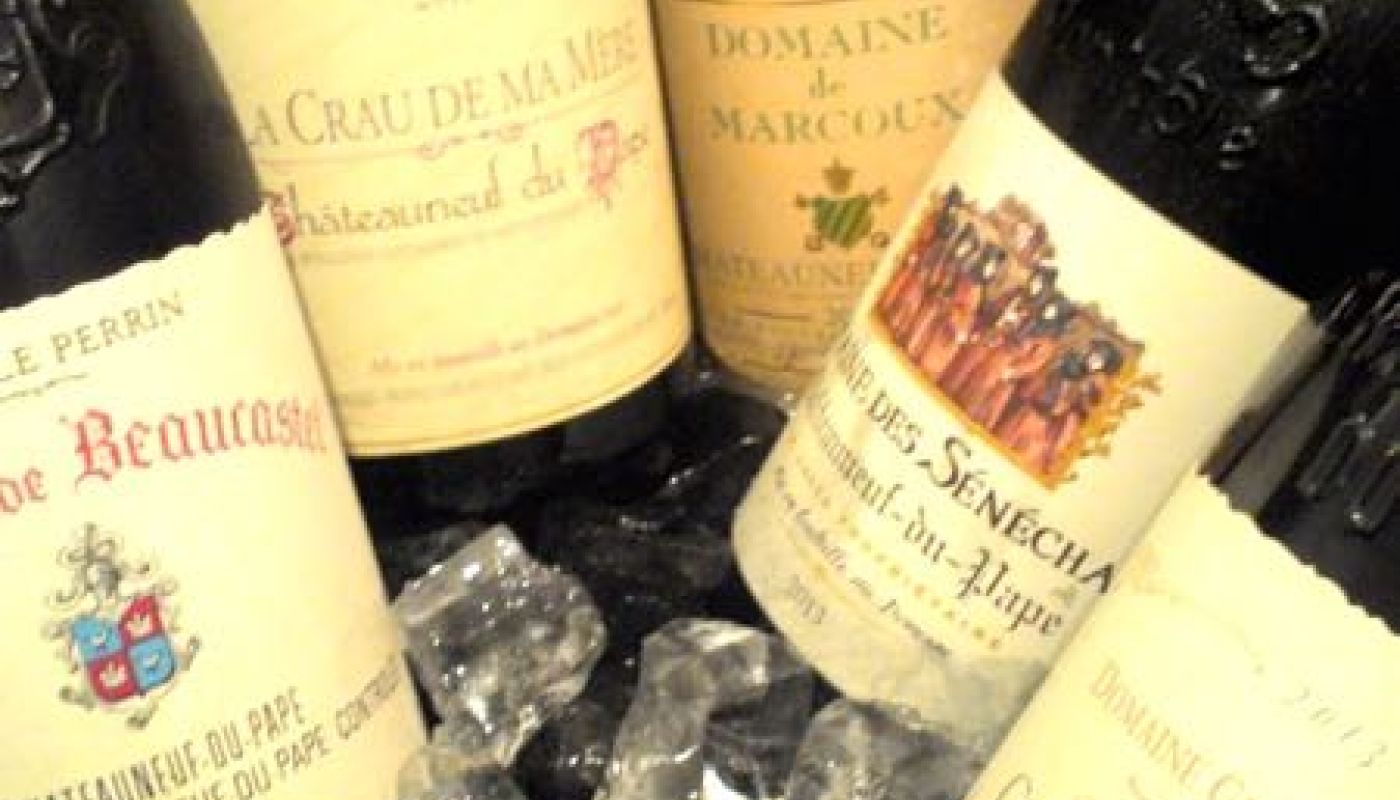
The photo above was taken by Matt Wilkin at his H2Vin tasting.