Come back next week for a series of fascinating detailed reports on vintage 2012 including Spain by Luis Gutiérrez, Italy by Walter Speller, Burgundy by Aubert de Villaine and Virginia by Jim Law of Linden Vineyards.
Vintage 2012 will go down in history as quite exceptional – for all the wrong reasons except for on the west coast of North America. And for the first time in half a century the world may have a shortage rather than a surplus of wine.
Europe’s growing season has been horrible. Late January and early February, when many vignerons were in the vineyards pruning before the arrival of spring, came that viciously cold snap all over Europe. Temperatures were almost low enough to kill vines – most unusual in supposedly Mediterranean climates.
Spring arrived tentatively, but without usefully plentiful spring rains to replenish water tables. And then, disastrously for quantity, there was extremely unsettled weather in June for the all-important flowering. The result was an exceptionally small uneven fruit set and relatively few bunches.
Since considerable work in the vineyard on quality-conscious estates nowadays consists of snipping off surplus bunches in order to make the final crop more concentrated, you would think this could be a good thing. But the problem was that the uneven setting of the fruit resulted in berries of very different sizes on the same bunch that ripened at inconveniently differing rates, making it difficult to decide when to pick.
But that was far from the major problem. The flowering was followed by an extended period of muggy weather that was perfect for the development of the two mildews to which vines are perennially prone. It was a great year for agrochemical merchants and the vines needed close attention and multiple sprayings. Those hoping to visit burgundian vignerons in late June found their appointments cancelled while their hosts frantically tried to keep the mildew at bay. On 30 June came hailstones the size of ping-pong balls that ravaged some vineyards in Volnay. This was an expensive and demanding vintage to make.
Some warm dry weather and sunshine was sorely needed but was in short supply in July. Leaves were stripped from around some bunches to maximise the ripening effect of what sunshine there was. August was a bit warmer but not nearly as hot as usual and by mid September red wine grapes still seemed a long way from full ripeness at a time when vignerons would often already be hard at work in the cellar instead of the vineyard. A major part of the problem throughout southern Europe was the drought, which always reduces volume anyway. The plants were gobbling up what water little there was for survival rather than using it for grape ripening. The result was that the grapes tended be short of the all-important phenolics that are responsible for flavour. In England’s much-vaunted vineyards, acid levels were generally still worryingly high and sugars way below the legal minimum to make wine.
Eventually, and much later than usual, most grapes have been picked, the only exceptions being those left in the (possibly vain) hope of being turned into top-quality sweet wine. But some producers have already announced that they will not be producing a 2012 vintage at all. Nyetimber, funded by the apparently bottomless pockets of Dutchman Eric Heerema, caused consternation in the burgeoning English wine industry by announcing that there would be no Nyetimber 2012. The owner of the Médoc Cru Bourgeois Ch Hourtin-Ducasse has done the same, citing rampant mildew as the culprit.
Throughout Europe quantities are way down, with the head of the OIV, the United Nations of wine, announcing last week that in 2012 global wine production will be at its lowest level since 1975. Thanks substantially to a lack of rainfall, the amount of grape juice and therefore wine produced in virtually every European country is even lower this year than it was in 2011, itself not a generous vintage. All this just as global wine consumption has started to rise once more after decades of decline.
The shortages will be most marked in basic blending wines, not least thanks to the effectiveness of the European Union’s policy of shrinking acreage of the most ordinary vineyards. But it is likely that the small crop will be used as an excuse for widespread price rises. Pricing of the 2012 vintage of Bordeaux en primeur will be an even more delicate art than usual, not least because of the lack of demand for the 2011s.
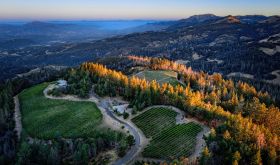
Americans can brace themselves for a return to robust pricing of California wine. The glut there is well and truly over and all West Coast vignerons, in Oregon and Washington as well as in the dominant wine state California, report the best quality harvest they can remember, with decent quantity too. But this is truly a global exception.
In the southern hemisphere where grapes were picked more than six months ago there is also a shortage of volume. Crop levels were down 22% for the biggest southern hemisphere producer Argentina thanks to frost, and rain at flowering time. Chile, which has been planting vineyards faster than any other country on earth, saw the results of this in an increase in wine production in 2012, but not by enough to compensate for Argentina’s shortfall. And an exceptionally hot, very dry summer caused many berries to shrivel and may result in wines that will be difficult to marry with the nation’s aim of making increasingly subtle, appetising wines (a phenomenon that is currently observable in just about every wine producing country).
The South Africans, for example, are thrilled with their 2012s because not only was the crop 7% higher than the previous year, and almost a record in terms of volume, but grapes reached full and generally rather glorious phenolic ripeness quite early, without having to wait for very high sugars that would have resulted in high alcohol levels.
Some Australians, on the other hand, suffered their own annus horribilis with rain blighting wine production throughout New South Wales although quality was good in the much more important wine state of South Australia. Australia and New Zealand have both had their own glut of wine in recent years but the 2012 crop seems to have brought supply and demand, as in the rest of the world, into much improved balance.