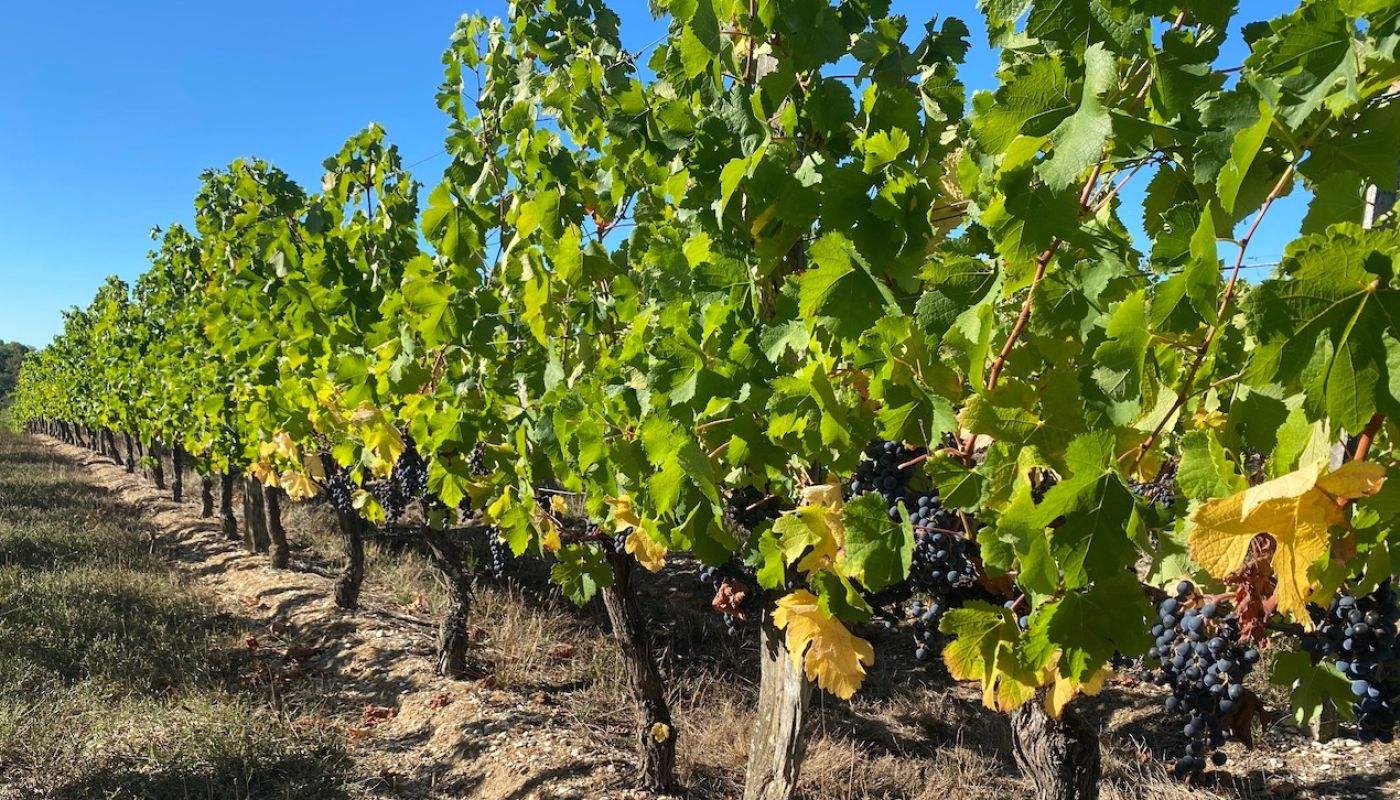
13 September 2022 In response to Bordeaux, Burgundy – it's time to irrigate, experts in wine and water Edmund C Penning-Rowsell and Terry Jones consider the wisdom and feasibility of increasing irrigation in France's fine-wine regions. (See below for a detailed explanation of the image above.)
Above all, serious wine lovers seek quality, and this requires carefully designed regulations and strict enforcement. In France such arrangements have taken decades to evolve and should not be unthinkingly discarded.
Some history
Following the phylloxera crisis and the scandals of fraud and adulteration at the beginning of the 20th century, a group of politicians, wine producers and experts began to argue that the quality of French wine could be protected only by linking law and agronomy, thus defining the nature of the product instead of just determining where it had to be made. This led to the Law of 1927 and in 1935 France established the Institut National des Appellations d’Origine (INAO) to control the reputations of its wine and other cultural foods.
By 1937, appellations for classic winemaking regions such as Bordeaux, Burgundy and Champagne were created, setting standards and rules that are still in play today. The INAO defined terroirs for various AOCs, permitted vine varieties, maximum yields and permitted interventions, including irrigation. All these efforts should be celebrated by wine drinkers around the globe.
So what about the issue of irrigation? The actual demand for water of a vine is determined by a multitude of factors. These include vine age, variety, rootstock, soil types and drainage (for both topsoil and subsoil), slope, topsoil depth, day and night temperatures, humidity, wind, the depth of the water table, crop load, canopy management, vine health, sun and UV exposure, and when the water is applied. In Alsace AOC quality wines are produced with no irrigation and as little as 50 cm (20 in) of rain per year. Burgundy and Bordeaux typically receive just over 75 cm (29 in) of rain annually and have well-drained soils. In most years this is sufficient to yield quality wines; in some years it rains too much!
Again, regarding irrigation, it was in the 1930s and 1950s that bans on irrigation came into place as part of packages to limit supply and thereby support falling prices caused by overproduction. Irrigation was outlawed by the INAO, not because it necessarily makes inferior wine, but because excessive or ill-timed water can result in diluted wine or too much vigour (vegetative growth). Without such a ban, some producers might be tempted to irrigate to plump the grapes with water, decreasing quality to increase quantity. Many such anti-irrigation laws were also passed before recent research into vine stress hormones such as abscisic acid and the application of that knowledge in the development of new techniques. These can enable very judicious watering such as regulated deficit irrigation (RDI) or partial rootzone drying (PRD) approaches.
In the 1980s French researcher Gérard Seguin conducted a survey of the soils in Bordeaux and concluded that the best terroirs were those where the soils are free-draining with the water table just high enough to supply a regular supply of water to the vine roots which then recedes on veraison (when grapes soften and change colour) so that the stress hormones can then signal to the plant to switch from vegetative growth to concentrate on fruit ripening.
Wine lovers may be surprised to learn that in Bordeaux vines are deliberately stressed by high-density planting regimes, so they compete for water. This competition forces the plant roots to delve deeper into the soils, sustaining life in dry periods and produces lower yields and smaller but more concentrated grapes. In the gravelly terroir of the Médoc most vines are planted to a standard 10,000 vines per hectare (4,049 vines per acre). On the right bank, and other terroirs with more clay and limestone, the planting density is lower, with averages of 6,500 to 7,500 vines per hectare (2,632 to 3,036 vines per acre). But in most years, all the vines here are stressed.
The main principle behind this historically successful strategy is controlled water stress, where the vine receives sufficient water during the budding and flowering period. Precipitation is usually less during the ripening period creating naturally the conditions that promote ripening. So with normal rainfall there is enough water at the right time and no drought and no human-made irrigation is required, such as in 2010 when the harvest began on 27 September and great wines were produced. In drought years such as 2003 the harvest started on 3 September and some vines were severely stressed.
In drought conditions, which are becoming more prevalent in Europe, without irrigation vines tend to shut down due to hydric stress. High water stress can alter grape composition, block the ripening process and cause crop losses due to dehydration of berries. The ripening process can come to a halt, because the plant is concentrating on survival, and the resultant wine can be tannic and lacking in fruit despite warm, dry conditions.
Changing regulatory regimes
The situation is not static. In 1964 the INAO issued a decree prohibiting the practice of irrigating AOC vines throughout France. The ensuing drought episodes of 2003, 2005 and 2006 severely penalised the wine sector in the south of the country. These and other difficulties (a Europe-wide wine surplus and the resulting EU grants for grubbing up vines) reduced the number of hectares of vines cultivated in France to 788,000 ha (1,947,190 acres), 11% less than in 2000, with a particularly significant decline in the Rhône Valley, Provence and especially in Languedoc and Roussillon.
Following these events, the public authorities decided to change the legislation that prohibited the irrigation of AOC vines. This remains prohibited, but the decree published in the Official Journal of 6 December 2006 specifies the legal framework within which derogations from this general principle may be included. So in 2006 irrigation was still forbidden from 1 May until harvest, except by permission granted on an appellation-by-appellation basis for the two months between 15 June and 15 August. Growers needed to declare their use of irrigation, and the situation was carefully monitored.
A further crucial change came in September 2017. Since then there has been further relaxation and a new regulation governing the irrigation of AOC vines. The objective declared by the INAO is to offer winegrowers more flexibility in the face of the consequences of climate change, starting with the 2018 season. The 15 June date has been further relaxed from the 2006 rules so that on an exceptional basis it will now be possible to irrigate from 1 May. Also, buried drip devices previously banned are now allowed.
For this, the local association for the defence of the appellation in question asks the INAO for permission to irrigate based on information from a network of plots representative of the terroir and demonstrating a water deficit. This must be made specifying the irrigated plots, the dates of irrigation, and the system used. Checks may be carried out in order to verify in particular that the crop load is not excessive and that in no case does it exceed the basic yield.
In 2022 vignerons in Pomerol have ‘exceptionally’ been allowed to irrigate in the face of record high temperatures in Europe and their adverse effect on vines. And 2022 is the third year in a row that irrigation has been allowed in Pessac-Léognan; climate change is challenging growers and the INAO to adapt.
But there is established theory and practice to achieve what we want: defending the quality and reputation of the AOC wines by irrigating on an exceptional basis and at the right time of the growing cycle. This is what the French are doing. This problem is here to stay, and vineyards will surely need to develop cost-effective interventions to deal more often with what were once exceptional circumstances. The major challenge is not relaxing the legislation to allow irrigation per se, it is identifying the key issues involved in meeting a more frequent and substantially increased demand on French water resources from AOC and other vineyards in the face of climate change, still within the kind of carefully constructed regulatory regime that has served wine drinkers so well in the past.
Water resource constraints
So what are the key issues concerned with meeting this additional demand? France appears particularly vulnerable to climate change: during the 20th century, the average annual temperature in mainland France rose by 0.95 °C (1.7 °F). Meanwhile, the equivalent global temperature rose by 0.74 °C (1.3 °F), meaning the country saw an average temperature increase that was around 30% higher than the average global temperature rise. Over the period 1960–2009 the average warming trend in France for summer is +0.35 °C (0.63 °F) per decade and for winter +0.20 °C (0.36 °F) per decade.
If this trend continues, by the time the average global temperature rise has reached 1.5–2 °C (2.7–3.6 °F), the average temperature in France will have increased by around 2–2.6 °C (3.6–4.7 °F). Summers are already getting warmer and an increase of 5–35% in autumn and winter rainfall is forecast, as well as a decrease in summer rainfall. The latter, combined with an increase in temperature, could increase the risk of more severe droughts, generally triggered by two dry winters occurring consecutively. Among the top 10 city regions in France forecast to experience increased risk of drought are Bordeaux and the capital of Burgundy’s Côte d’Or, Dijon (annually 1.5 and 1 more days of drought respectively by 2050).
Climate change is therefore expected to severely affect many crops, including vines. Evapotranspiration will be greater and less beneficial summer rain is expected. This leads to the greater need for the irrigation and higher costs.
There are four types of irrigation: sprinkler or spray irrigation, surface irrigation (flooding the fields – not really relevant in this context), drip irrigation, and sub-irrigation (see below). The amount of this irrigation has increased decade by decade, and even by 1997 6% of France’s total agricultural area had irrigation systems installed.
The most common type is spray irrigation, largely used in France for the cultivation of maize (43% of all irrigation). The second most common type is drip irrigation, delivering water from pipes above ground but directly adjacent to the stems and roots of the vines. A third type is similar, but the pipework is located within the soil, adjacent to the rootstock (sub-irrigation), watering plants from below and into plants’ roots. A variant is where the sub- or drip irrigation is guided by probes in the soil measuring soil moisture content.
Spray irrigation is inexpensive but also relatively ineffective. Much of the water is lost through evaporation or surface run-off, potentially causing erosion in Burgundy’s sloping vineyards. Drip and underground irrigation systems are orders of magnitude more expensive, but they are more effective and involve less waste and, if appropriately monitored and controlled, can deliver exactly the right amount of water to the vines at the right times of the year. Commonly adopted average values of efficiency over a cropping season, taking into account direct evaporation, drift, leaves getting in the way, run-off and drainage losses (but not soil evaporation) are 65% for inexpensive hose-reel spray machines, 85% for micro-sprinklers and surface drip systems, and 90% (75–95%) for costly subsurface drip systems. You get what you pay for.
In France, the three largest water suppliers are Veolia, Suez Environnement (formerly Lyonnaise des Eaux) and Saur Group. Water is generally abundant, although water stress is increasing in some regions and there are periodic episodes of scarcity. Ground and surface water are designated as part of the ‘common heritage of the nation’. Recent reforms include the changes in abstractable volumes to balance the available water with the needs of users as well as the creation of management bodies (Organismes Uniques de Gestion Collective, OUGC) for irrigation.
Key characteristics of the recently reformed allocation regime for irrigation include the OUGCs providing an incentive for irrigators to allocate a set volume of water among themselves at a catchment level. All abstractions (above a certain threshold) are metered and charged, except in some exceptional circumstances. During episodes of scarcity, local representatives of the central government have the authority to ban partially or totally lower-priority water uses.
Possible sources of water for major irrigation initiatives in Bordeaux and Burgundy include from new reservoirs, from rivers and from groundwater. To service irrigation in Bordeaux would require pumping fresh water from its rivers, but these are already at low levels in summer. Water-management organisation in France divides the territory into hydrographic basins and in the Adour-Garonne basin, serving Bordeaux, severe drought is already common. By 2050, forecasts suggest its rivers will carry only 50% of the summer flow today, owing in part to shrinking snow-melt volumes in the Pyrenees. There are no significant facilities to store water and the construction of new reservoirs would need to be as close as possible to the irrigation planned, but land costs here are very high.
It might be technically possible, for example, to construct a reservoir filled with freshwater from the region’s rivers, in the central area of the Médoc or the Entre-Deux-Mers, where vineyards are less prevalent and land costs are lower than at prime sites. However the underground substrate here is largely gravel, meaning that leakage will be considerable without expensive lining of any new reservoir. The higher the cost of irrigation water, the less likely this will help the petits châteaux where profitability is already perilous. Directly taking water from the Gironde estuary would not be possible owing to its salt content downstream of the tidal limit.
The construction of reservoirs in Burgundy would again fall foul of land costs and topography; the side valleys of the Côte d’Or might have some potential for new reservoir construction but again the limestone substrate makes leakage unacceptably likely.
Groundwater abstraction appears attractive, via boreholes or wells located adjacent to the vineyards. The problem here, however, is that such abstraction lowers adjacent normal groundwater levels, thus denying the naturally accessible water for the vines’ roots. This is just what is not needed: one possible water source solution makes the overall situation worse, not better. Large-scale irrigation by pumping groundwater therefore appears unlikely to be successful.
Conclusions
Irrigation in France’s vineyards is now permitted, but carefully regulated. Major schemes would almost certainly require new sources of water, and this will not be easy or inexpensive. But vignerons and their regulators are already adapting to a new normal, and wine lovers must hope that they will be able to continue to do so.
Professor Edmund C Penning-Rowsell of the Oxford University Centre for the Environment is currently advisor on water issues to the World Bank and was awarded a Royal Geographical Society medal in 2011. His father was the Bordeaux expert Edmund Penning-Rowsell.
Terry Jones of the Oxford Sommeliers Wine Group is an economics graduate and Bordeaux enthusiast, specialising in the Côtes de Bourg. Making wine, partly from his own Oxfordshire grapes, has given him a thorough understanding of wine chemistry.
Image of drought-stressed Merlot vines was taken two days ago by Gavin Quinney, well known to visitors to JancisRobinson.com for his Bordeaux vintage reports, at his Ch Bauduc in Bordeaux. As he explains:
‘These are 20-year-old Merlot vines on gravel and clay, a pretty good terroir. As with much good Bordeaux, the canopy is green and healthy but thirsty. The leaves around the fruit zone are suffering. I’d also guess the potential alcohol here is comfortably 15%. We’ll check again tomorrow. Likely harvest date is the end of the week. I have other more catastrophic-looking vines but they’re on drier soils, or young vines etc.
‘For what it's worth, I would install irrigation like a shot if everything fell into place. It wouldn’t bother me that much if I lost the appellation as I would with irrigation and we had to sell our wines as Vins de France or IGP. The word ‘Château’ would be lost in either case – a wider problem for château-centric Bordeaux. We'd need access to our own water sources (doable), cost-effective water storage/reservoir and drip system (doable, I think), plus permission from the water and other authorities (unsure).’
















