
24 November 2014 This article has been syndicated.
Where in the world are the oldest wines? Not vines (although that is another interesting question – see our unique Old Vines Register), but caches of seriously old liquids. Of course there is always the odd centenarian bottle stashed away, but where are commercial quantities of venerable wine to be found?
I was inspired to think about this by the current vogue for releasing venerable wood ports. The Fladgate Partnership (Taylor, Fonseca, et al) have now launched two ancient limited-edition bottlings, Scion dated 1855 and a Taylor's 1863 Single Harvest Port. The firm craftily acquired the old tawny specialists Wiese & Krohn recently, a family-owned firm with relatively extensive stocks of port back to an 1863 made two years before the company was founded and which Richard Mayson describes as 'almost undrinkably concentrated' in his book Port and the Douro. (See also this late 2022 update on Taylor's tawnies.)
Arch rivals Symington Family Estates had already tested the water with a special release of a 1952 Colheita (vintage-dated tawny) to celebrate Queen Elizabeth's diamond jubilee. But as a riposte to the Fladgate's 19th-century scrabblings, last June they launched Graham's Ne Oublie, a wine based on one of three casks of 1882 port that the founder of the company had bought to celebrate the year he arrived in Oporto as an18 year old. All of these luxuriously packaged 19th-century wood ports are priced at several thousand pounds a bottle, pricing presumably depending on their rarity. But they do make me wonder how many more casks of ancient port are sitting in the Douro Valley or in a port lodge in Vila Nova de Gaia blithely unaware of their commercial potential. (See also the Symingtons' very special limited offer of a Bicentenary collection of a beautiful cabinet filled with six extremely rare ports.)
For a wine to be ancient, still in bottle or cask and not vinegar, it more or less has to be fortified – although there are famous exceptions. Ch d'Yquem and top-quality Loire Chenin Blanc can last for decades, as those who come across 19th-century Vouvrays and the Moulin Touchais Anjous can attest. Kloster Eberbach in Germany's Rheingau has bottles of Rieslings going back to 1706 and the Ratskeller of Bremen contains even older German wine, albeit in a different form. Michael Broadbent MW notes in his magisterial Vintage Wine, a record of the thousands of fine wines he tasted over 50 years at the helm of Christie's wine department, that this Hanseatic trading city's official cellars house large casks of extremely ancient German whites. The oldest is dated 1653, containing wine he describes as 'very sharp and not very nice', but these are casks which have routinely been topped up with much younger wines.
This sort of regular, fractional replenishment is the solera system most famously associated with sherry and Jerez in southern Spain, and there are certainly casks of very venerable wine in the whitewashed, cathedral-like bodegas of Jerez. Although in my experience, some of the oldest sherries in Jerez are far from the most delicious. They tend to have been kept so long in cask that they have become almost unpalatable, like an over-reduced sauce. These are wines best consumed as only a minute component in a blend, adding depth and a hint of antiquity.
Barbadillo claim to have the oldest soleras, with those that supply the wines they call their Reliquias having been started in the early 19th century. Valdespino has a range based on their solera begun in 1842, and El Maestro Sierra still sell an Amontillado Viejo 1830. But these dates nowadays relate to a tiny fraction of the wine in that solera. As for vintage-dated sherries, wines that are 100% from a given year, Williams & Humbert are famous for the depth of their collection but in this context 1924 is considered old.
But for serious quantities of wine bearing venerable vintage years, you have to look to the Atlantic island of Madeira, home to the most vigorous old wine in the world. When I searched the 100,000 tasting notes (nearly 230,000 in late 2022) we have on JancisRobinson.com to see which were the oldest wines I had tasted, I saw the great majority of them were madeiras, including three from the 18th century. Chris Blandy of the important eponymous Madeira wine producer reports that they have about 1,000 bottles of 18th-century madeiras in their company cellar. The specialist website madeirawineguide.net has done an audit of all the old wine stocks on the island and has come up with no fewer than 30 from the 18th century, back to two 1715s. Many of these extremely precious wines are available in multi-bottle lots. Madeira is almost indestructible, even in an opened bottle, and I for one hope that it does not become so popular that this inimitable resource is plundered too heavily.
Nowadays there's an annual tasting of fortified wines in London every year known as the BFT (Big Fortified Tasting). Tierras de Molina showed some centenarian Málaga one year, and apparently there's a similar stash of venerable Marsala in the cellars of Curatolo in western Sicily.
There are also various caches of ancient wines, mostly not just strong but also sweet, in the old Soviet Union territory, presumably a hangover from iron state control and the desire to keep the best for an elite. The Massandra collection of stickies goes back into the 19th century and was amassed on the Crimea, holiday country for the old Tsarist regime. It has been sold by Sotheby's in its time and is still available. In 2009 I tasted widely from what was billed as the biggest collection of Soviet wines near Krasnodar but it went back only as far as the 1960s, whereas there's a collection of wine stored in 75 km of tunnels in Moldova that includes, they say, Hermann Goering's personal cellar, although it is mainly early 20th century.
To find stocks of much older wines it pays to look at those parts of the world that used to produce fortified wines in quantity but have seen them fall from fashion. Australia is an obvious place and still harbours enviable stocks of stickies. At Seppeltsfield in the Barossa Valley there are tawnies of every year back to 1878, almost all of them still in cask, including as many as 250 litres of 100-year-old wine. Small quantities are being marketed once more. In Rutherglen there are also stocks of old Muscat and the renamed Topaque – and Yalumba, Penfolds and McWilliams all have long histories of fortified-wine production.
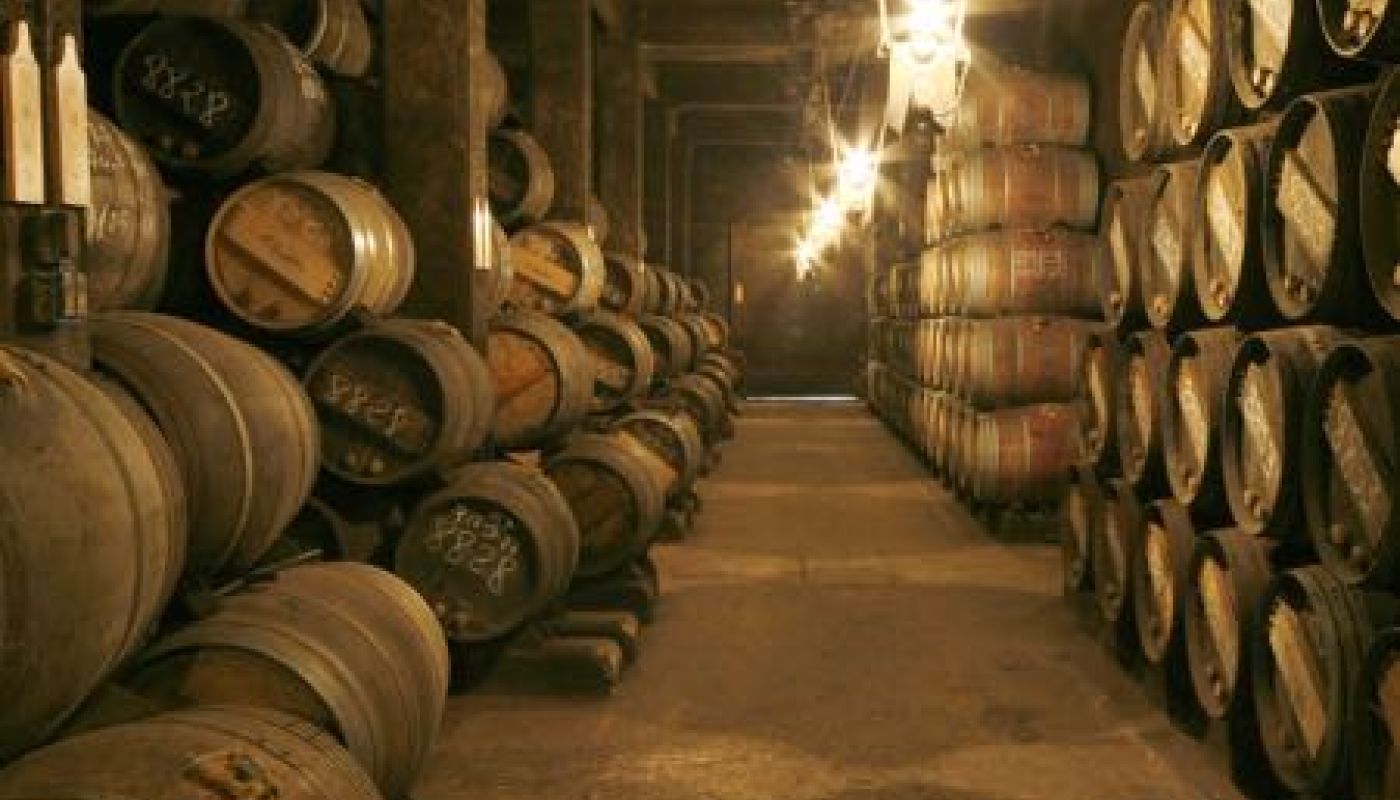
Some of the most traditional Rioja producers, such as Marqués de Riscal and R López de Heredia (the photo above, courtesy of Viña Tondonia, shows the latter's 'Bodega Nueva', build in 1903), have impressive collections of ancient vintages but, funnily enough, stocks of really old wine are none too plentiful in France's most famous wine regions. The first growths, especially Latour and Lafite, have old vintages of their own wine, and in their smart new premises, the négociant Mahler-Besse probably has the best collection of early-20th-century wine in the city of Bordeaux, even if Bouchard Père et Fils probably beat them for the antiquity of their burgundy cellar. But otherwise, enviable collections are mainly in private hands, those of the odd British, Belgian, Swiss and Norwegian collector, plus Oxbridge colleges, particularly All Souls. You can be sure that the auctioneers are hovering, awaiting the moment any of them need to raise some cash.













