
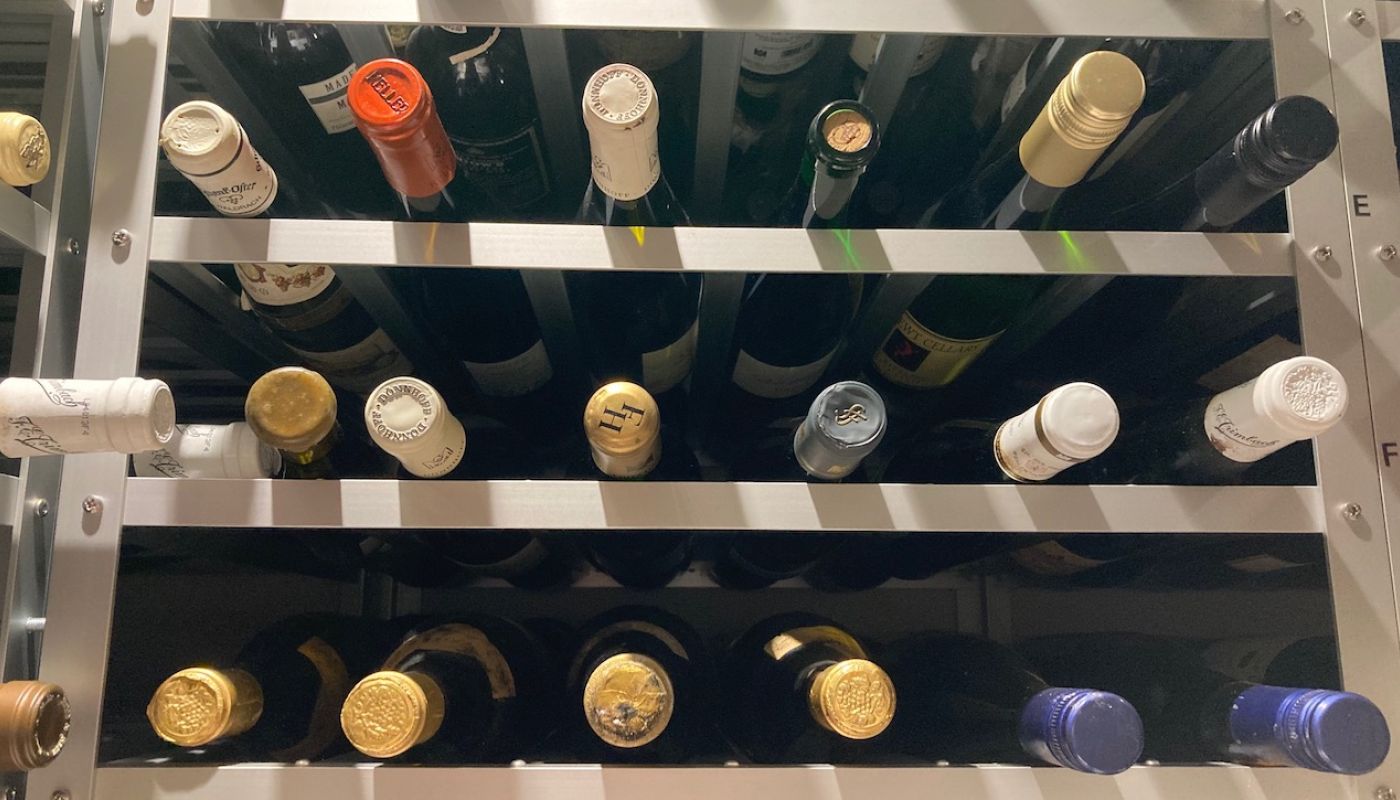
There can’t be many wine cellars or personal wine collections in which white wines are more plentiful than reds – although there may be the odd exception to this rule in Germany whose white wines outnumber reds and have a great track record for ageability.
Riesling, the signature grape of Germany, makes wines that, in my experience, are almost immortal. Not only do opened bottles of Riesling last weeks if kept reasonably cool, but the wines continue to improve in bottle for decades. I am happily drinking examples from the 1980s and 1990s at the moment. They tend to taste drier with time so that, for example, a Spätlese whose natural grape sugar seemed pretty obvious when the wine was young seems quite dry enough to serve as an aperitif after a decade or two in bottle. And the nuances of flavour, the crystalline expressions of the vineyard responsible for the wine, are all the greater. A lower-alcohol alternative to a sparkling wine perhaps? See our German specialist Michel Schmidt's recommendations on which German vintages to drink now.
Even a mass-market Riesling, wherever it’s grown (and there are particularly fine examples not just in Germany but in Alsace, Australia and Austria), will last much longer in bottle than wines made from other grape varieties. Whereas many supermarket whites should be drunk virtually immediately, I would have no qualms about keeping a supermarket Riesling for a year or more.
Like rosé, Sauvignon Blanc is an obvious candidate to drink young. Certainly most inexpensive examples are best enjoyed before their aroma and fruit – their chief attributes – start to fade. But some, especially those aged in oak and some of the more sophisticated, terroir-driven Sancerres and Pouilly-Fumés, are deliberately designed for a longer life.
Wines based on Chenin Blanc grapes, mainly from the Loire or South Africa, don’t seem to age very quickly. Ditto Jurançon from south-west France based on Petit Manseng grapes. This may be because, like Riesling, Chenin Blanc and Petit Manseng are relatively high in acidity. (So is Sauvignon Blanc but it’s the precious Sauvignon aroma that can be so evanescent.) I tasted an inexpensive 2019 Chenin Blanc in a can the other day (by The Copper Crew) that was still fresh as a daisy at coming up for two years old. As was the 2017 Romanian Fetească Regală that Tanners are currently selling for just £7.50 a bottle. It was screwcapped, which almost certainly helps by keeping out oxygen, which ages wine.
The one sort of white wine that absolutely deserves to be cellared is sweet wine whose sugar has been concentrated by the famous Botrytis cinerea fungus, sometimes called noble rot, which attacks ripe grapes and shrivels them, covering them with mould but working magic within the grape. A really top-quality Sauternes can outlast even Riesling, perhaps helped by its extra alcoholic strength. In 2014, at the end of a birthday dinner, I enjoyed a Ch d’Yquem that was exactly a century old and was still very much alive and kicking. And various other Sauternes from the 1920s have been absolutely glorious when enjoyed over the last few years.
The ageability of sweet whites seems to depend on how they were made. Icewines, which owe their sweetness to freezing, don’t seem to have the longevity of wines made from botrytised grapes.
The really big ageability question mark hangs over perhaps the most common sort of white wines of all, those made from Chardonnay grapes. In very general terms Chardonnay makes wines that are a bit more alcoholic and less acid than most of those described above, and because they have been aged in oak they have often been exposed to more oxygen than, say, a Riesling so have a tendency to age a bit faster. Most American Chardonnays, for example, are ready to drink on release.
On the other hand, some of the greatest white wines in the world are fully mature white burgundies – all made from Chardonnay. I cannot remember tasting a more stunning dry white than the Domaine de la Romanée-Conti 1978 Montrachet I was lucky enough to taste to celebrate the new millennium.
However, the reputation of white burgundy has taken a serious knock since some of the wines made in the 1990s turned brown and lost their fruit after only very few years in bottle – a phenomenon known as premature oxidation, or premox. Burgundy producers have been doing their best to diagnose and correct the problem but it leaves people like me, who are expected to suggest ideal drinking dates for individual wines, extremely wary.
In pre-premox days I would happily have suggested that a top-quality white burgundy could be kept for up to 20 years. Nowadays I feel I may be risking it to suggest ten. And I would argue that the qualitative difference between a five- and 10-year-old white burgundy is less than the Riesling equivalent would be; Chardonnays seem to gain less complexity with time in bottle (wild generalisation alert). Although I much enjoyed the 2017 vintage of the most unusual Tuscan Chardonnay Querciabella Batàr the other day.
The classic exception to this is Chablis, the far northern outpost of Burgundy, whose wines, all made from Chardonnay, have traditionally relied less on oak than on acidity and really can evolve enormously and beneficially in bottle. I have enjoyed 40-year-old examples.
There is also the fact that, as with red wines, winemakers today are making white burgundies that can be enjoyed much earlier than in the past. So, although I have quite a bit of maturing white burgundy in my cellar, it is there partly for experimental reasons. I would feel guilty insisting that everyone else should follow my example. The great majority of the 300 2019 white burgundies I have so far had the pleasure of tasting seemed ready to enjoy now.
And this is also true of white bordeaux, generally based on Sauvignon Blanc with a bit of Sémillon. I have been tasting a raft of 2018 bordeaux of both colours recently because the reds were bottled relatively recently, and so are much more worth judging than they were when offered as cask samples en primeur in April 2019. It struck me that quite a high proportion of the whites were past their best already, even though, because of the red wine bottling dates, they are entering commercial circulation only now.
So I do think there can be disadvantages to shipping whites at the same time as reds when they tend to age so much faster. I remember making this point to Michel Chapoutier at one of his presentations of the latest Sélections Parcellaires, his single-vineyard wines. The white Rhônes in particular are usually clearly way ahead of the reds in terms of evolution, yet they have to wait for ages before being shipped. At least with many white burgundies offered en primeur, they are not just bottled but also shipped sooner than the reds and so stand far less chance of being past their best when they reach the end-consumer.
See below for the general burgundy shipping protocols of the principal UK merchants with offers of the popular, and very appealing, 2019 vintage.
When burgundies are shipped
I asked the following UK merchants when they expect to ship the whites and the reds. Unless otherwise stated they will try to ship whites this spring or early summer and reds in the autumn, avoiding the heat of midsummer. Almost all of them said that if they buy both reds and whites from a producer, then they wait to ship them together in the autumn. Both of these considerations apply to Goedhuis, H2Vin, Howard Ripley and Lay & Wheeler.
Berry Bros & Rudd
Some white-wine producers bottle too late to catch the spring shipment and so are shipping in autumn.
Corney & Barrow
They ship May–June and then October–November to avoid the heat of summer.
Haynes Hanson & Clark
As above although they currently ship three times from Olivier Leflaive Frères from whom they make a particularly early offer. This may change because of Brexit bureaucracy.
Jeroboams
The trend towards earlier bottling helps to get most Chablis and Côte de Beaune wines shipped in spring.
Justerini & Brooks
October and November mainly but some Mâconnais and Côte Chalonnaise whites in the spring.
Lea & Sandeman
Early bottlers from April onwards, mostly in the autumn and some late bottlers not until after the Christmas 2021 rush.
Montrachet
Customers generally receive their en primeur burgundies in two batches, the first of which may include lighter reds as well as whites.
Stannary Wine
As they now use refrigerated trucks all year round when shipping from Burgundy, they don’t need to worry about heat spikes.
Tanners
They ship when producers say they are ready to release and are generally keen to deliver rapidly in order to make space in their warehouse.
Tasting notes on more than 1,000 2019 burgundies on Purple Pages.













