Our 29th entrant into the JancisRobinson.com wine writing competition introduces himself as follows:
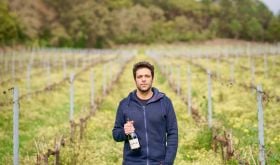
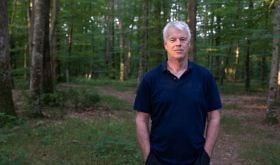
My name is Hrishi Poola. I'm a 33-year-old WSET Diploma student living in Berlin. Concerning wine, I'm humble, but opinionated. I relish most those that are honest, unshowy and big-hearted. My hobbies are browsing wine-store labels for hours, chatting with sommeliers and producers, and uncorking bottles with strange new Italian or Chinese-sounding names. This year I was within selfie distance of a 1928 Latour. BOORRRINGG. Please, give me a good barn dance!
My credo – seek inner grace and blissful embarrassments, reject pandering and endless chicken dinners. I believe in historical, literary and scientific heft. I believe that my wine and writing identities are inextricably linked. My love for both is marrow-deep. And as the poet C D Wright said, 'Seen in this light (this damnable dingy light), Brothers and Sisters, Señors y Señoras, I tell you how it is that we live, and what it is that we do, we get ourselves up, off our much abused sofas, Hermanos, Hermanas, to the old intolerable sound of hollow spoons in hollow bowls, to insure that our love has not left the world or else.'
Yes, of Corsica
In autumn, our hallway is busy with boots. Coats shuffle and are hung. And all the wine shops and lists are deep, green fields. Beyond the apple thuds, pumpkin ravioli and, inevitably, Beaujolais Nouveau, something essential unfolds. Maybe it's because we see the year nearing its end that we grow restless and itch to explore new things.
So I found myself sitting at the table with Dirty Grapes, my weekly tasting group, browsing photos of Corsica. Maybe it was the season. Or, maybe our palates were tired of the umpteenth Bordeaux blend or Sancerre or Tempranillo and we were thirsty for something new. Or, maybe it was because so many of us were originally islanders – I from Jamaica and others from Hawaii, New Zealand and Taiwan. And when we learned of the island-wide IGP named L'Île de Beauté, we looked up, half-glowing, half-crazed, and, almost in harmony, said, 'we have to do this'.
We planned our Corsica-themed tasting, open to what we'd find, knowing that Old Europe is always turning up new tricks. After all, they did discover King Richard III's remains under a Leicester city parking lot. Though Corsica is no parking lot. On it grows wild mint, myrtle, lavender, fennel, immortelle and rock rose. The Mediterranean teethes on all sides and wind-worn mountains stare down from its centre. The island, while French, is actually closer to Tuscany than it is to the Côte d'Azur and, in fact, the northern dialect of the Corsican language is not unlike medieval Tuscan. Culturally and viticulturally, Corsica is a blend of French and Italian, though it has long lived in the shadow of more recognised wine regions such as Bandol, Languedoc, Provence, southern Rhône and Tuscany.
While Corsica has long been a political afterthought – even Napoleon, who was born in the capital Ajaccio, neglected the isle – Corsicans are outspoken, fiercely loyal, proud and independent. And who could blame them? After being settled by the Phoenicians and occupied by the Greeks, Etruscans and Romans, weathering Germanic and Moorish invasions, falling under the rule of the Kingdom of Genoa, and having a brief 15-year dalliance with independence, Corsica was finally ceded to France in 1768. Crime and warring clans rumbled L'Île de Beauté in the 19th century. But winemaking endured. It shook off the ravages of phylloxera and WWI and ballooned after the arrival of pieds noirs from Algeria in the 1960s. So it's no surprise that Corsica's modern armed nationalist struggle began in 1975 in Aléria in, of all places, a wine cellar.

Grape-growing and winemaking have dramatically improved since the generic, high-yield days of the 1960s and 1970s, and over the past two decades Corsicans have focused on improving quality, planting the right grapes in the right places, managing yields and reviving local varieties. Nielluccio, or Italy's Sangiovese, is adapted to the limestone and clay of the north, particularly Patrimonio, which, like Chablis, is dotted with marine fossils. Sciaccarello, identical to Tuscany's blending grape Mammolo and often called the 'Pinot Noir of Corsica', thrives on the granite of the south-west coast, particularly Ajaccio, Corse-Figari and Corse-Sartène. Dom de Vaccelli's 2014 Granit Sciaccarello rosé from Ajaccio was, unanimously and to our surprise, one of the most memorable, complex wines of the tasting and of the year, with chamomile, tangerine, apple cider, fennel, gummy bear, and wet stone notes and a long saltwater finish.
Dom de Vaccelli's 2011 Sciaccarello (100%) lived up to its Pinot Noir likeness – light and fresh with cranberry, strawberry, white pepper, wet stone, and truffle notes and a – there it was again – long saltwater finish. Another, the 2012 Clos Canarelli Nielluccio from Corse-Figari, was bright with raspberry, lentil, ginger, roasted tea and black pepper notes. Vermentino, Corsica's chief white variety, is planted across the island and made in a range of styles from light and crisp to full and characterful. The 2014 Faustine Vermentino from Ajaccio's famed Dom Comte Abbatucci was melony, grapefruity, stony freshness, with an almond finish and a surprisingly full body. A host of other local varieties, including Barbarossa, Bianco Gentile, Brustiano Bianco, Carcajolo Bianco, Carcajolo Nero, Codivarta, Genovese, Riminese and Rossola Bianca have drawn attention in hopes of a broader island renaissance. The 2012 Dom Comte Abbatucci CN Carcajolo Nero delivered the final pinch-me moment with blackcurrant, red cherry, lentil, bay leaf and white pepper notes and an easy-drinking lightness reminiscent of cru beaujolais.
All in all, we discovered Corsican wine to be just that, themselves – bright, complex, unique and proudly Corsican. We began planning a ceviche and poached fish night to pair with our wish list of whites, rosés and reds from Patrimonio's Dom Antoine Arena and Yves Leccia. It was then that I got that feeling again. It's the feeling you get from having good wine with good people— that you are young, you are here and you are happy.
Mencía and more Mencía
I've heard of an old Gaelic word èit, meaning a piece of quartz placed in a moorland stream so that it glimmers in the moonlight and in that way attracts salmon in late summer and autumn. Here I am, the salmon.
Mencía has been, whether it's wine o'clock on a given Wednesday or a birthday dinner, that thing that I lust after. This year I again find myself with two loves, Mencía and more Mencía. While the genie's been out of the bottle on this one for Purple Pagers, the grape has yet to receive broader visibility. Part of me, selfishly, prefers it that way, while my more generous side sings it from the rooftops.
I was a Mencía devotee the moment my nose reached the top of a glass of 2010 Dom do Bibei Lalama from Ribeira Sacra. I thought to myself, this is a winemaker's wine, lean, restrained. No, wait, this is a drinker's wine, light, fresh, with ripe, concentrated black cherry and stony herbal notes, a subtle beast so comfortable in itself it demanded no extra attention. Though after a few sips, I couldn't keep quiet. 'Please, get this on your tongue pronto, and on yours, and yours!'
If today's Spain is a story of rediscovery, then Mencía is its main character. Mencía is the central grape of Bierzo, a cosy corner tucked in Spain's north-west corner in the mountains just over the border of Galicia into Castilla y Leon. And just as Priorat rose to become the darling of the wine world, Bierzo has been sailing on its way. Taking a page out of the Priorat playbook, young winemakers saw possibility in Bierzo's low-yielding old vines and steep schist slopes (Bierzo is predominantly clay-based) and brought with them improved vineyard and winery practices, putting the region on the international map.
Early protagonists in the Mencía story were thought to have been Cistercian monks, who specialised in God and grapes – they were the ones who began perfecting Burgundy Pinot Noir in the Middle Ages. Like the Nile depositing fertile silts up the flood plains, the monks are believed to have brought their know-how and Mencía to north-west Spain while making the pilgrimage El Camino de Santiago, or The Way of St James, to Santiago de Campostela in Galicia. The route also brought the grape to Portugal's Dão, where it is known as Jaen or Loureiro Tinto.
Mencía thrives in the cooler Atlantic region. While it was historically known for producing thin, fruity, early-drinking reds and rosés, today it's drawn attention for producing rich, concentrated, relatively high-acid reds with red fruit, black cherry, plum, herb, spice and stone flavours that could be described as a fuller, more tannic Pinot Noir. Bierzo boasts fuller, more oaked, and more structured Mencía wine, relative to Ribeira Sacra's lighter, stonier, more restrained examples. You'll also find Mencía in Valdeorras, Monterrei, and Liébana, and, if you're a Portugal evangelist like me, in Portugal's Dão and Beira Interior regions.
Naturally, I was giddy this year when a 2006 Descendientes de J Palacios Villa de Corullón from Bierzo was placed on the table. This was different – a classic big, bold Bierzo with sensual black cherry, lavender and chocolate goodness set for a long flight in the cellar. And just like that, like a silver fish slowly slipping into the shadows, it was gone.