
Every year at fine-wine traders Farr Vintners in London there are two big blind tastings of well over a hundred of the most important Bordeaux wines attended by more or less the same group of about 16 wine merchants and wine writers.
The aim is to assess one vintage at each – so a horizontal tasting, as opposed to a vertical one, in which different vintages of the same wine are tasted. One of these tastings, the so-called Southwold tasting, focuses on the vintage that’s four years old* and the other on those same wines at ten years old, the age at which bordeaux was traditionally reckoned to be broachable – although nowadays, what with warmer summers and riper grapes, together with much gentler, more sophisticated winemaking, bordeaux can be drunk with enjoyment much earlier in its relatively long life.
This year, most unfortunately, it was the turn of 2017 and 2011 to be poured in sensible flights from anonymised bottles, so two distinctly disappointing vintages. I couldn’t attend the 2017 tasting but subsequent reports, such as these ones from Tom Parker MW, were not enthusiastic. Coincidentally, these were two of the least ripe vintages for red bordeaux this century – though 2021 may rival them on some estates. They were also two of the most difficult vintages to sell en primeur, as futures only a few months after the harvest. In theory, buying en primeur allows people to pay less by committing their money early but in neither case have prices moved very much since the wines were first offered.
After every pair of tastings the Farr group of tasters rank the 10 most recent vintages. In the current ranking only 2013 is rated lower than 2017 and 2011.
But inevitably those rankings are made on the basis of Bordeaux’s most famous wines, the supposedly long-living reds based on Merlot grapes on the right bank of the Gironde and on Cabernet Sauvignon grapes from the most famous estates on the left bank.
In fact the indubitable stars of the 2011 vintage were the sweet white wines. The exceptionally cool, damp weather in August, following drought earlier in the year, clearly encouraged many growers, fearful of rot, to pick too early, before their Merlot and Cabernet grapes were fully ripe. But the humidity of August and early-morning mists at the beginning of September encouraged the development of Botrytis cinerea, the ‘noble rot’ that’s a crucial factor in making great Sauternes. This was followed by wonderfully warm, dry weather that meant that the noble rot developed so well that, most unusually, the sweet-wine harvest was relatively uncomplicated and was over by the end of September. In some years the pickers have to go through the vineyards time and time again snipping off only the most botrytised bunches, or even grapes, each time, but on some Barsac estates it was possible to harvest the whole crop with only two or three passes through the vineyard.
Which brings me to my constant lament: why is sweet white bordeaux so unloved when it is such a pain to make? Even Ch d’Yquem, once regarded as the greatest wine in the world and the tasting group’s favourite sweet white 2011, has been difficult to sell. Yquem 2011 was released in 2012 at £2,900 a dozen and is now available for £2,100.
For a while this sort of thing didn’t stop the owners LVMH trying to sell young vintages for higher prices than older vintages but a new commercial regime seems to have put paid to this craziness.
My favourite wine of the entire blind tasting of 2011s, including all the famous red first growths such as Chx Lafite, Latour and Mouton, was Ch Suduiraut Sauternes. It was released en primeur in 2012 at £480 a dozen and is now offered by Farr Vintners at £395, or £400 for 24 of the half-bottles that are so popular among the relatively few enthusiasts for sweet white wines. Just to put this in perspective, Mouton 2011 was released at £3,500 a dozen and is now selling at £4,100 – much more than any sweet white 2011 but a rise of 17% over nine years hardly makes a compelling case for buying en primeur, especially once storage costs are taken into account. The stock market rose 27% over the same period.
Ch Lafite’s associated Sauternes, Ch Rieussec, has effectively been ‘bundled’ with the Lafite stable’s other wines by the Bordeaux merchants, meaning that if their customers want to buy easy-to-sell reds such as Lafite and Carruades de Lafite, they have to commit to buying Rieussec too. This, inevitably, has led to widespread dumping of Rieussec, further depressing the market for sweet white bordeaux. As outlined by Alice Lascelles in the FT’s How to Spend It magazine last Saturday, Saskia de Rothschild of Lafite is trying to stir up interest in the sweet-wine category by putting Rieussec in a jazzy new bottle. I really hope this works, but am sad that half-bottles will no longer be available. You need quite a few thirsty, non-dieting drinkers to polish off 75 cl of Sauternes.
Among red 2011s it was not all doom and gloom. The general problem with the wines was a lack of ripeness of both fruit and tannins so that too many tasted skinny, with such fruit as there was dominated by some distinctly un-luscious tannins. Most of them tasted as though you may as well drink them over the next few years, and definitely with food.
But there were exceptions, perhaps the result of delaying picking until the grapes were fully ripe, taking advantage of that warm, dry September. In the official report on the vintage by Bordeaux University’s oenologists, the point is made that the world-famous Professor Émile Peynaud ‘castigated estates that, in his opinion, picked too soon’ working to the old formula of waiting no longer than 50 to 55 days after the grapes changed colour from green to red.
Although the St-Juliens as a group were the most consistent, the sometimes austere St-Estèphes much more successful than I expected and the Pomerols a lot juicier than the St-Émilions, the group’s favourite two wines were both from Pauillac. The last vintage released by first growth Ch Latour before it withdrew from the en primeur system, 2011, earned top marks overall, with AXA Millésimes’ Ch Pichon Baron a close second. But neither of these wines is a bargain. I have tried to highlight some of the better buys in my specific recommendations.
Better buys among the 2011 bordeaux
All prices are per dozen bottles in bond unless otherwise stated. All did very well when compared blind with their peers recently.
Sweet whites
Pretty much any 2011 … with some of the more obvious being:
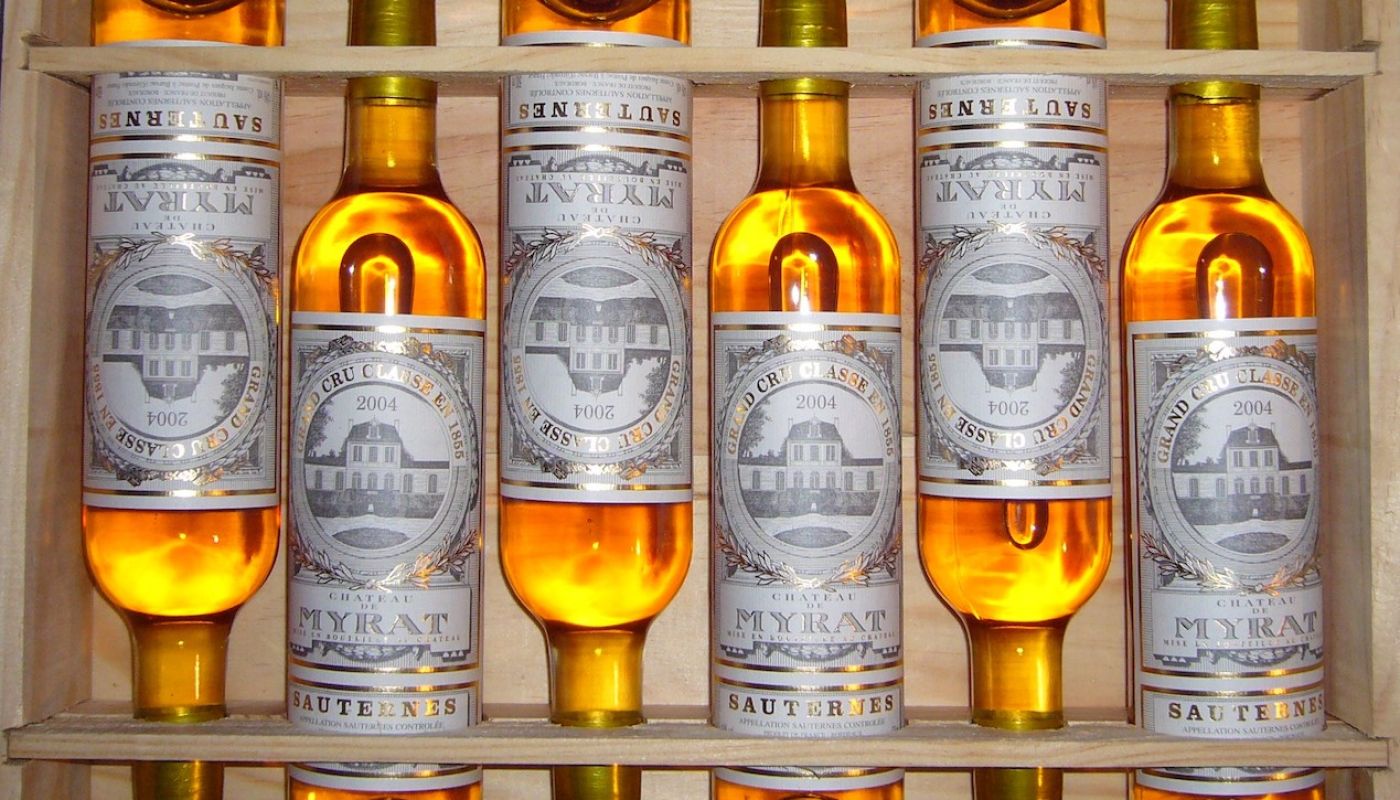
Ch de Myrat (pictured above)
£240 Fine + Rare
Ch Raymond Lafon
£240 Cult Wines (half-bottles)
Ch Rieussec (yesterday's wine of the week)
£360 Richard Kihl and others
£58 per bottle duty paid Woodwinters
Ch de Fargues
$99.89 per bottle duty paid Grand Vin Wine Merchants, Olympia, WA, and other US retailers
Ch La Tour Blanche
£160 per case of 3 duty paid Millésima
Ch Suduiraut
£395 Farr Vintners
$75 Mt Carmel Wine & Spirits Co, Hamden, CT
Reds
Ch Joanin Bécot, Castillon
£165 Farr Vintners
Ch Les Ormes de Pez, St-Estèphe
£225 Goedhuis and others
Ch Haut-Batailley, Pauillac
£330 Corney & Barrow and others (a third of the price of the Pichons)
Ch Langoa Barton, St-Julien
£420 Farr Vintners
£52.18 per bottle duty paid Bon Coeur Fine Wines
Ch Brane-Cantenac, Margaux
£56 per bottle duty paid Berry Bros & Rudd
Ch Gazin, Pomerol
£570 Farr Vintners and others
See a total of 136 tasting notes on right-bank 2011s, left-bank 2011s and sweet whites.
*See also our dozens of Southwold tasting articles about bordeaux vintages at four years old.













