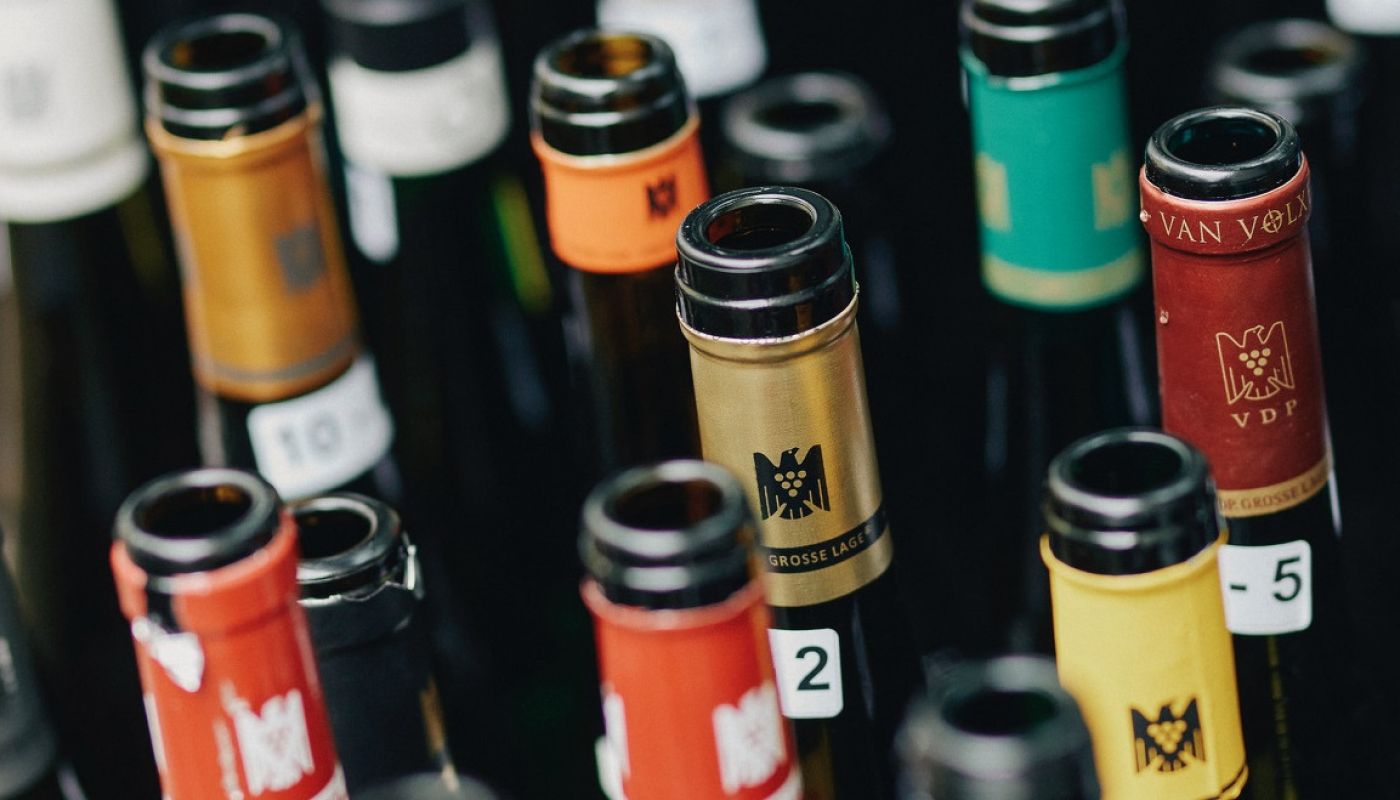
One of the most common wine questions I’m asked is how long can one keep a bottle of wine that has been opened. This is not unrelated to the number of opened bottles I have to find a home for. I probably taste on average between six and 10 different wines a day at home at the moment, a number that has been dramatically increased by the crippling effect of lockdowns on the usually crammed London wine-trade calendar.
The great majority of wines I have tasted over the last 18 months have been tasted at home from a full bottle rather than from a bottle shared with 20 or more fellow wine tasters at a professional tasting. So my children and neighbours have benefited considerably, but they do all want to know how fast they have to drink my leftovers before they ‘go off’.
At least I’m allowed to share them. I remember when I visited the famous American wine critic Robert Parker at his home, deep in the woods of Maryland, he told me that since it was against state law to transport an open container of alcoholic drink, even to the house next door, his leftovers had to be poured down a particularly well-wined hillside in front of Château Parker.
The answer to how long to keep an opened bottle of wine before it loses its fruit and freshness depends on how you keep it, how empty the bottle is, and what the wine is.
The best way to prolong the life of the wine is to keep it cool, preferably in the fridge, even reds – in fact especially reds because in general they tend to lose their freshness faster than whites, perhaps because white wines tend to have higher levels of preservative sulphites. The reactions involved in ageing are slower at low temperatures. Red wine warms up surprisingly fast out of a fridge – and anyway, most reds are better served initially a little cooler than so-called room temperature, at about 16 or 17 °C (61–63 °F), which will highlight their fruit and refreshing qualities. They will warm up soon enough.
The enemy of wine as it ages is excessive oxygen. (Sulphites are antioxidants.) So the more air there is in the bottle – the less wine – the faster it will go downhill and oxidise, taste dull and flat and start to brown. Because of this, some people add shot or marbles to half-full bottles of wine to take up the space that air would otherwise. Care is obviously required when serving…
But which wines last longest? I’ve been asking around my colleagues and people I know who drink a wide variety of wines and all are agreed that unoaked white wines made with maximum effort to preserve the youthful fruit, often with a fairly high level of acidity, are those that last longest in an opened bottle. In my experience, Rieslings are almost immortal. Riesling has a very low pH – the lower the measure the more concentrated the active acidity. Wines with a low pH stay notably fresh and can remain youthful for decades in an unopened bottle, and weeks if not months in an open bottle if it is kept cool enough.
I have come home from many weeks away to find half-full bottles of German wine in my fridge that taste virtually the same as when I first opened them. For that reason, and because the very successful 2020 vintage of German wines is currently being offered, I am concentrating on Germany, mainly Rieslings, for my recommendations this week. I focus on Germany’s dry whites that are so exciting now that grapes ripen fully there – a rare benefit of climate change.
The word trocken on a label guarantees a wine that tastes bone dry. Halbtrocken or feinherb mean medium dry – although acid levels tend to be so high in German wines that the acidity can counterbalance this amount of sweetness, as it tends to in wines labelled Kabinett, which can also have usefully low alcohol levels. Although Riesling in general has the virtue of delivering a huge amount of flavour without a huge amount of alcohol.
In general German wine is underpriced but I have tried to concentrate on the best-value bottles. Unfortunately for UK-based wine lovers, however, most of the best wines are offered strictly by the six-pack in bond. Bless Uncharted Wines for selling the beautiful, certified-organic Mosels of Sybille Kuntz by the single bottle online. The WineBarn is a useful online German wine specialist while The Winery in Maida Vale is where Londoners will find a selection of hand-picked modern dry German wine available by the bottle.
In the US, Crush Wine & Spirits and Chambers Street in New York and Dee Vine Wines and K&L in San Francisco have some of the best German selections. I’m also a fan of the single-vineyard, colour-coded bottlings of dry Rieslings of Martin Tesch in the Nahe region, but they can be devilishly difficult to find outside Germany.
German vintners are increasingly using screwcaps rather than corks, which are delightfully practical (a tall flute bottle with a cork sticking out of it can take up a lot of room) and can usefully keep oxygen out particularly efficiently.
Open bottles of oaked whites such as white burgundy and most Chardonnays don’t last nearly as long as Germany’s Rieslings – a few days rather than a few weeks. Champagne and other sparkling wines can last pretty well – provided you have a really effective sparkling-wine stopper. The best I have found to date are those sold at £4 apiece by The Finest Bubble in London. Worth every penny, they have kept my leftover sparkling wines fizzy and interesting for longer than I care to confess in print.
Wines that seem to lose their fruit and charm quickest in an opened bottle are generally red, and typically made from the delicate Pinot Noir grape. So red burgundy is not a good candidate for hanging on to for more than two or three days. The younger and tighter the wine, the longer it is likely to last. Perhaps this is all a good excuse to drink any older Pinot Noir or red burgundy that comes your way as fast as possible?
Vacuvin has been around for a long time and I have not found it to be terribly effective but there is a new stopper for opened bottles called Repour. It’s plastic and has been treated so that it literally sucks the oxygen out of an opened bottle. It has had some enthusiastic reviews that suggest it can keep wine fresh for up to six weeks. The inventor Tom Lutz sent me some to try and I am ashamed to say that I have yet to test it properly. I’m waiting for two bottles of the same wine to try as I feel a control is needed to really put it to the test. Each stopper may be used only once, but 10 of them cost only $17.99. (Shipping to a UK address adds another $24.70 though.)
I can hear many a connoisseur asking, but what about Coravin? This is the leading wine-preservation system that allows wine lovers to extract, via a fine needle and rather expensive cartridges of neutral argon gas, only as much from a bottle as they want to drink. Since its launch in 2013 several new iterations have been launched, including a preserver for screwcapped bottles and most recently a gadget to preserve sparkling wine.
Coravin has been so popular around the world that competitors are emerging, more sophisticated systems than the Vacuvin that pumps air out of the bottle and the canisters of neutral gas designed to be squirted into an opened bottle to keep oxygen out. When the consumer publication Which? tested wine-preservation systems recently, they found six worth investigating.
In my experience Coravin does a brilliant job in allowing fine wine to be served by the glass in tiptop condition in bars and restaurants, as well as providing wine producers with a way to test bottles before they show them to customers and the media. There is no longer any need for them to take a spare in case of cork taint.
I don’t actually find Coravin that useful in my own wine-tasting context. I generally like to share whole bottles from our cellar. And if I took only a small sample from each bottle I taste professionally without pulling the cork, my home would be completely taken over by an army of bottles, and I’d have none to give away. I don’t think my neighbours would be pleased.
Great dry German whites
ib means in bond so UK duty and VAT have to be paid on top.
GG stands for Grosses Gewächs, dry expressions of top vineyards by members of the elite VDP producers’ association.
Battenfeld-Spanier, Mölsheimer Riesling trocken 2020 Rheinhessen 12%
£90 per case of 6 ib Justerini & Brooks
Fritz Haag, Juffer Riesling GG 2020 Mosel 12.5%
£96 per case of 6 ib Howard Ripley
Heymann-Löwenstein, Kirchberg Riesling GG 2020 Mosel 12.5%
(or Stoltzenberg for £126 or, even better, Röttgen for £150 for 6)
£120 per case of ib in Howard Ripley
Knewitz, Gau-Algesheimer Goldberg Riesling trocken 2020 Rheinhessen 12.5%
£114 per case of 6 ib Howard Ripley
Kühling-Gillot, Oppenheimer Riesling trocken 2020 Rheinhessen 12%
£78 per case of 6 ib Howard Ripley
Sybille Kuntz Riesling trocken 2019 Mosel 12%
£18.78 Uncharted Wines
Peter Lauer, Ayler Kupp Riesling Fass 18 GG 2020 Saar 12.5%
£126 per case of 6 ib Howard Ripley
May, Retzstadter Langenberg Alte Reben Silvaner trocken 2020 Franken 12.5%
£72 per case of 6 ib Howard Ripley
J J Prüm, Wehlener Sonnenuhr Riesling Kabinett 2020 Mosel 8%
£125 per case of 6 ib Justerini & Brooks, £126 per case of 6 ib Howard Ripley
Rebholz, Vom Muschelkalk Riesling trocken 2020 Pfalz 12.5%
£110 per case of 6 ib Justerini & Brooks
Willi Schaefer, Graacher Domprobst Riesling Kabinett 2020 Mosel 7.5%
£90 per case of 6 ib Justerini & Brooks
Schloss Lieser, Graacher Himmelreich Riesling Kabinett 2020 Mosel 8%
£65 per case of 6 ib Justerini & Brooks
Emrich Schönleber, Lenz Riesling trocken 2020 Nahe 11.5%
£75 per case of 6 ib Justerini & Brooks
Josef Spreitzer, Oestricher Doosberg Alte Reben Riesling trocken 2020 Rheingau 12.5%
£85 per case of 6 ib, Justerini & Brooks
Tesch, Laubenheimer Karthäuser Riesling trocken 2019 Nahe 12.5%
$24.95 Bounty Hunter, Napa
International stockists from Wine-Searcher.com. Image © VDP by Peter Bender.
Explore our extensive coverage of Germany's 2020 vintage here.