
‘Retsina – what’s that?’
It was the most refreshing question I’d ever been asked about wine, and at the same time, one of the saddest. Retsina is one of the greatest inventions ever in the wine world, up there with capturing bubbles in a bottle or figuring out that oak barrels could do marvellous things to an ageing wine.
But just as oak barrels have been abused, used to add flavour to unappetising fruit, and bubbles have been pumped into wines that have no business being bubbly, the pine resin that defines Retsina was once overused, creating a sea of samey wines with Pine-Sol aromas that destroyed the category’s reputation.
By the 2000s, when Greek wines were finally gaining a foothold in the international market, Greek winemakers didn’t even want to talk about Retsina, for fear it would distract from the seriously good (non-resinated) wines they were putting out. I once had to promise not to write about a Retsina from a prominent winemaker in order to get him to let me taste it. ‘My importer will kill me’, he said, glancing around to make sure no one was looking as he poured me a taste.
Now that it’s been firmly established that the Greeks make fantastic wines of all sorts, Retsina is no longer a bad word. In fact, we are living in the midst of a Retsina renaissance. But it’s not popular yet, either, and it should be, especially in the height of summer (or, for those readers in the southern hemisphere, when you’d like it to be high summer).

What is Retsina? It’s a wine – usually white – scented with pine resin, a practice that dates to ancient times and once extended all over the Mediterranean. While there’s no doubt that at various times and in various hands the practice has been used as a way to ameliorate sub-par wine, that wasn’t the original intention. Rather, pine resin was found to have preservative properties (something Pliny the Elder details in his Historia Naturalis) as well as a pleasant flavour and feeling. (There’s even a word for the cooling sensation it lends a wine: droserótita.)
As Konstantinos Lazarakis MW points out in The Wines of Greece, ‘There are accounts of Ancient Greek winemakers taking extreme care while producing the resinated wine, treating it in a way that reminds of the ageing of top-quality white burgundy.’ They were careful to protect the wine from oxygen, so that it would remain fresh; they paid careful attention to the lees, working with them to enhance the texture without overwhelming the delicate fruit; and they paid close attention to the quality and freshness of the pine resin.
Today Retsina is an official category of wine, one of the EU’s ‘traditional terms’ (defined as ‘terms traditionally used to convey information to consumers about production or ageing methods, colour, type of place or a particular historical event of a wine with a protected designation of origin or geographical indication’ and, in this case, limited solely to resinated wines from Greece). The rules declare that only the resin of the Aleppo pine (Pinus halepensis, a fast-growing conifer native to the Mediterranean) be used, and only in quantities equal to or less than 1,000 g per hectolitre.

And while you can still find oxidised, oily, over-resinated Retsina on wine-store shelves the world over (NB they tend to be collecting dust on the bottom shelf and have turned bright gold), there are a host of wineries making Retsina to exacting standards. (There’s even a winery dedicated solely to high-quality single-vineyard resinated wines now; you can check out the reviews for the first releases from 1979 Wines in our tasting notes database.)
Mylonas is an excellent example, widely available at a friendly price – in fact, a bargain price when you know how much thought and work goes into it. Stamatis Mylonas and his brothers are the third generation to farm their family’s vineyards in Attica, where the Savatiano grape rules. As it’s also the traditional heart of Retsina country, Savatiano got a bad rap for decades – a rap the Mylonas brothers have worked to dispel since they took over in 2000.
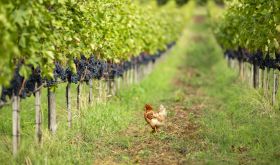
Of Mylonas’s 17 ha (42 acres) of vines, 60% are Savatiano and mostly all old bush vines dating to the 1950s, the plots small and scattered in the high, rocky foothills of Mt Panion.

There’s no irrigation, no chemicals – never has been – not just because the landscape makes it difficult or because the family hews to an organic and biodynamic mindset in their winegrowing but also because it’s part of the Lavreotiki UNESCO Global Geopark, a protected district UNESCO describes as a ‘natural mineralogical museum’ due to the extraordinary diversity and concentration of minerals in its soils. The vines are mainly grown on sandy clay over limestone though there are gravels and shales and a wealth of intermediate soils in between; elevations are 200–350 m (c 650–1,150 ft), and the dry wind keeps things fresh and production low (on average 400 kg/ha).
So when you’re drinking a Mylonas Retsina, you’re drinking really good Savatiano – fresh, concentrated, with a lemony-herbal flavour that’s a hallmark of their wines (whether this comes from the elevation of their sites, the mineral richness of the soils or just the Mylonas touch, I don’t know, but it’s always there). The Retsina just has a little something extra in the form of pine resin, also locally grown and harvested, used fresh (not always the case in mass-market Retsina) and with restraint. It’s a terroir wine through and through.

The result is a wine that tastes like the air when you’re standing in one of their vineyards, the sun beating down and the sky a crisp blue, the scent of salt water and wild rosemary and hot stones and Aleppo pines carried on the wind. It’s lemony, herbal, minty, and yes, piney, but not so much that it stands out more than anything else – when I poured it for an unsuspecting friend recently, she couldn’t put her finger on what the flavour was – only that it was delicious and revitalising in its cooling effect.
By law, Retsina isn’t allowed to list a vintage date, but Mylonas’s is always made from a single vintage’s grapes, and always sold fresh – you’ll find the 2023 or 2024 on the market right now, the former just a little softer, rounder than the latter (and the handy QR code on the back label connects you to all the vinification details). At 12.5% alcohol, it’s not heavy at all, but it does have the body and personality to stand up to all manner of mezedes, be it a crisp green salad showered with feta and dill or stuffed grape leaves dripping in oil. It’s even delicious with lamb, and brilliant on a hot night with takeaway souvlaki.
So if you’re new to Retsina, start here. And if you’re an old-school hater, start over again. This isn’t your parents’ Retsina. This is one of Greece’s gifts to the gastronomic world.
All photos courtesy of Mylonas unless otherwise credited.
For more great Greek wines, see Julia's recent articles on Great Greek Wines 2025 and spring 2025 releases as well as our tasting notes database.