
There are various landscapes that get under your skin. I've been on safari in southern Africa only once and for a very short time, but I defy anyone exposed to the haunting rawness of the terrain to be immune to its call. Among wine regions I'd nominate the Douro Valley in northern Portugal as having the same ability to claw its way into your consciousness.
What's in (and out) in the world's oldest wine region
• 5 min read
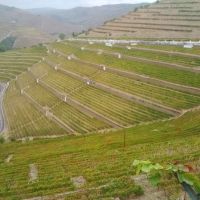
The landscape is so extraordinary. Rounded folds of terraced vineyards rise straight up from the riverbank for as far as the eye can see, punctuated by the odd twisting road and quite remarkably few buildings. The terrain looks so inhospitable (and feels like it in the arid heat of summer), it seems extraordinary that it is capable of growing anything. The vine is just about the only plant that would survive on these uncompromising mounds of schist. But you feel that production costs must be sky high, for mechanisation is virtually impossible in most vineyards. The economics of port production are balanced uneasily with Portugal's rising urbanisation and living standards.
On my most recent visit to the Douro I found myself looking at the landscape and shaking my head in wonder at its apparent impossibility as a production centre. The area of interest to wine lovers has been expanding as producers look for ever cooler sites upriver (we had to add a map of the Douro Superior in the new, 7th edition of The World Atlas of Wine). Not surprisingly, perhaps, the number of port producers has been declining. The big get bigger and the small disappear into their maw. Even the Portuguese themselves admit that a mere two British-run companies dominate serious exports of port. The Symington family, whose best-known brands are the fiercely separately-run Graham, Warre and Dow, now also own Cockburn, having presumably taken a deep breath and muttered their oft-proclaimed commitment to the future of the 'Port Wine Industry' (sic) several times before taking it off the somewhat bemused hands of the American company that owns Jim Beam whiskey in 2010.
Their big rivals The Fladgate Partnership is built on the names Taylor and Fonseca, but they added Croft and Delaforce not that many years ago, more recently offloaded Delaforce on to the dominant Portuguese company Real Companhia Velha (also known as Royal Oporto), only to get seriously into wood-aged port by buying the previously family-owned Wiese & Krohn last year. See Richard on A tale of two tawnies.
The French also play a significant part in port production, which is perhaps not surprising in view of the fact that France was for long the principal export market for port by volume if not by value. In fact the biggest economic problem for the Douro Valley today is managing to supply French supermarkets with cheap young porto from expensive old vineyards. Quinta is Portuguese for farm and the Douro is full of them. Quinta do Noval is arguably the most famous because of the quite outstanding quality of port (sometimes) produced from a two-hectare patch of vines known as Nacional there. In the early 1990s the family who owned it were looking to sell and the two most likely buyers were both French. The story goes that Jean-Claude Rouzaud of Champagne Louis Roederer was thought to be about to swoop but was enticed to spend the weekend beforehand at the Quinta da Ervamoira by the owners of port shippers Ramos Pinto. He loved it and the family so much that he ended up buying Ramos Pinto instead. Just as significantly, he was so blown away by the quality of a varietal Tinto Cão 1981 red Douro table wine that Ramos Pinto helped pioneer the great wave of table-wine production we have seen transform the Douro Valley in the last two decades.
(Quinta do Noval was eventually bought by another French company, AXA Millésimes, in 1993 and the Rouzauds also continued to expand their wine empire so that, coincidentally, each of the famous rival Pichons of Pauillac in Bordeaux, Lalande and Longueville, have a sister company in the Douro. Only Ramos Pinto finish a Douro wine tasting by serving champagne though. The house fizz at Quinta do Noval is director Christian Seely's English sparkling wine Coates & Seely, made in a climate that could hardly be more different from that of the Douro.)
During my recent visit I had the chance to taste a bottle of that famous Tinto Cão 1981 and can quite understand how inspiring it must have been. It gave birth to Ramos Pinto's Duas Quintas, of which a full 50,000 cases are now made each year, making it one of the best-known examples of Douro table wine – even if nowadays it is easier to sell at a high price in booming Angola, the African Portuguese ex-colony, than in financially shaken Portugal.
I well remember my own Douro table wine epiphany, enjoying Ferreira's Barca Velha and the occasional unlabelled table wine served at port wine quintas on the way to the all-important port at the end of the meal in the 1970s and 1980s. But it took the likes of Duas Quintas and a host of young, professionally trained local winemakers to boost production of table wines in the Douro so that it has become a very serious wine category in its own right. You need considerable capital to make port because of the strict rules about quotas and ageing. But Douro table-wine production has been easier for young people to infiltrate, sometimes on a very small scale. One of the heroes of the new wave of young Douro table-wine producers is without doubt Dirk van der Niepoort of the originally Dutch-owned Niepoort port house. He is one of those wine producers who has a real curiosity about and grasp of the wines of the world. His travels in Burgundy and Germany inspired him to make a (very loosely) burgundian red and white called Charme and Coche respectively, and a Germanic white called Tiara. An iconoclast, he has done his bit to shake up perceptions and habits in the younger generation working in the Douro Valley. Famously, he promulgates Davids rather than Goliaths among the richly varied collection of grape varieties that grow there, with Tinta Amarela one of his particular favourites.
One of the most entertaining conversations I heard during my most recent stay in the Douro was a discussion between a few of the producers about which Douro varieties are in and which out. All were agreed that the most famous (though not the most planted) one Touriga Nacional is regarded as overdone, my dear. (In 2013, incidentally, this flagship variety most unusually almost refused to ripen.) Roriz, the local name for Tempranillo, is also out, apparently; it can produce uncomfortably tannic wines in the Douro. Touriga Franca is definitely in. Tinta Cão and, just possibly, Sousão are coming in. Tinta Barroca was in, went out but may be on its way back in. Bastardo is in limbo.
So, there you have it. Oh, and old vines, of which the Douro Valley, the world's first delimited wine region, has no shortage, are always in.
There are various landscapes that get under your skin. I've been on safari in southern Africa only once and for a very short time, but I defy anyone exposed to the haunting rawness of the terrain to be immune to its call. Among wine regions I'd nominate the Douro Valley in northern Portugal as having the same ability to claw its way into your consciousness.


选择方案
会员
$135
/year
适合葡萄酒爱好者
- 存取 295,693 条葡萄酒点评 & 16,104 篇文章
- 存取《牛津葡萄酒指南》及《世界葡萄酒地图集》
- Access askJancis, our AI wine assistant


核心会员
$249
/year
适合收藏家
Everything in “Member”, plus:
- Early access to the latest wine reviews, 48 hours in advance
- Early access to the latest articles, 48 hours in advance
专业版
$299
/year
供个人葡萄酒专业人士使用
- 存取 295,693 条葡萄酒点评 & 16,104 篇文章
- 存取《牛津葡萄酒指南》及《世界葡萄酒地图集》
- Access askJancis, our AI wine assistant
- 提前 48 小时获取最新葡萄酒点评与文章
- 可将最多 25 条葡萄酒点评与评分 用于市场宣传(商业用途)
商务版
$399
/year
供葡萄酒行业企业使用
Everything in “Professional”, plus:
- 可将最多 250 条葡萄酒点评与评分 用于市场宣传(商业用途)
- Access to submit wines for review
- Offer memberships to your employees and manage them from a single place
- API access available for an additional fee
More Free for all
Free for all
根据星级酒单 (Star Wine List) 的评选,这是一份比大多数指南更具权威性的榜单。上图,美食与葡萄酒行家们齐聚阿里尔德酒庄...
Free for all
南部并非全是强劲的歌海娜 (Grenache)。本文的一个版本发表于《金融时报》(Financial Times)。 另见...

Free for all
在聆听最喜爱的专辑或阅读一本好书时,你最想喝哪款葡萄酒?你是否有与 芭比 [Barbie] 、 蒙娜丽莎 [Mona Lisa] 、...

Free for all
以下是那些为获得令人垂涎的两个字母而努力的考生所面对的问题,其中包括 我们自己的 萨曼莎·科尔-约翰逊 (Samantha Cole...
More from JancisRobinson.com
Tasting articles
If you appreciate wines that reflect vintage and terroir, the top 2020 Brunellos are well worth buying. Above, the Poggio...

Book reviews
提醒我们葡萄酒在冲突时期恢复人性、幽默和希望的力量。 葡萄酒与战争 法国人、纳粹和法国最伟大宝藏的争夺战 唐和佩蒂·克拉德斯特鲁普 (Don...
Wines of the week
一款来自奥地利的神奇起泡酒,售价 €9, £15.50, $16.95 起 。 有人说,这是魔力最强大的时刻……夏至,仙灵在我们中间起舞...
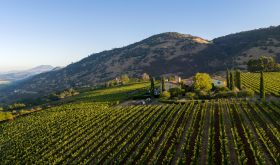
Tasting articles
一个标志性的年份。上图,位于奥克维尔 (Oakville) 的达拉瓦莱酒庄 (Dalla Valle Vineyards) 出品了萨姆...
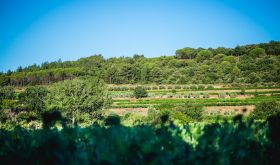
Tasting articles
南罗纳河谷"西北走廊"高海拔葡萄酒品质潜力的预览。上图为雷梅让酒庄 (Domaine La Réméjeanne) 的生物多样性葡萄园之一...
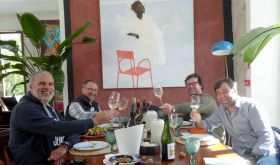
Tasting articles
葡萄牙这一葡萄酒产区南半部分的巡礼。北半部分的生产商和葡萄酒请参见 第一部分 。上图(从左至右)为雨果·门德斯 (Hugo Mendes)...
Don't quote me
尼克·马丁 (Nick Martin) 在又一场期酒活动接近尾声时进行了反思。拉科斯特大皮伊酒庄 (Château Grand-Puy...
Tasting articles
这个被低估且有时被误解的葡萄牙葡萄酒产区之旅。今天,我们介绍北部地区——恩科斯塔斯德艾尔 (Encostas d'Aire)、阿尔科巴萨...