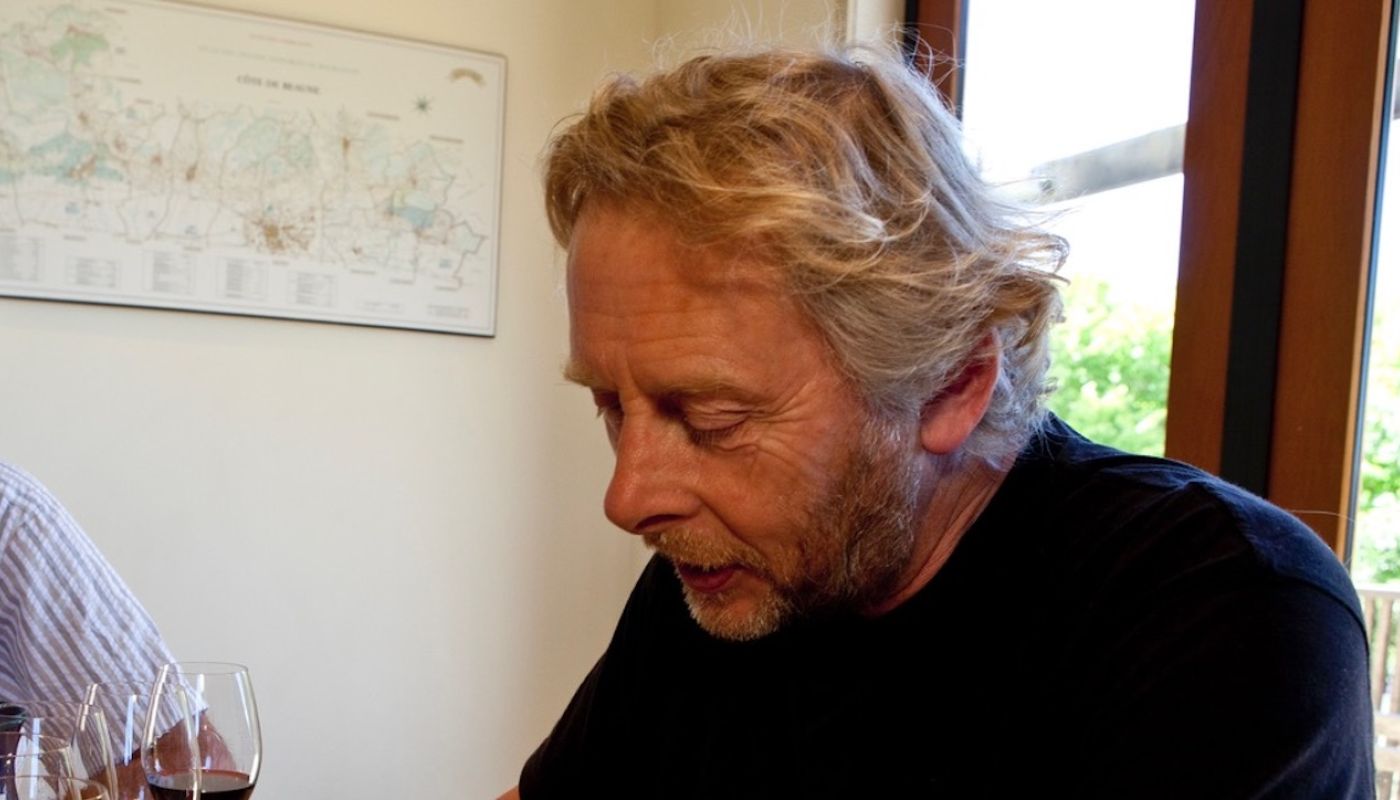
When I crossed the Rubicon from wine drinker to vigneron in 1999, a wonderful thing happened. I was still living close to London at that time and I found that the cornucopia of wine tastings offered in the capital, maybe the most wide-ranging in the world, were suddenly open to me. I was in the business!
I also felt painfully ignorant. My acquaintance with Burgundy was fairly sound, having lived through the era when it was affordable... sort of. But my knowledge of so much else in the outrageous proliferation that is the wine world was sketchy. So any free day was spent tasting, learning. I found to my delight that many of these events had the producers pouring their offerings, so I could meet and discuss rather than just taste. I became a regular sight at these events and, thanks to the generosity of the merchants, the wine organisations and the producers concerned, my knowledge, and my address book, gradually expanded.
There was a second benefit to this approach. As we at Felton Road managed to engage a few distributors around the world, they would ask us to attend their annual portfolio tastings. As a lover of travel, and ignorant of the carbon I was squandering, I was happy to agree. I quickly learned that at such tastings there were three classes of tables: those with the winemaker or proprietor manning them were the busy ones, then came those with a local representative or member of the distributor’s staff behind the bottles. Lastly were the, often lonely, tables simply left for people to ‘self pour’. It took only a glance to realise that that would be the fate of my wine if I weren’t there.
If you did make the journey to be there, then you would probably be included in the wine dinners, symposia or masterclasses that accompany such events. Distributors are always more diligent with wineries that support them by turning up. But you’d also meet the other producers, together in a different city and keen to socialise.
Before long I had discovered a remarkable world: one perhaps unique in commerce. In any other profession we would be rivals, but in wine there was a spirit of comradeship, not competition. Everybody would help everybody else. It is, I think, a fairly recent phenomenon born of two unusual quirks. Firstly, in the world of good wine, one is not saying to a customer ‘buy my wine, not theirs’. Our customers drink many, many different wines, so they can enjoy both. By enthusing to the customer, we sell not just our wine, but our colleagues’ wines as well. I remember once swapping places with a notable Burgundy producer, and I poured and talked to his wine while he did the same for mine.
The second factor is that we need each other. All winemakers are students of their craft: no intelligent practitioner thinks they have mastered it. The best are eternally curious and turn to their counterparts to learn. And not just in winemaking. If we are looking for a good distributor in, say, Hungary, then we turn to our colleagues who are in the market there already. They have the lowdown and, in return, you can brief them on Montreal. Their cellars are always open for you to go taste and discuss, their vineyards are yours to walk through and explore.
And, most collaboratively of all, there is the exchange of our young. We send our daughters, our sons, and our young hopefuls on the staff to them to be trained. They return the compliment with theirs. Over 200 young winemakers and viticulturists have been delivered to us from around the world over the years. We have sent many back in return. We lost one to marriage. We all learned a lot.
But this is a subset of the wine world. Once wine was purely generational: families owned vineyards and daughters and sons were born into the business. Today, we have more and more arrivals into the world of wine production who come from outside. Normally as a second career, as it needs some capital. Sometimes it’s more of an enthusiastic pastime than a deep commitment. These new arrivals tend to come from worlds where collaboration with the competition is an alien concept. They are shy of their relative inexperience. Crucially, while they may have drunk plenty of ‘what they like’, they are lacking in a broad experience of the wines of the world. It is a hard and lonely place from which to begin.
There is a pejorative description of wine producers, sometimes used by their peers, that most people outside that group don’t hear: ‘Oh, they drink their own wine.’
Evolution has devised an effective solution to prevent our poisoning ourselves, but it comes at a price. Every time we taste something new our brain is distrustful: ‘this is unfamiliar; will it harm us?’ The flipside is that things we have tasted many times must, by definition, be safe. Hence ‘acquired taste’, the cognitive bias that tells us that anything we’ve tasted a lot tastes good. It works, as long as it doesn’t create an addiction to Coca Cola or buckets of fried chicken.
It has a second danger. Those who start to make their own wine tend to drink it a lot. They want to show it to their friends, to congratulate themselves with a regular glass. Pretty soon their brains are telling them that this stuff is the nicest they have ever tasted and they have fallen down the wormhole we call ‘cellar palate’.
So we have a double danger: a delusion that our wine is much better than it really is, combined with a significant reduction in exploring the wider world of wine. The solution is simple and becomes joyful. Limit consumption of any wine you make to an occasional taste rather than a drink, reserving those occasions when you do serve your wine to those that are professionally unavoidable. When you do want wine to drink, drink as widely as is possible. Focus on benchmarking the greatest range of styles and origins you can. Make every wine the subject of conscious analysis and, if possible, discussion: what is good here? What do I see that I don’t see in my wine? Would it have a place there? Also be absolutely brutal in casting aside any wine you don’t think will add to your knowledge. Trashing your liver and waistline for no intellectual gain other than numbness is a fool’s pastime.
Twenty years on, the two best lessons I have learned? Don’t drink your own wine and go to as many tastings as you possibly can, wherever they may be. It’s not about selling wine, it’s about being a part of your new world.
















