On Sunday night, watching the election results from Hungary unfold on television in the UK, I found myself thinking about a square in Budapest.
The celebrations were gathering at Batthyány tér, on the Buda side of the Danube. It is a place I know well. My father is buried in the church there. Watching the crowds gather in that square, the same square where I have stood many times in quieter moments, made the news feel unusually close, even from London.
Earlier that day I had cast my vote in London, accompanied by my children and husband.
By the evening it was clear that something significant had happened. After 16 years of Viktor Orbán’s government, Hungarian voters had delivered a decisive result signalling a desire for change.
Monday morning, looking at photographs from the night, one image caught my attention in particular. Standing behind Orbán during his concession speech was a former Hungarian ambassador to London, Kristóf Szalay-Bobrovniczky, applauding.
The irony did not escape me.
Because the years during which I tried to introduce Hungarian wine to the British trade unfolded almost entirely during that same political period.
My own involvement began in 2014. My daughter was two years old at the time. I was in my early thirties and, if I am honest, knew very little about wine. But I had a conviction that Hungarian wine deserved to be taken seriously in Britain.
Hungary has a remarkable wine history. Tokaji, for instance, was once described as ‘the wine of kings and the king of wines’. Yet in the decades following the fall of communism, perhaps only half a dozen Hungarian wineries had managed to secure listings with major British importers. Compared with the presence of French, Italian or Spanish wines, Hungary barely existed in the British market.
Hungary did not lack vineyards, talent or indigenous grape varieties. What it lacked was recognition and teamwork. So I started Wines of Hungary UK.
The idea was initially to import Hungarian wines. Instead the project quickly became something closer to a marketing initiative funded collectively by the winemakers themselves, effectively acting as Hungary’s unofficial wine-promotion effort in Britain.
Hungarian producers operate on small margins. Most are family estates with enough concerns in the vineyard without worrying about international marketing. Frost, hail, harvest (now esca) and survival come first.
So I tried to tell the story of Hungarian wine for them.
London at the time was one of the most vibrant wine cities in the world. The trade was full of legendary figures – Steven Spurrier, Oz Clarke, Hugh Johnson, Jancis Robinson. Walking into tastings sometimes felt like entering a kind of wine pantheon. I remember thinking that these were the people shaping how the world understood wine. And I used to imagine them tasting Hungarian wines.
My father followed the project closely.
‘How are the wines going?’ he would ask.
‘Not yet’, I used to tell him.
‘Just hang in there’, he would say. ‘Success will come.’
The first wineries who believed in the project were visionary producers such as Barta Winery in Tokaj and St Andrea in Eger. Soon others joined, including Attila Gere and Kàroly Kolonics and gradually we built a portfolio of around 13 wineries.
Over time I helped secure UK representation for six Hungarian wineries, including Barta from Tokaj at Corney & Barrow and Nimród Kovács from Eger at Boutinot. Slowly, something began to change. Buyers became curious. Journalists appeared at tastings. Sommeliers began asking questions about grape varieties they had never encountered before. Furmint began travelling beyond its borders.
One particularly rewarding collaboration came with The Wine Society, which released The Society’s Hungarian White, an Egri Csillag assembled in Eger by the winemaker, Freddy Bulmer from The Wine Society and me. Seeing a Hungarian wine appear within such a respected British institution felt like a milestone.
But perhaps the moment when Hungarian wine truly entered the London conversation came in 2018, when we organised a large tasting at the Hungarian Embassy in London.
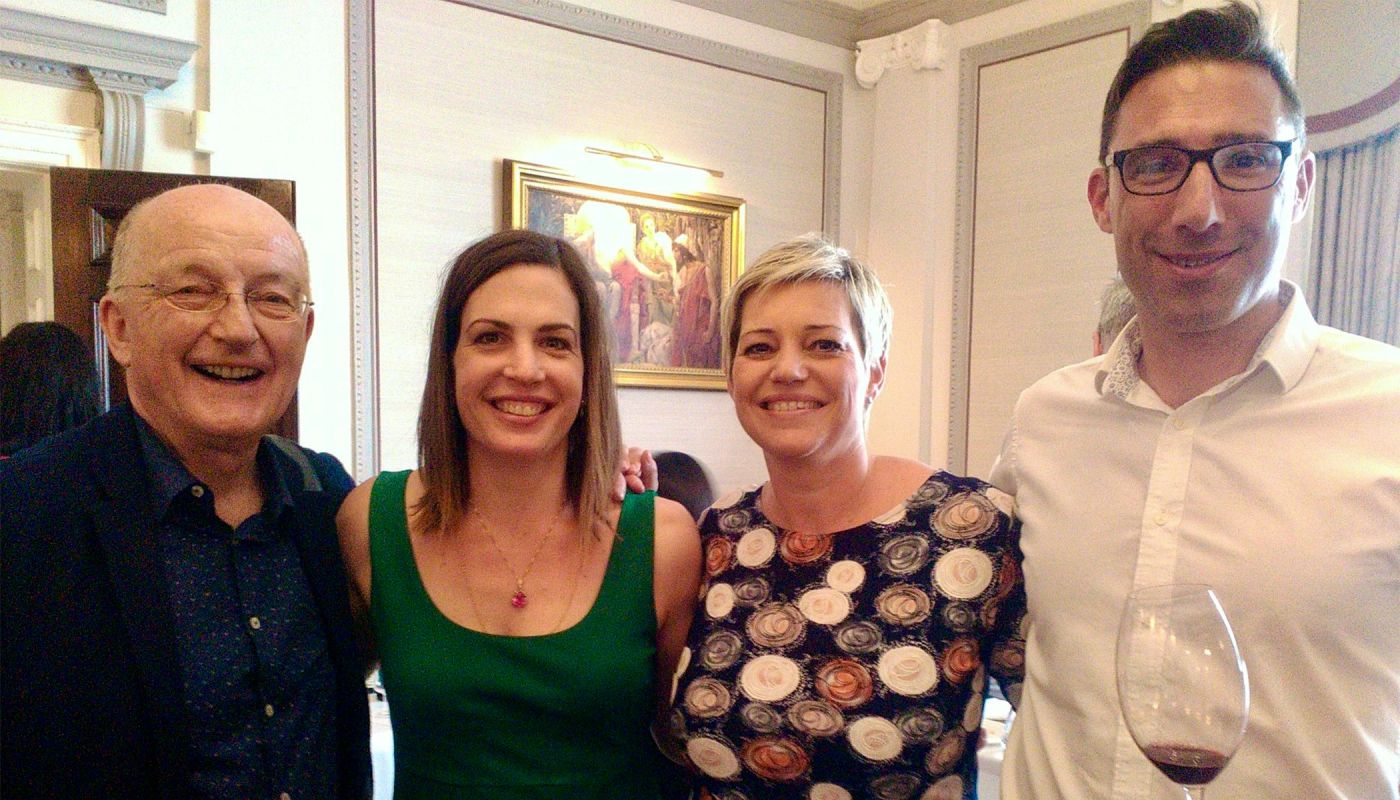
More than 70 Hungarian wines were presented to the trade and press. The ambassador at the time, Szalay-Bobrovniczky, hosted a lunch pairing Hungarian dishes and wines, alongside Oz Clarke, who enthusiastically championed the diversity of Hungary’s indigenous grapes. (See Tam’s report on the tasting.)
I remember the room vividly: journalists, sommeliers, buyers, Hungarian winemakers, plates of Hungarian food circulating, glasses of Furmint and Hárslevelű constantly being refilled. For the first time it felt as if Hungarian wine had properly arrived in London.
It was about time.
For years the winemakers and I lobbied for meaningful international support. Hungarian producers pay a levy intended to fund overseas marketing and help their wines reach markets such as the UK.
In practice, those funds rarely seemed to appear. Meetings were held, promises made and initiatives discussed, but little concrete support ever reached the producers themselves. Eventually a formal Wines of Hungary body was created, building on the work that had already been done through years of tastings, trade engagement and lobbying. Yet the international momentum Hungarian wine needed never translated into sustained growth in export sales. And Brexit, adding additional bureaucracy and rising wine duties, surely didn’t help.
Hungarian history has often moved in cycles. The revolution of 1848 promised a modern European Hungary before being crushed. In 1989, with the fall of communism, the country opened itself again to the world.
It felt like Sunday night will prove to be the beginning of a new chapter. And if that’s so, the opportunity for Hungary’s wines is considerable. The country has extraordinary terroirs, distinctive indigenous grapes and a generation of highly skilled winemakers, from the volcanic slopes of Tokaj and Somló to the historic red-wine regions of Eger, Szekszárd and Villány.
What it has often lacked is a clear national voice abroad.
Perhaps now it will be able to have one.
We share Lilla’s love and respect for Hungarian wines, having published dozens of articles as well as more than 1,600 tasting notes on them.