
Gérard's father René was the very first vigneron signed up back in 1968 by the redoubtable Becky Wasserman of Le Serbet, who represents so many of Burgundy's finest wines. She describes the wines as 'from generation to generation quiet, calm, and they age beautifully; a sort of a Côte de Nuits Lafarge'. High praise. René was an uncle of Dr Georges Mugneret, whose widow and daughters run the estimable Domaine Mugneret-Gibourg along the Vosne backstreet. The Mugnerets' house and cellars lie round a neat yard just downhill of the church and the main offices of the world-famous Domaine de la Romanée-Conti, but Gérard Mugneret wines are very much under the radar. Until now 70% of them were sold directly to individuals, leaving just 30% of the barely 3,000-case production to be shared between one British and a handful of American importers. Gérard's son Pascal, who now runs and lives at the domaine, intends to reduce the proportion sold direct to 40%, but to judge from his father's work labelling and packaging bottles like these just off the main cellar during my visit, satisfying the lucky buyers on their mailing list is still a time-consuming business.
Gérard was very worried about handing over to Pascal, who had never shown any real interest in the domaine as he was growing up. He admits that as a child he saw vines and wines as unwanted competitors for his father's attention. 'So I try to be very careful about this with my three young daughters and my wife', he told me. 'I don't travel much now, even though I loved travelling before I had kids.'
It was his previous life, seven years as a Phillips engineer, including a spell in Hatfield, England, that is responsible for Pascal's excellent English. But since then his life has changed utterly (although I much appreciated the ease with which this ex-engineer sorted out a problem I had with my Blackberry). He found himself living in Orléans in northern France with his teacher wife, another Burgundian, and drew up two columns to represent what he liked and disliked about being an engineer. The result was that, after navigating their way round the geographical complexities of the French teacher supply system, they were able to return to the Côte d'Or and Pascal, who presumably understood much of the science already, enrolled on a brief oenology course in Beaune.
One of his fellow students was David Clark, another engineer convert to winemaking, this time a Scot who had been part of the Williams Formula One team and was about to start up his own domaine in Morey-St-Denis. Clark did not have the advantage of many generations of vineyard acquisition behind him and, without a whisper of a likelihood of a grand cru to get his hands on, he has decided to look for new challenges and recently sold his domaine, but he says of his classmate, 'I can't think of many I like and respect more than Pascal Mugneret. Both he and his father never seem to stop working and Pascal clearly cares deeply about making the best wine possible. He seems to have the skills to achieve it too!'
Pascal began by spending a year as an employee of his father, who wanted to check that he really was genuinely interested in wine production. And are you?, I asked. 'Completely, passionately', he said with conviction, adding, 'everything I learned as an engineer has been useful – everything except to be Cartesian. You have to be tough and straight – but winemaking is a mix of reason and the heart. The problem is to find the right balance.'
He was spoilt with his first vintage, 2005 – a breeze for Burgundy's vignerons. Recently they have all been tested considerably with vintages 2011, 2012 and 2013 presenting a succession of meteorological challenges, although admittedly hail has hit the Côte de Beaune well south of Vosne far harder than it has the Côte de Nuits.
The general principle of the domaine has been to use new oak sparingly, just 25 to 30% for their five premiers crus – one each in Chambolle, Nuits and Savigny (from vines planted in 1926) and two in Vosne – and to destem everything. But Pascal tried out 15-20% whole-bunch fermentation in 2012 (which he admits was a relatively easy vintage once the grapes got into the cellar) but reduced that proportion in 2013 because of the rampant rot. (The domaine is run along biodynamic lines but is not certified.)
I asked him how on earth he managed to make all his wines so delightfully silky, yet by no means weak. What exactly were the tricks in vineyard (where he has a team of six for their 7 ha at peak times) and cellar? 'Nothing special', he insisted, 'just a lot of details. Like Einstein, I'd say if I had one hour to solve a problem on which my life depended, I'd spend 45 minutes analysing it and 15 minutes acting on it.'
Unlike David Clark, Pascal Mugneret is able to grow and vinify almost 300 cases-worth of grand cru grapes every year, thanks to his family's status as sharecroppers of the Dames Mugnerets' Échezeaux (and a parcel of Vosne). As with so many family domaines in Burgundy, other family members own a share of the vineyards and have to be paid rent for them. The hope is that they will eventually sell, and, as Pascal explained in the wake of this year's exceptional price hikes, 'It's the anticipation of the cost of buying relatives out that has forced up prices'.
If it keeps land in the hands of those who make the most from it, then I for one would not complain too loudly.
Mugneret's wines are imported into the UK by AB Vintners and are still part of the Wasserman portfolio of burgundies sold in the US (see www.leserbet.com).
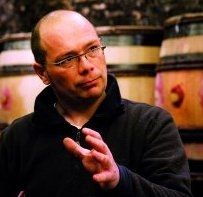
Pascal Mugneret – the engineer of Vosne
Read our 1,600 tasting notes on 2012 burgundies.
I have my tried-and-tested ports of call in Burgundy but every time I go I try to visit a few producers who are entirely new to me. I can't remember one as immediately thrilling and convincing in terms of wine quality as Domaine Gérard Mugneret in Vosne-Romanée, encountered recently. I don't often find myself using the word 'beautiful' in a tasting note, and never before about a mere village wine. But it seemed the right description of Mugneret's Vosne-Romanée 2012, a wonderfully pure expression of this starry village blended from no fewer than 15 different parcels all over the commune, the Pinot Noir vines being between 40 and 50 years old. 'Gorgeous. What more could you want?' I also wrote in my enthusiasm, even though I was tasting it towards the end of its long élevage in old casks so it was a little bit reduced. This is the domaine's quantitatively most important wine, of which almost 1,300 cases are made each year from a total of 2.58 ha.


- Access 297,190 wine reviews & 16,153 articles
- Access The Oxford Companion to Wine & The World Atlas of Wine
- Access askJancis, our AI wine assistant


Everything in “Member”, plus:
- Early access to the latest wine reviews, 48 hours in advance
- Early access to the latest articles, 48 hours in advance
- Access 297,190 wine reviews & 16,153 articles
- Access The Oxford Companion to Wine & The World Atlas of Wine
- Access askJancis, our AI wine assistant
- Early access to the latest wine reviews & articles, 48 hours in advance
- Commercial use of up to 25 wine reviews & scores for marketing
Everything in “Professional”, plus:
- Commercial use of up to 250 wine reviews & scores for marketing
- Access to submit wines for review
- Offer memberships to your employees and manage them from a single place
- API access available for an additional fee
More Free for all




More from JancisRobinson.com







