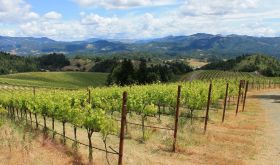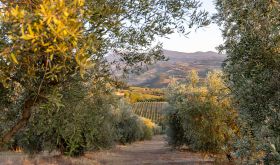
Unlike their counterparts in Germany (hem, hem; see our many articles on the Mosel bridge issue), Australian government officials do actually mind how they are seen outside their own country. So, if you would like to register your concern about this threatened development, it would not be a waste of time for you to send an email to the the Honourable Paul Holloway, Minister for Urban Development and Planning, at [email protected]. Alternatively, you can email [email protected] to register your support for the fight against the proposed development that is currently being mounted by the Vale's wine producers, grape growers and tourism operators. I suggest you put 'Protect McLaren Vale!' in the subject line.
McLaren Vale Grape, Wine and Tourism Chairman and local grape-grower Dudley Brown explains more about the potential of the land the South Australian government would like to sell off: 'Two years ago we commissioned three geologists (all senior current and former state government geologists) to map the region and discovered the area of the proposed new site has a very unique formation which is over 650 million years old. We are learning more all the time about the effect of terroir and we know from the few other places similar formations occur that it has the ability to produce amazing wine. This geology appears nowhere else in the region and is possibly one of the greatest undeveloped vineyard sites in the world. This development would rob us of that possibility forever. The other two are Seppeltsfield / Greenock area in Barossa and Polish Hill in Clare, both lack the maritime influence this site possesses.
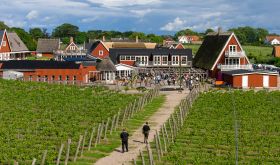
With over 70 cellar doors, multiple award-winning restaurants and a thriving boutique accommodation industry, McLaren Vale is one of South Australia's most valuable tourism assets. It is also one of the world's wine regions closest to a large city, making it relatively vulnerable to developers.
The region has expanded enormously over the last 20 years but the planning ordinances that are currently in place date from a very different era. Those most closely responsible for the nearly Aus$1 billion worth of revenue generated by wine, gastronomy and tourism in McLaren Vale (equivalent to 9.8% of the national wine economy by value) would like to see the region protected by the sort of planning controls that have so successfully retained Napa Valley's bucolic landscape, but since the largest landowner is the South Australian government, which has found selling off tracts of the Vale an extemely useful revenue generator, this is proving much more difficult than most wine lovers would hope.