The Jancis Robinson Story | Mission Blind Tasting | wine writing competition | 🎁 20% off annual memberships

The spirit of port

• 2 min read
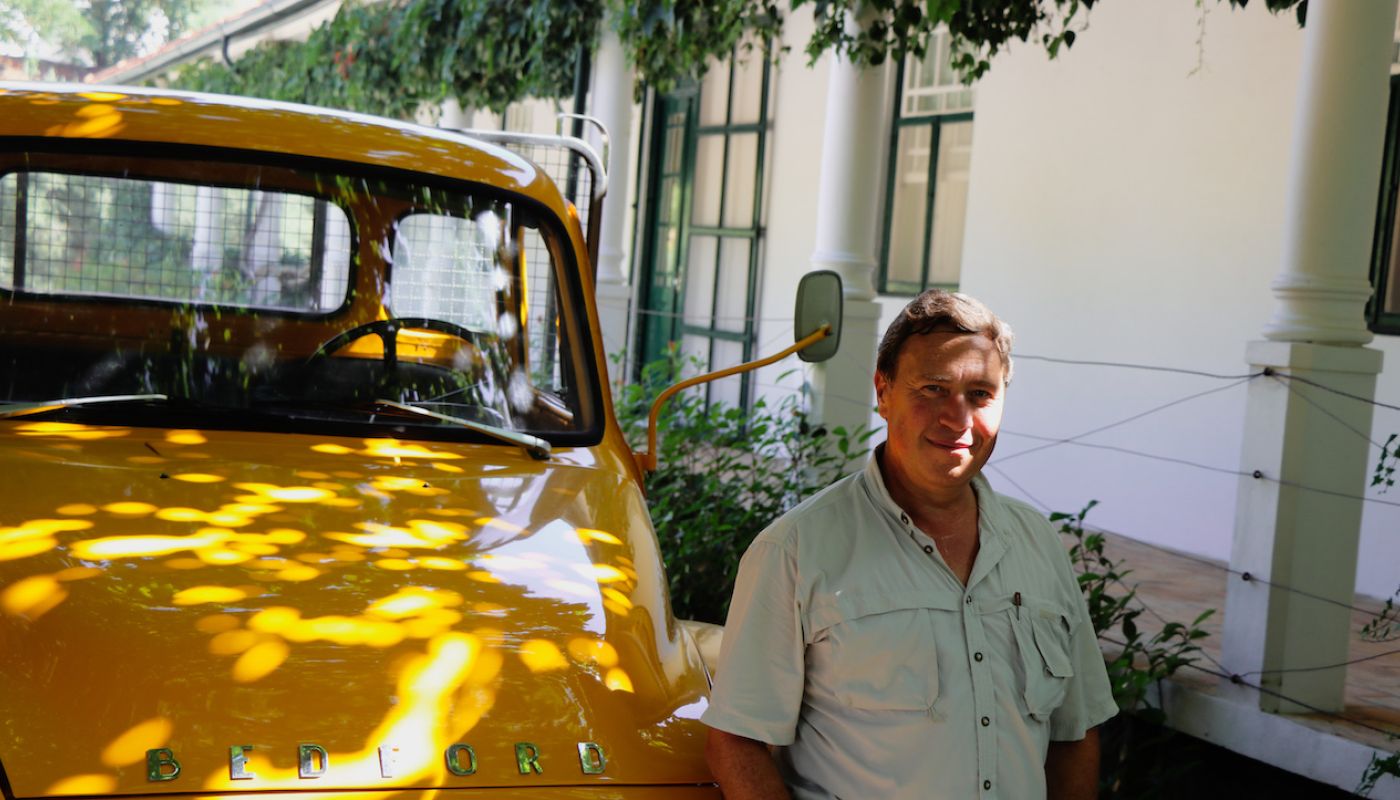
David Guimaraens of The Fladgate Partnership

David Guimaraens of The Fladgate Partnership (see our notes on his 2018s recently added to our 2018 port article), like Dirk Niepoort, Antonio Agrellos and João Nicolau de Almeida, is fascinated by the intricacies of the fortifying spirit used in port production. This is his answer to a question about the extent to which it influences how port, especially vintage port, tastes.

Thank you for referring to me on this wonderful topic of fortifying spirit for port. In fact, although this year has been very difficult in so many aspects of our lives and our work, it has been a great year for spirit, and I am delighted with its quality.

The wine spirit used to fortify port is naturally a very important component, making up 20% of every bottle, and the history of its origins and quality over the past couple of centuries is very interesting, but also very varied.

The important aspect to consider is that the spirit that is used should not interfere with the character of our ports, allowing the grapes to express the terroir where they originate. However, the quality of the spirit will inevitably affect every port that is made. Wine spirit, being the distillation of made wine, will reflect the quality of the wine distilled, and, as a result, we see variations in quality of spirit from one year to another, linked both to the quality of the year and to the global supply of wine in the market.

When I look back to vintage ports from the past, I see in them significant differences in the quality of spirits used. In the 1950s, harder and more aggressive spirits were used. The 1960s was a very good period for the quality of spirit, but the mid 1970s through to 1991 was a very poor period regarding the quality of the spirit used, reflecting directly on the vintage ports produced. After 1991 there was a significant improvement in the quality of spirit used, and from 2000 onwards we have experienced a very exciting level of quality for the finest ports produced.

There is no doubt that the time from the Portuguese revolution in 1974 until the liberalisation in 1991 (when port shippers were no longer required to buy their spirit from the Casa do Douro) was a complicated period for the quality of spirit. The supply from the Casa do Douro resulted in batches of 5 million litres of spirit being made whose quality was, at best, average. As a result of the liberalisation, as a winemaker I was able to work directly with the distillers and produce very clean and high-quality spirits, which do not interfere with the quality and character of our grapes. Today, as a result, young vintage ports express their fruit and complexity so much more, and they also age so much better. This is particularly important in vintage ports between 10 and 20 years old when they lose their youthful berry fruit but are still developing their bottle-maturation complexity.

I am completely certain that vintage ports since 2000 are much more enjoyable at all phases of their life than in the past. A young vintage port (410 years) is especially attractive for its richness of fruit, a vintage port between 1020 years shows better its bottle maturity while still carrying plenty of fruit, and from 20 years onwards, bottle maturity becomes the main complexing factor. There is also no reason why the spirits used today would reduce the ageing potential of vintage port.

During the time I spent in Australia between 1985 and 1990, I discovered this magical world of fortifying spirit. My thesis at university in Australia was on fortifying spirit, with precious help from James Godfrey at Seppelt (famous for his fortification expertise). The Australians really understood their spirits. I was very fortunate to have returned home to Portugal in 1990, with the spirit monopoly ending in 1991. It has been my passion ever since.

Choose your plan
25th

For the dad who loves wine

Start your membership this Father’s Day with 20% off a full year. Expert reviews, honest writing, no guesswork. Or, gift a membership and save 20%.

Enter code DAD20 at checkout. Offer ends 22 June.

Member
$135
/year
Save over 15% annually
Ideal for wine enthusiasts
  • Access 295,558 wine reviews & 16,101 articles
  • Access The Oxford Companion to Wine & The World Atlas of Wine
  • Access askJancis, our AI wine assistant
Inner Circle
$249
/year
 
Ideal for collectors

Everything in “Member”, plus:

  • Early access to the latest wine reviews, 48 hours in advance
  • Early access to the latest articles, 48 hours in advance
Professional
$299
/year
For individual wine professionals
  • Access 295,558 wine reviews & 16,101 articles
  • Access The Oxford Companion to Wine & The World Atlas of Wine
  • Access askJancis, our AI wine assistant
  • Early access to the latest wine reviews & articles, 48 hours in advance
  • Commercial use of up to 25 wine reviews & scores for marketing
Business
$399
/year
For companies in the wine trade

Everything in “Professional”, plus:

  • Commercial use of up to 250 wine reviews & scores for marketing
  • Access to submit wines for review
  • Offer memberships to your employees and manage them from a single place
  • API access available for an additional fee
Pay with
Visa logo Mastercard logo American Express logo Logo for more payment options
Join our newsletter

Get the latest from Jancis and her team of leading wine experts.

By subscribing you agree with our Privacy Policy and provide consent to receive updates from our company.

More Free for all

Mont Ventoux seen from Les Deux Cols at dawn
Free for all It’s not all turbo-charged Grenache down south. A version of this article is published by the Financial Times. See also...
WWC26 announcement graphic
Free for all 18 June 2026 Prizes announced! Académie du Vin Library, the sponsor of the 2026 wine writing competition, has just announced...
Institute of Masters of Wine logo
Free for all Here are the questions posed to those striving for those coveted two letters, among them our very own Sam Cole-Johnson...
Wild menu - yellow background
Free for all Carefully cultivated wildness in the Home Counties. And an unmissable wine list. Farm to fish to fork to frying pan...

More from JancisRobinson.com

Flowers in the Meinklang vineyard
Wines of the week A magical sparkling wine from Austria, from €9, £15.50, $16.95. It is, some say, the time when magic is strongest...
Dalla Valle vineyard
Tasting articles A banner vintage. Above, Dalla Valle Vineyards in Oakville produced two of Sam’s highlights of this vintage (image courtesy of...
La Réméjeanne vineyard
Tasting articles A taster of the quality potential in wines grown in the southern Rhône’s ‘north-west corridor’. Above, one of Domaine La...
Hugo, Rui, Francisco and Ricardo of Cas’amaro
Tasting articles A tour of the southern half of this Portuguese wine region. See part 1 for producers and wines from the...
Ch Grand-Puy-Lacoste
Don't quote me Nick Martin reflects as another en primeur campaign winds up. Château Grand-Puy-Lacoste (pictured above) bundled a visit to the property...
A castle in the Espera vineyards
Tasting articles A tour of this underappreciated and sometimes misrepresented Portuguese wine region. Today, we cover the northern half – Encostas d’Aire...
Azenhas do Mar, Portugal
Inside information The wines of this Portuguese region are emerging from the shadows of their history. Above, Azenhas do Mar in Colares...
Jota Tanaka at Gotemba distillery
Drinks not wine An exploration of the transparency of Japanese whisky – and how that sensibility is influencing whisky-making back in Scotland. Above...
Wine inspiration delivered directly to your inbox, weekly
Our weekly newsletter is free for all
By subscribing you're confirming that you agree with our Terms and Conditions.