For the last 10 years I have been intimately involved with updating The World Atlas of Wine, a picture-book classic of wine literature that has been a much loved and constantly consulted standard in my own library since Hugh Johnson prepared the first edition back in 1971. One of the double-page spreads I have referred to most comes at the very beginning, a map of the world showing two neat bands around the earth, one in each hemisphere, indicating the countries where wine is produced.
But the wine map of the world has changed more rapidly in the last decade than ever before in the history of wine. One major factor in this fluidity is climate change. Countries that only recently we thought of as having summers definitively too cool to ripen grapes now have vineyards planted by a mixture of brave hopefuls and pioneer vintners who have already proved the validity of their regions' claim for a place on the world wine map. Acclaimed German vintner, Klaus Peter Keller of the Rheinhessen, recently planted a Riesling vineyard in Norway, for instance. Who would have believed 20 years ago that Scandinavia, and now even Poland, would become a wine producer?
Other unlikely northern European countries are also establishing themselves as serious wine producers. In Britain we had the moderating influence of the Gulf Stream and the knowledge that England had been quite a substantial wine producer in the Middle Ages to sustain the renaissance of English viticulture from the mid 20th century, but more recently vineyards have been planted across the North Sea in Belgium and the Netherlands. I had my first intimation that Belgian wine was not a joke when given Clos d'Opleeuw Chardonnay 2001, grown west of Maastricht, blind and, along with a fellow Master of Wine, took it for a Puligny-Montrachet.
But this is just one wine, grown with the tenderest of loving care in a clos, a walled plot of land, protected from the vicissitudes of nature. Much more of a shock, and more generally impressive, was a selection of 16 Dutch wines brought to me recently by a Dutch film crew. I had the most modest of hopes for them but the more I tasted the more surprised and delighted I was (see My most surprising tasting ever). A line-up of reds based on the distinctly superior Regent, which contains some non-vinifera genes and is usefully disease resistant in a climate as damp as Holland's, was really very convincing. The wines, particularly those of Colonjes and Gelders Laren's excitingly packaged Kus van Thérèse bottling, tasted fresh, fruity, not unlike a well-made cool-climate Cabernet Franc.
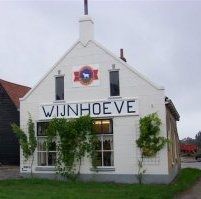
And the vinifera-based whites were if anything even better. Apostelhoeve's oaked 2007 Pinot Gris was just as good as many a serious Alsace Pinot Gris with some bottle age on it and their Riesling 2008 really did taste like Riesling, while De Kleine Schorre's Schouwen-Druiveland's renditions of Pinot Blanc were exemplary – rather better than most Alsace examples. Bravo, the Dutch!
Admittedly this was a carefully handpicked selection of the best Dutch wines, but they struck me as superior to most English still wines to have come my way so far, even those that have won prizes. But I am thrilled to see that the chalky downs of England, so similar in soil structure to much of the Champagne region, can now give 'proper' champagne a run for its money, made to almost exactly the same varietal recipe and using the same techniques. Blind comparative tastings are always producing the right result for the Brits and the wrong one for the Champenois (who are still not moving wholesale to England despite rumours to that effect).
Similarly, the boundaries of Canadian viticulture are edging northwards, as they have been across the Pacific in Japan, where there is now a considerable wine industry on the northernmost island of Hokkaido. And in China, not just at the northern limits of viticulture, the quest continues for the perfect spot for the vine. Initially the focus of wine-producer attention was in Shandong province on the east coast, and indeed this is where the golden brand Château Lafite has chosen to establish its new joint venture. But there are still more than 3.6 million square miles for the vine to explore in China and some of the most recent plantings by ambitious producers such as Pernod Ricard, the promising private enterprise Silver Heights and Grace Vineyards, originally established in Shanxi province to the immediate east, are in the Helan Mountain region of Ningxia province. First signs are promising but there are doubtless others exploring possible new wine regions in other parts of China, including in the Muslim far west around the troubled city of Urumqi.
Climate change may well force extensive redrawing of the wine map in established wine-producing countries. Australian vine growers are already showing signs of abandoning their hottest regions and migrating upwards (see, for example, Queensland's Granite Belt) and southwards (see smug Tasmanians). Some of the more prescient vine growers all over the world are quietly acquiring land just that little bit cooler than the vineyards they already own. Clearly this inspired much of the planting in the chillier reaches of the Sonoma Coast appellation in California, and is presumably one of the reasons there is currently so much investment in the far south of Chile and Argentina, but I'm thinking, for example, of more particular instances such as Torres in north-east Spain and Prager in Austria's Wachau. Some of these new acquisitions may not (yet?) be in officially delimited wine regions but still their new owners think the investment is wise.
Then there are the brand new spots on the wine map that are much closer to, rather than further from, the equator than we would ever have imagined possible 20 years ago. Thanks to often extreme ingenuity, and general advances in tropical viticultural techniques, there are now thriving wine industries in the far north of Brazil, just eight degrees south of the equator in the Vale do São Francisco, as well as in unlikely places all over Asia such as in Thailand, Vietnam and, especially, India as producers experiment with 'new latitude wines'.
I wonder who will be the first to plant vines at the North or South Pole?