
5 October 2007 This is a longer version of an article also published in the Financial Times.
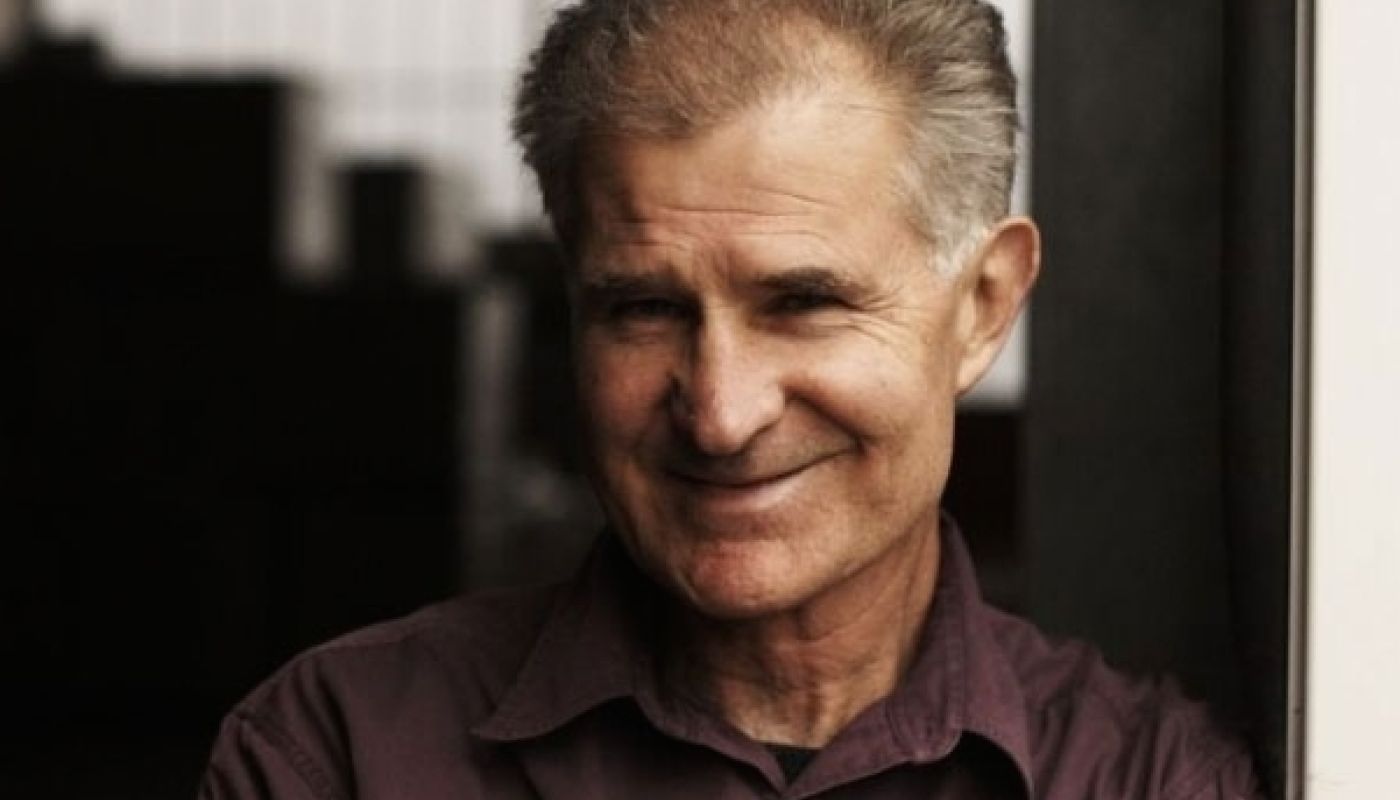
Last Thursday night the first ever Len Evans Award for leadership in the Australian wine industry was given to David Hohnen, a man who is as quiet as the late Len Evans was noisy. Hohnen only met Evans twice – a sure sign that he operates well outside the bloke-ish mainstream of the Australian wine mafia. Indeed he lives on the very western edge of the Australian land mass, four hours’ flight from Sydney and a journey of at least ten hours from the wine region that he put on the world map.
Outside Australia David Hohnen is probably best known for having dreamt up Cloudy Bay and its much-loved Sauvignon Blanc, the essence of Marlborough, the northern tip of New Zealand’s South Island that in the last 20 years has been transformed from sheep to wine country. Inspired by the quality of the Sauvignons brought by some New Zealand visitors to his Cape Mentelle winery in Margaret River, he decided to go and see for himself. In 1984 he tasted lots of wine and noticed that all the best Sauvignons came from Marlborough. He met Kevin Judd, who has run Cloudy Bay ever since (and who is even more taciturn than Hohnen – they presumably communicate in grunts) and the rest is history. [Judd now has his own label, Greywacke.] The moody label with its successive ridges of grey mountains was inspired by the view out of plane window as he flew in to Blenheim.
But Hohnen is very much more than a marketeer. Very early in his career he won Australia’s famous Jimmy Watson Trophy for best young red not once but two years in succession for his 1982 and 1983 Cabernets. His father, a mining engineer, had travelled extensively with the family (second son David was born in New Guinea in 1949) but settled in Perth, Western Australia. A stint in New Caledonia had exposed the family to French culture and with it wine. Back in Perth, Hohnen Senior’s attention was caught by wines that a doctor neighbour of his, Tom Cullity, would bring home from a vineyard called Vasse Felix he had planted in 1967 in virgin wine country three hours south of Perth near the tiny settlement of Margaret River. By 1970 the Hohnens became the third family to plant vines in this now world-famous wine region, after another doctor, Bill Pannell, at Moss Wood. They called their outfit Cape Mentelle after a nearby spit of land well known to Margaret River’s army of surfers, many of whom have worked for the Hohnens.
David needed some training but it had to be in English. He was not impressed by the parochial nature of Australia’s only wine school at the time, Roseworthy (which has since evolved into a mecca for wine students from all over the globe), and applied to the two possible sources of wine education in California. Only Fresno replied. He soon realised that there were general and core subjects. 'I left out all the general ones. Didn’t want American history, culture and basket-weaving. Essentially I didn’t graduate, but I did all the winemaking bits pretty well and cleaned it all up in two years.'
His brother Mark preceded him at the winery but after a session planting the Taltarni vineyard in the wilds of Victoria, David was back in time for the family’s first commercial vintage in 1976. Cabernet Sauvignon grapes were all the rage then. The entire wine world was in the grip of rampant Francophilia and the Hohnens had to battle local prejudice to plant Shiraz at all. One of the things Hohnen is most proud of is Cape Mentelle’s having demonstrated that Margaret River can produce wines other than world-class Cabernet. 'Shiraz was regarded as rather working class then,' he snorted, 'so we had to sell it as Hermitage at first.' They also planted one of the first non-California Zinfandels to hit the international marketplace, a super-voluptuous wine that has forged its own wayward path.
It is far from the laconic Hohnen style to blow his own trumpet. When I saw him in London last month he was still a bit bemused by the forthcoming award but he did allow himself some third person observations: 'The more I get around the more I see the leadership that brand [Cape Mentelle] has had for Margaret River. Leeuwin, Moss Wood, Cullen – they’ve all made some great wines. But Cape Mentelle made sure Shiraz had a foothold. Then the two Jimmy Watsons gave Margaret River credibility.
'And those very early blends were important too. Cape Mentelle was the first to produce a Semillon/Sauvignon which established a whole white wine category that’s now the second strongest in Australia after New Zealand Sauvignon Blanc. And Cape Mentelle was the first to realise we were bouncing on the varietal ceiling with 100% Cabs. By the early 1990s Cab was perceived as hard, a connoisseurs’ wine. So it had to be a Cab/Merlot to ensure sales growth. Cape Mentelle was the first to popularise the blend.'
I would not have immediately guessed that this inaugural award would have gone to someone as low key as David Hohnen. He has never judged at Australia’s all-important wine shows, never written or pontificated about wine. You would call him the opposite of a team player were it not for the fact that he is famous for the loyalty of the teams he built up at both Cape Mentelle and Cloudy Bay. But when I consider what he has managed to achieve in terms of winemaking, marketing and selling his wines all over the world, I realise just how clever the judges of this award, initiated by Australian Gourmet Traveller Wine magazine, have been.
A 1990 masterstroke was selling both Cloudy Bay and Cape Mentelle to the benevolent 'Uncle Jo', Joseph Henriot, who then owned Veuve Clicquot champagne and allowed Hohnen to carry on doing what he did best but with much more money. Less welcome was the consequence of LVMH’s takeover of Clicquot, which precipitated Hohnen’s departure from both Cape Mentelle and Cloudy Bay in 2003 to set up his own family wine business McHohnen Henry in cahoots with his brother in law.
McHenry Hohnen’s winemaker is David’s daughter Freya, very much a determined chip off the old block and not one who immediately relished the idea of devoting her life to something as frivolous as wine. Her chief cited interests are permaculture (which led to her training as an oenologist, much to her father’s relief) and Buddhism. 'It was only when Freya committed that we got things rolling. I had to create a bit of a vacuum so I pissed off and bought a farm. She still frets, still wants to tread very lightly on the earth. But now she sees that the wine business can be part of something bigger. She’s a great winemaker and is really involved with part of the farming. We don’t claim to be organic but we call it grandpa farming – just like two generations ago without the DDT.'
David Hohnen’s own home farm is an idyllic – for once the word is appropriate – 300 acres of Margaret River woodland shared with his vines and Wiltshire sheep, his wife’s horses and such wildlife as he chooses to spare from his home-made bullets.
There is really only one authenticating fault in the Hohnen Persian carpet, a subject he raised himself in London recently. 'I suppose we’ve got to mention brett,' he volunteered wearily, a reluctant reference to the nasty spoilage yeast that somehow infiltrated the Cape Mentelle winery in the 1990s infecting particularly the 1998s and 1999s with an offputtingly horsey smell. 'We were assured that if you didn’t have it in a wine at the time of bottling then sulphur and filtration would stop it developing in bottle. Wrong, wrong, wrong,' he now says grimly.
Putting that trial on one side, one could indeed sum up his career path as Right, right, right.













