Volcanic Wine Awards | 25th anniversary events | The Jancis Robinson Story

Why shipping temperatures matter

Monday 17 December 2012 • 3 min read
Image

Singapore has been in the wine news recently with the acquisition of a major stake in Robert Parker's publishing empire having been acquired by investors there (see this FT article last weekend), and much online toing and froing about the balance of power between Parker's own base in Maryland and his associates in Singapore, including Lisa Perrotti-Brown MW, newly appointed editor-in-chief. Below is a cautionary tale of the wine trade there.

I first met YiXin Ong of Kot Selections, a Singapore wine importer, when he was a student at Oxford. He had clearly got the wine bug and introduced me to wine producer Eric Texier. He wrote to me recently explaining, 'I finally moved into the trade last year (Oxford, civil service, management consulting, investment banking, wine importing – common route, no doubt)'. It has not been all plain sailing.

Earlier this year I shipped a full container of wines (Huet, Amirault from the Loire, de Sousa and Laherte Frères in Champagne, etc) from France, having specified reefer truck pick-up and switched-on reefer container.

To my horror, the arrival notice showed that the wines had been shipped in a dry (ie non-refrigerated) container. When we opened up the container in Singapore, a full 27 days after it had been 'stuffed', measured temperatures were between 32 and 35 °C. There were no popped corks or visible signs of seepage in the small number of cases we opened up, and the insurer is now claiming that they '[can]not see any proof for a total loss or even a damage to the goods insured'.

We've consistently taken every care to ensure that our wines arrive in the best possible shape (eg unstuffing the container ourselves), and it's heartbreaking to see someone else's labour treated thus. So I thought it might be worthwhile reminding consumers that they should care about how their importers, distributors and retailers treat the wines en route.

When I approached Kermit Lynch for advice after a container of wine had been shipped without refrigeration (despite our clear instructions), he correctly forecast trouble with the insurance company. Half a year later, we've just reached a settlement where we are effectively buying the wines back in order to protect our winegrowers' and our reputations. While some of the bottles we've tasted were seemingly fine, others bear the characteristic scars of heat damage – advanced colours, cooked odours and flat, attenuated flavours. It is of course impossible to tell ex ante if any individual bottle is damaged, and no honest, conscientious wine merchant would want to see these wines sold to an unsuspecting buyer.

Mishandling of wine is endemic and unacknowledged. In our case, even though the wines had been picked up in refrigerated trucks, they were loaded onto a dry (ie un-refrigerated) container. That nobody thought this odd speaks volumes – the status quo is to ship wines without any sort of temperature control, even to sunny, tropical Singapore. The prevailing attitude seems to be: if end consumers can't tell the difference, why should the middlemen care? It is shocking that to save a few pennies per bottle, and sometimes out of sloppiness, the middlemen run the unnecessary risk that the wine will be damaged en route.

Acknowledging the problem is the first step to solving it. We've seen that with cork taint and, to a lesser extent, wine forgery. I'd like to see winegrowers insist that their wines be shipped under climate-controlled conditions. I’d like to see middlemen make the effort to ship and store wines properly, and consumers and wine writers complain loudly when they come across a heat-maimed (or worse, murdered) wine. Otherwise we'll always wonder why the wines tasted better at the vineyard.

In his book Adventures on the Wine Route, Kermit Lynch famously wrote: ‘The difference between a wine shipped at cellar temperature and one shipped in a standard container is not subtle. One is alive, the other cooked.’

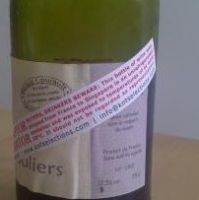
We plan to sell the wines at half the listed price and have plastered a warning label over the front label of every single affected bottle: ‘CAVEAT EMPTOR, CAVEAT BIBITOR – BUYERS, DRINKERS BEWARE: This bottle was shipped from France to Singapore in an unrefrigerated container and was exposed to temperatures of at least 30 °C. It should not be regarded as representative.’

heat_damage_strip_label

Choose your plan
Member
$135
/year
Save over 15% annually
Ideal for wine enthusiasts
  • Access 289,183 wine reviews & 15,898 articles
  • Access The Oxford Companion to Wine & The World Atlas of Wine
Inner Circle
$249
/year
 
Ideal for collectors
  • Access 289,183 wine reviews & 15,898 articles
  • Access The Oxford Companion to Wine & The World Atlas of Wine
  • Early access to the latest wine reviews & articles, 48 hours in advance
Professional
$299
/year
For individual wine professionals
  • Access 289,183 wine reviews & 15,898 articles
  • Access The Oxford Companion to Wine & The World Atlas of Wine
  • Early access to the latest wine reviews & articles, 48 hours in advance
  • Commercial use of up to 25 wine reviews & scores for marketing
Business
$399
/year
For companies in the wine trade
  • Access 289,183 wine reviews & 15,898 articles
  • Access The Oxford Companion to Wine & The World Atlas of Wine
  • Early access to the latest wine reviews & articles, 48 hours in advance
  • Commercial use of up to 250 wine reviews & scores for marketing
Pay with
Visa logo Mastercard logo American Express logo Logo for more payment options
Join our newsletter

Get the latest from Jancis and her team of leading wine experts.

By subscribing you agree with our Privacy Policy and provide consent to receive updates from our company.

More Free for all

Clisson, copyright Emeline Boileau
Free for all Jancis revels in the glorious 2025 Loire vintage, and her tasting of dry whites identifies some excellent 2024s, too. A...
Maison Mirabeau and Wine News in 5 logo
Free for all Also, Concha y Toro set to purchase Provence estate Mirabeau (shown above); an update on Facebook’s recent recommendation bans and...
White wine grapes from Shutterstock
Free for all Favourites among the quirkier vine varieties. A shorter version of this article, with fewer recommendations, is published by the Financial...
Kim Chalmers
Free for all Kim Chalmers of Chalmers Wine and Chalmers Nursery in Victoria is no stranger to JancisRobinson.com. She was an important influence...

More from JancisRobinson.com

Diners in Hawksmoor restaurant, London, in the daytime
Nick on restaurants Nick reports on a global dining trend. Above, diners at Hawksmoor in London. My frequent conversations with our restaurateur son...
Famille Lieubeau Muscadet vineyards in winter
Tasting articles From crisp, mineral Muscadet to racy Chardonnay, Chenin and Sauvignon Blanc, plus some Grolleau Gris and reds from Gamay and...
Greywacke's Clouston Vineyard, in Wairau Valley, New Zealand
Wines of the week Exemplary New Zealand Sauvignon Blanc from the Wairau Valley, pictured above. From $17.99, £23.94. It was not my intent to...
Sam Cole-Johnson blind tasting at her table
Mission Blind Tasting Learn to taste – and think – like a wine pro. Whether you’re studying for a wine exam or just...
Vignoble Roc’h-Mer aerial view
Inside information A continuation of Chris Howard’s two-part exploration of the newly revived wine regions of north-west France. Above, an aerial view...
The Chapelle at Saint Jacques d'Albas in France's Pays d'Oc
Tasting articles From light, delicate Prosecco to cult wine from Bordeaux and red Zinfandel, there’s something for everyone in these 25 wines...
Three Kings parade in Seville 6 Jan 2026
Don't quote me January is always a heavy month for professional wine tastings. This year Jancis fortified herself beforehand. 2026 got off to...
The Sportsman at sunset
Nick on restaurants Nick denies an accusation frequently levelled at restaurant critics. And revisits an old favourite. Those of us who write about...
Wine inspiration delivered directly to your inbox, weekly
Our weekly newsletter is free for all
By subscribing you're confirming that you agree with our Terms and Conditions.