Even grape varieties go in and out of fashion. Cabernet Sauvignon and Chardonnay, having been the height of fashion 20 years ago, are now decidedly out. But – at last – Grenache’s time seems to have come. I would argue that many of those who make wine in its most famous stronghold, the southern Rhône, could learn a thing or two from those blazing a trail in Spain, Australia and South Africa for a new style of this red wine grape.
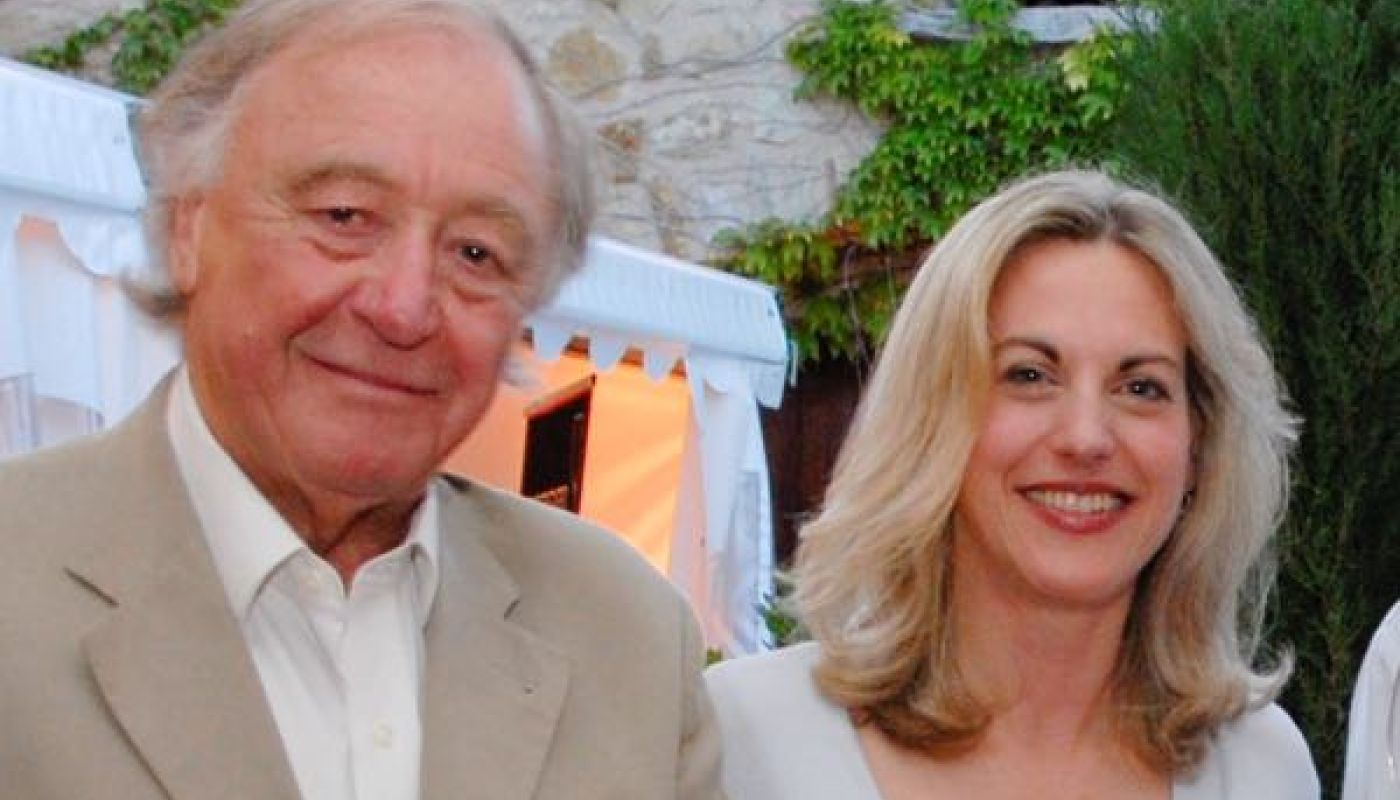
Outsiders have played an important part in the (slow) rehabilitation of Grenache in the southern Rhône. The Grenache Symposium organised there over an exceptionally hot weekend in 2010 that arguably lit the current flame was the brainchild of Nicole Sierra-Rolet, wife of the head of the London Stock Exchange, and Scot Walter McKinlay (pictured here at the symposium), owners respectively of local wine domaines Chêne Bleu and Mourchon.
As Garnacha, Grenache has long been one of Spain’s most planted grape varieties and for years was regarded by Spanish wine producers as distinctly inferior to the popular Tempranillo that is planted all over Iberia and produces more structured wines. But recently no fewer than three organisations designed to promote Garnacha have sprung up in Spain, as Ferran Centelles pointed out in Garnacha – now the height of fashion. They were presumably inspired by the delightfully underpriced concentrated reds that have long been made from old Garnacha vines in lowly Spanish wine regions such as Calatayud, Campo de Borja, Cariñena and Utiel-Requena – as well as by the important role played by Garnacha vines in various stratospherically priced Priorats.
But in Spain an exciting new style of wines is being made from old Garnacha vines on granite and schist in the Gredos mountains south and west of Madrid. Dani Landi, now on his own after producing some seminal wines under the Jiménez-Landi label, is one of the more prominent and established exponents of these excitingly vibrant Gredos reds that seem to have nothing whatever in common with the big, concentrated, potent Rhône reds of Châteauneuf-du-Pape, the most famous Grenache-based wine of all. But Dani Landi is far from a loner and there is now a wide selection of such wines to choose from. The only problem for us in identifying them is that they don’t necessarily share an appellation. Jiménez-Landi’s wines qualify for the Méntrida denomination whereas those of Bernabeleva and Marañones are sold as Vinos de Madrid.
The one Spanish region for long dominated by Garnacha was Navarra in the far north, where it was mainly allowed to produce big crops of slightly insipid rosé. But there has been a re-evaluation of Garnacha even here with the admired producer of Artadi rioja making very serious wine from nearly centenarian Garnacha vines in Navarra under the Santa Cruz de Artazu label, new-wave producers such as Domaines Lupier making very expressive Garnacha cooled by Atlantic influence. In Rioja, an increasing number of producers are taking Garnacha more seriously.
What all these wines have in common is unusually old vines. Indeed a very significant proportion of the world’s older vines are Garnacha or Grenache. In contrast to Cabernet Sauvignon and Sauvignon Blanc, for example, Garnacha is unusually resistant to the vine trunk diseases such as eutypa dieback and esca that are killing so many vines around the world that international conferences are regularly – and so far fruitlessly – held in an effort to come up with effective ways of fighting them.
To make interesting wine, Garnacha/Grenache has to get pretty ripe and is anyway fairly late-ripening, so is planted only in relatively warm climates, helped by its ability to thrive without much water. This means that it is planted all round the Mediterranean and in the world’s warmer wine regions such as inland areas of California and Australia.
For long regarded as a very poor substitute for Shiraz in Australia, Grenache is now increasingly admired here. The variety has a long history in South Australia. Family-owned Yalumba are able to call their wine from ‘820 gnarly old bush vines planted in 1889’ their Tri-Centenary bottling.
As Australia’s Winemaker of the Year (according to the influential Gourmet Traveller magazine) Stephen Pannell, a big fan of Grenache, puts it, ‘Grenache is now much more respected because it’s lighter than Shiraz', adding, in a reference to the super-fashionable red burgundy grape, ‘and we’re making it more like Pinot'. His 2014 McLaren Vale Grenache from 78-year-old vines close to D’Arenberg is much paler and lighter than any Châteauneuf and he is explicit that he is modelling it more on a Sardinian Cannonau (the Sardinian name for Grenache) – bracing, even a little salty, and bone dry – than on any southern Rhône Grenache.
This may be wise in view of the oft-expressed view that, thanks largely to climate change, Châteauneuf-du-Pape in particular has been getting too potent and sweet for comfort. Admired producer Vincent Avril of Clos des Papes reports with pride that he is deliberately trying to return to the alcohol levels of the 1980s and 1990s, pointing out that ‘2003 was the first vintage we hit 15%’.
Australian producers such as Taras and Amber Ochota of Ochota Barrels are injecting freshness into their variable but sometimes stunning McLaren Vale Grenache by leaving the stems in the fermentation vat, so-called whole-bunch fermentation. This practice, also followed by Dani Landi, can make a potentially rich wine taste fresher, even though it tends to decrease both overall acidity and (slightly) alcohol while often adding a bit of density and tannin and therefore potential longevity.
Last November I tasted 160 red Châteauneuf-du-Papes from the uneven, late-maturing 2014 vintage and was provided with an extraordinary amount of background information about each wine. I tried in vain to find a direct correlation between my favourite wines and what proportion of stems had been included in the fermentation vat. This is hardly surprising perhaps when one considers just how extensive and varied is the terrain of the Châteauneuf appellation, not to mention the multiple possible permutations of 18 different grape varieties (albeit Grenache usually dominating the blend) and the many different ways of ageing the wine – in concrete, oak barriques holding about 225 litres of wine and, most traditional, large oak demi-muids with a capacity of about 600 litres. But, for example, of the three 2014 red Châteauneuf-du-Papes from the Barrot family of Fines Roches fame, La Sousto, fermented with the highest proportion (50%) of stems, seemed the most successful to me: rose-scented and fresh.
There does seem room for styles of Châteauneuf other than full-on, super-concentrated red. After all, one of its most admired exponents Château Rayas demonstrated this years ago.
SOME FAVOURITE NEW WAVE GRENACHE/GARNACHA
For what it’s worth, I scored all of these at least 17 out of 20.
A A Badenhorst, Raaigras 2012 Swartland, South Africa
Acústic, Auditori 2009 and 2011 Montsant, Spain
Carlisle, Rossi Ranch 2013 Sonoma Valley, California
Neil Ellis 2010 Piekenierskloof, South Africa
Dani Landi, Las Uvas de la Ira 2013 Méntrida, Spain
Momento 2014 Swartland, South Africa
Domaine de Montcalmès, Grenache 2011 Vin de France
S C Pannell 2014 McLaren Vale, Australia
David Sadie 2013 Swartland, South Africa
Thistledown, Thorny Devil 2014 Barossa Valley, Australia