
‘Where is Brian?’
‘Brian is in the kitchen …’
And so begins a famous French comedy sketch about learning English.
Brian is in the Minervois: a river running through the north-eastern part of Le Causse, equally home to a slightly milder Roquefort-esque blue cheese, Bleu des Causses. Vines, sheep and cheese, in this quite wild corner of the Languedoc – that’s about it. That and some seriously well-priced red wines with a Burgundian twang.
Anne Gros and Jean-Paul Tollot are partners in the Tollot-Gros Minervois domaine and parents of three children. Unmarried, Anne underlined, they each head up separate domaines in their native Burgundy: Domaine Anne Gros in Vosne-Romanée and Domaine Tollot-Beaut in Chorey-lès-Beaune. A member of Vosne-Romanée’s lattice-like Gros clan, Gros has been making wines there since the 1990s, when a sip of her 1999 Richebourg at Vinexpo 2001 first made me swoon. Jean-Paul Tollot works the vines and the winemaking with his two cousins at his family domaine in Chorey-lès-Beaune. His wines are, according to Jasper Morris MW, a fine source of ‘delicious, consumer-friendly wines that are better than just a safe choice from the restaurant list.’

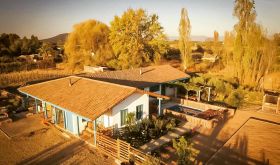
In 2005 Tollot and Gros set out looking for an interesting project south of Burgundy, initially scanning the Rhône, then Provence before finally heading to the Languedoc. A fruitless visit to Aniane, home to Mas de Daumas Gassac and Grange des Pères, brought little joy or enthusiasm before the real-estate agent brought a final dusk-tinted visit out of the bag, to Cazelles in the Minervois.
Twenty years later the Tollot-Gros estate spreads over 21 ha (52 acres) and several lieux-dits in three sectors: the IGP Pays d'Hérault Côtes du Brian, AOC Minervois and AOC Minervois Cazelles (the latter is in the process of being recognised by the INAO). Their first harvest was 2008 with the years prior complicated by a lack of any winery facilities at the domaine and some apparently endless contractual and bureaucratic difficulties. The first year’s work was just weekends and holidays; today there are two full-time workers in place.
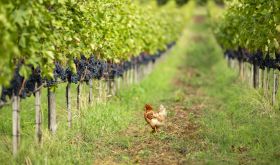
The varieties grown at the domaine run to the Languedoc classics of Syrah, Carignan, Cinsault and Grenache, but also include Cabernet Sauvignon and some Pinot Noir (planted in 2018) and Marselan (a 1961 INRA cross of Cabernet Sauvignon and Grenache) planted in 2015. There is a wealth of aged vines at the domaine, with the Grenache and Carignan for Les Carrétals cuvée dating from 1909 and other parcels straddling the 50–60 years age band.

Gros points out that the climate in Minervois is harsher than that in Burgundy, with a diurnal shift of 35–15 °C (95–59 °F) at harvest. The vines grow at 220 m (722 ft) in elevation, coincidentally exactly the same as Vosne-Romanée. The heat and the wind can be quite violent, she states, and low pHs regularly complicate red winemaking, with her Carignan clocking in at 3.3 and her Syrah at 3.45.
Gros and Tollot initially intended a Bordeaux-type model with blended ‘grand’ and ‘second’ wines from the four varieties already planted on the estate: Grenache, Syrah, Carignan and Cinsault. After some inter-partner debate the difficulties of this plan became apparent, and the initial two-wine project now runs to a total of eight different wines.
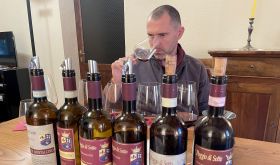
Les Fontanilles, La Ciaude and Les Carrétals come from singular lieux-dits; La 50/50 blends fruit from across the domaine vineyards (and ‘anything that doesn’t quite fit into a single varietal cuvée’). Then there are four varietal wines: Le Clos (Pinot Noir), Les Combettes (Marselan), Grenache 8 and the CinsO featured here.

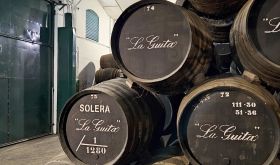
Gros’ stylistic goal has been to move away from the open-knit wines of the Minervois, ‘so full of charm’ but often lacking in gravitas, to create wines with ageworthiness. As they do back home in Burgundy, the grapes are entirely destemmed. Fermented in inert stainless steel, the wines are aged in either stainless steel, a mix of steel and barriques or 100% barriques according to the cuvée, with 30% of their barriques being renewed each year.
La CinsO is made entirely from Languedoc’s ‘forgotten variety’, Cinsault, destemmed, then fermented and aged in stainless steel. Open and approachable, the 2023 offers up classic red fruits, raspberry, flowers and plum, with pitch-perfect freshness. The acidity and refined tannins offer balance to the discreet 14.5% abv. Delicious.

In the UK, London-based independent Lea & Sandeman are selling the wine at a single-bottle price of £22.95, reduced to £20.75 when part of any mixed case, and, at the time of writing, VinatisUK had a few bottles remaining at just under £18. In the US, the wine is imported by North Berkeley Imports and is on its way across the ocean; in the meantime, they have other wines from Gros & Tollot worth exploring.
You can find Cinsault (also spelled Cinsaut) in Chile, South Africa, Lebanon, California … as well as its native France. Find reviews of nearly 200 highly rated varietal Cinsaults from around the world, many made from old vines, in our tasting notes database.