
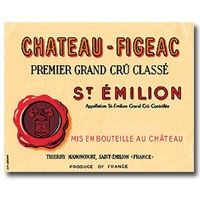
It was difficult to think of a wine estate on the right bank of Bordeaux, with its famous twin appellations of Pomerol and St-Émilion, that had changed as little as Château Figeac had in the 64 years it was run by one owner, Thierry Manoncourt. The great majority of other châteaux on this side of the Gironde have changed ownership and consultants with dizzying frequency, and most of those at Figeac's level have flirted with overt new oak and extreme ripeness levels, often leading to a stylistic yo-yo.
Under Manoncourt, on the other hand, Figeac ploughed a lonely furrow of utter classicism, refusing to bend to short-term fashions. Even though as a trained agronomist he was unusually involved in winemaking as well as running the estate and initiated a wide variety of improvements in vineyard and cellar, the style of the wine remained consistent. It was never flashy. In fact it often failed to shine when served blind in the early primeur tastings, perhaps partly because Figeac is distinguished by the fact that, most unusually, its deep gravels allow Cabernet Sauvignon, which represents about a third of the vines planted, to thrive and ripen fully. (The earlier-ripening Merlot and Cabernet Franc are the usual ingredients in right-bank wines.)
Château Figeac seemed to need a good decade in bottle before really communicating its undoubted charms – and a 60-year retrospective held in Paris in 2007 was one of the most thrilling Bordeaux tastings I can remember. We went right back to Manoncourt's first vintage in situ, 1947, and, while its quality was not up to that of the famous 1947 from Figeac's neighbour Château Cheval Blanc, the 1950, 1955, 1959, 1961, 1964 and 1975 were virtually perfect wines, with many of the younger vintages clearly waiting in the wings to take over the glory. Visitors to Château Figeac itself were routinely treated to some of the oldest wines they were ever served in Bordeaux (thanks to the fact that Manoncourt was his own boss, unencumbered by nagging shareholders), and to the story of how Cheval Blanc owed its prowess to the fact that it had been lucky enough to acquire a prime slice of Figeac from a previous owner.
St-Émilion is unique in Bordeaux for revising its classification very publically every few years. It always rankled with Manoncourt that, while Cheval Blanc and Ausone alone occupied the top ' A' tier, Figeac was relegated, along with about a dozen others, to 'B' rank. We have to give thanks in a way that, although Manoncourt gave every impression of being immortal, he didn't live to see the promotion in 2012 of Châteaux Angélus and Pavie, in some ways the antithesis of Figeac, to A rank. It might have killed him.
As it was, he died just before his glorious 2010 vintage was picked. He is survived by his vivacious widow Marie-France, who for the next year or two continued with the status quo, their son-in-law Comte Eric d'Aramon having been involved with the management of the estate since 1988. But in February last year it was announced that Jean-Valmy Nicolas from the family that owns the nearby Pomerol estate Château La Conseillante had been appointed non-executive director of Figeac. His stated brief was to to set up a new senior management team, to improve relations with the all-important négociants who sell the wines of Bordeaux, and 'to reinforce the means by which the growth's standing may be enhanced and the long-term family management of Figeac ensured'.
A few weeks later the well-oiled Bordeaux gossip machine went into overdrive at the news that d'Aramon and his wife Laure, the eldest of the Manoncourts' four daughters, had been shown the door, to be replaced as managing director by 32-year-old Frédéric Faye, who had joined Figeac 10 years before as vineyard manager. Even more inflammatory was the news, published on 1 April last year, of the appointment of the famously modernising consultant oenologist Michel Rolland. Indeed some commentators were convinced it was an April Fool, so apparently contradictory were the auras of the grand old classicist Manoncourt and Rolland, demonised in the film Mondovino as the king of micro-oxygenation and all manner of interventionist techniques.
Since then the world of wine has been somewhat puzzled by the likely future of the wines of Château Figeac. Were they about to be subjected to the same sort of turbo-charged winemaking recipe that is associated with the Rolland stereotype? Were the Manoncourts going hell for leather for promotion to A rank next time the wines of St-Émilion are reclassified?
I had a chance to get some idea of the answers to these questions just before Easter when Madame Manoncourt, her youngest daughter Hortense Idoine Manoncourt and Frédéric Faye came over to London, bringing 14 vintages of Figeac with them, including the 2013, the first to made in the new Rolland era. Admittedly, Nature supplied some pretty uninspiring ingredients in the 2013 vintage. The wines generally lack concentration and focus, and it has proved virtually impossible to make exuberantly showy wines at even the most exhibitionistic addresses. But it certainly didn't look as though Figeac had turned a dramatic corner with the 2013 vintage and, perhaps more to the point, I learned more about the background to Rolland's appointment, instigated, Madame Manoncourt insisted, by the retirement of their old consultant oenologist, Gilles Pauquet. 'It would have been impossible to hire someone from the left bank', she shuddered.
Faye, a personable young man brought up on a Périgord farm who first qualified as an engineer in Bordeaux, smiled when asked how long he had known Rolland. 'All my life, 33 years', he said. Faye worked the 2008 vintage on Rolland's joint venture in northern Argentina, Yacochuya. He laughed as he insisted that he was well able to countermand Rolland or at least disagree with his advice. 'He has promised not to change the style of Figeac, and after all, we have had the same cellarmaster at Figeac for 32 years!' But, Faye insisted, Rolland is a master blender and that specifically is why he has been drafted in to this historic estate, its nearly 100 acres of vines on a complex mix of gravels, clay and sandy alluvium producing wines of particularly varied qualities and styles – not least because of its almost equal proportions of the three different grape varieties.
Thierry Manoncourt had been the first right-bank proprietor to introduce the concept of a second wine, La Grange Neuve de Figeac, the produce of specific, underperforming plots of vines. But from the 2012 vintage this has been replaced by Petit-Figeac, a second wine that is a blend of the least successful vats each year and giving the much-discussed newcomer something other than Figeac's immutable terroir to get his teeth into.
See my tasting notes on these recent vintages published last Thursday.
SOME ESPECIALLY SUCCESSFUL RECENT FIGEAC VINTAGES
With average pre-tax prices per bottle, as calculated by wine-searcher.com.
2011 £72
2010 £178
2008 £65
2006 £72
2005 £101
2004 £69
2001 £93
2000 £115
1998 £114
And the real bargain is Petit-Figeac 2010, the second wine from a vintage that seems especially successful for this renowned St-Émilion, made from the last grapes to have been overseen by the late Thierry Manoncourt. This so far seems to be available only in France from under €34.
Figeac's future
• 1 分で読めます
This is a longer version of an article also published in the Financial Times.


購読プラン
スタンダード会員
$135
/年間
ワイン愛好家向け
- 297,231件のワインレビュー および 16,155本の記事 読み放題
- The Oxford Companion to Wine および 世界のワイン図鑑 (The World Atlas of Wine)
- askJancisへのアクセス(AIワインアシスタント)


プロフェッショナル
$299
/年間
ワイン業界関係者(個人)向け
- 297,231件のワインレビュー および 16,155本の記事 読み放題
- The Oxford Companion to Wine および 世界のワイン図鑑 (The World Atlas of Wine)
- askJancisへのアクセス(AIワインアシスタント)
- 最新のワイン・レビュー と記事に先行アクセス(一般公開の48時間前より)
- 最大25件のワインレビューおよびスコアを商業利用可能(マーケティング用)
ビジネスプラン
$399
/年間
法人購読
「プロフェッショナル」プランの内容に加えて
- 最大250件のワインレビューおよびスコアを商業利用可能(マーケティング用)
- レビュー依頼用のワインを提出可能
- 従業員向けにメンバーシップを提供し、一元的に管理可能
- APIアクセス(※別途料金)
More 無料で読める記事




More from JancisRobinson.com
テイスティング記事
ペンフォールズの世界では大柄な赤ワインが依然として主流だが、変化の兆しが見えている。写真上はペンフォールズのマギル・エステート。...

テイスティング記事
このアクセスしやすいヴィンテージに関するウォルターのレポートの後編。今回は、カスティリオーネ・ファッレット、モンフォルテ・ダルバ...

テイスティング記事
困難なヴィンテージに関する最終報告。驚くほどフレッシュでアクセスしやすいワインに仕上がっている。本日は、複数の村のワインと、ケラスコ...

現地詳報
メキシコのワイン産業は気候変動への対処法について教訓を与えてくれる、とメキシコを拠点とするジャーナリスト兼ソムリエのカルロス・ボルボア...

Vinomakase
リチャードの新連載「Vinomakase」では、専門家たちがワインと日本料理をどのようにマッチングさせているかを探る。第1回は...

Bite-sized
セント・オールバンズの大聖堂地区にある15世紀のパブで、最新の料理を堪能できる。 フロント・バーは今も安心できるほどパブらしさを保っている...

今週のワイン
フランス中部の赤ワインに見る、渇きを癒すフレッシュさ。 £15.50、$26.95から 。...

書籍レビュー
クラシック・ワイン・ライブラリーへの3つの新刊と、ポルトガル・ワインに関する自費出版ガイド。 以下のレビューのうち3冊は、アカデミー・デュ...