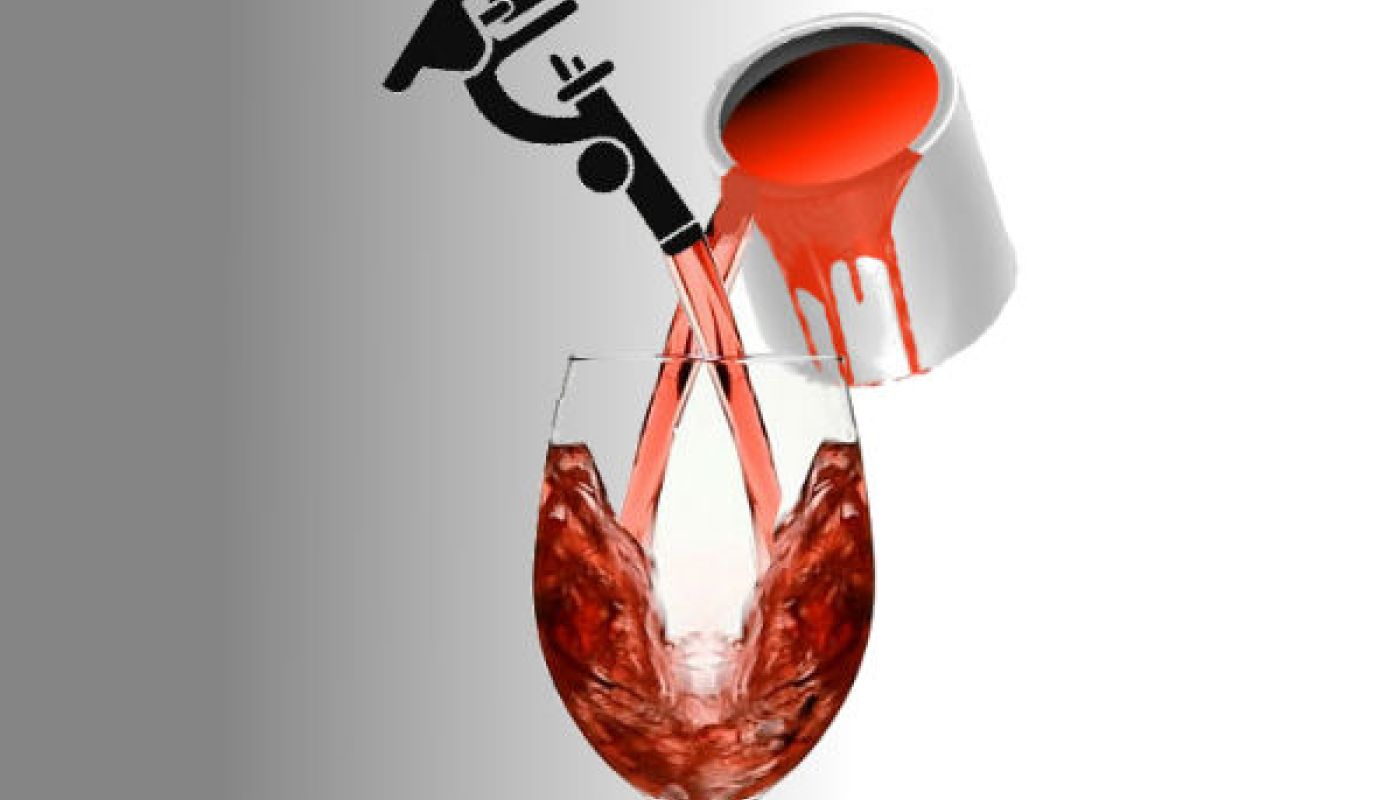
Neither. It is a drink.
Then sat back and started planning which vintages of champagne to serve at my celebratory graduation dinner.
This turned out to be somewhat premature because it took me until 2015 to complete the whole bloody thing, but I did in fact pass that paper – though not, in truth, with such a pithy answer. I do remember my actual first line, however, which was as follows:
If art may be described as a matter of opinion, then science is a matter of fact.
I was rather pleased with that, although the essay went on to conclude that wine was equally reliant on both disciplines, in a typically non-partisan but perhaps rather wishy-washy fashion.
Years later, I can afford to be more opinionated, and it struck me this week that wine is most definitely an art.
Firstly, I will happily concede that science has an important role to play. How magnanimous of me. But it’s true that nobody could dispute that science has massively improved the overall quality of wine over the past hundred years.
Let me count the ways. Sulphur dioxide is perhaps one of the best-known scientific influences on wine. Since Roman times it has been known as a preservative, and today it is an essential (though controversial) ingredient in the vast majority of wines, helping to maintain freshness and prevent browning, such as that which began this paragraph. (Sorry.)
In the 18th century, chemist Jean-Antoine Chaptal advocated adding sugar to must to increase its alcoholic strength – an important advance at the time, though it was subsequently blamed for encouraging over-cropped, dilute grapes producing wine in which alcohol could be easily bolstered.
Fellow Frenchman Louis Pasteur was responsible for several scientific breakthroughs. He not only discovered the principles of fermentation, but made it possible to improve the stability of wine by understanding its microbiology [though not as well as our Julia – JR], as well as researching into the role of tartaric acid and glycerol.
The point is that all the science, all that understanding, and all those matters of fact amount to nothing without all the artistic input, all that feeling, all those matters of opinion which are contributed by us humans.
And I don’t mean the opinions of those of us who write about wine to pass examinations and shoehorn in wonky gags about Victorian sonnets, but by those who make wine.
The particular reason this struck me recently came when listening to Aaron Lee Tasjan for the first time, thanks to a friend’s recommendation. He’s a musician I’ve just discovered that I love, among the many millions in existence. Why did he want to record songs? What drove him to write 'Memphis Rain'?
The answer sounds facile at first, but it actually gets to the heart of the matter. Any artistic endeavour is motivated one way or another by a need for self-expression; to scratch the creative itch.
This applies as much to wine as it does to music or painting or writing Victorian sonnets (or making jokes about Victorian sonnets). We just can’t help it.
Wine is often described as an expression of terroir, and its makers as mere conduits for mother nature, allowing the grapes to tell their own story. But that’s disingenuous at best. Aaron Lee Tasjan doesn’t claim to be channelling the intrinsic notes from his guitar. Making music, like making wine, involves making decisions; matters of opinion.
It is these choices which determine what results in the glass, from what to plant to when to pick to which oak to use. What are these choices if not artistic? Winemakers may use science to inform their actions and underpin their rationale, but the act of making wine requires arbitrary choices that depend on their taste and personality and aesthetic preferences.
Furthermore, great wine has the rare capacity to move the drinker in a way that science cannot. There may be beauty in science, but it surely doesn’t evoke that gut reaction, that instinctual emotional response which characterises how we react to great art – wine included.
Wine was made long before science could explain it. So wine can live without science but not without art, which might sound like natural wine dogma but is meant to reinforce my point that wine is first and foremost an art.
And also a drink.