Few people think of Bulgaria as a treasure trove of rich, ancient archaeology and culture. It's more often all about cheap sunshine or skiing, or a lingering fondness for cheerful Cabernet Sauvignon from the 1990s, but on a recent trip to explore the wines of north-east Bulgaria, I jumped at the chance to explore some of this little-known history.
Bulgaria may be the oldest country in Europe to keep the same name – since 681 AD (through several kingdoms and eras) and it is littered with traces of a fascinating past. One example is the Madara Rider, a UNESCO-listed bas-relief dating from the early eighth century (the time of the First Bulgarian Empire). You must climb dozens of steps to see it and puzzle over how and why it was created in such an inaccessible location, carved 23 m (75 ft) up a sheer cliff side in Madara. It's the only surviving example of its type and depicts a knight on horseback triumphing over a lion – some even claim the knight is holding a glass of wine.

Not far away, the port city of Varna itself (located on this World Atlas of Wine map) may be best known for its fine golden sands (well worth kicking off your shoes for a run through the waves) but a stop at the former girls’ school that houses the city museum is a must. This is home to the oldest and richest gold treasure so far discovered anywhere, from the Varna Necropolis site, which was uncovered in 1972 during site works for a tin factory. Some 6,500 years ago, the people that lived here were rich enough to bury finely worked gold with their dead and as the richest treasures were found in just four of around 300 graves, this also suggested a complex society. It's regarded as one of the world's most significant archaeological finds and yet no one knows what happened to this culture which left no written records.

Varna has much more to offer the curious traveller – from an impressive Roman bath house to churches, museums and an old city centre. It’s worth a stop at one of the country’s best wine bars – Wineground Bottles and Beans – which is all about showcasing modern Bulgarian wine with local food and great coffee.
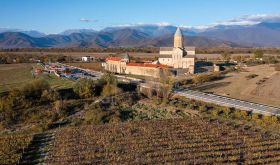
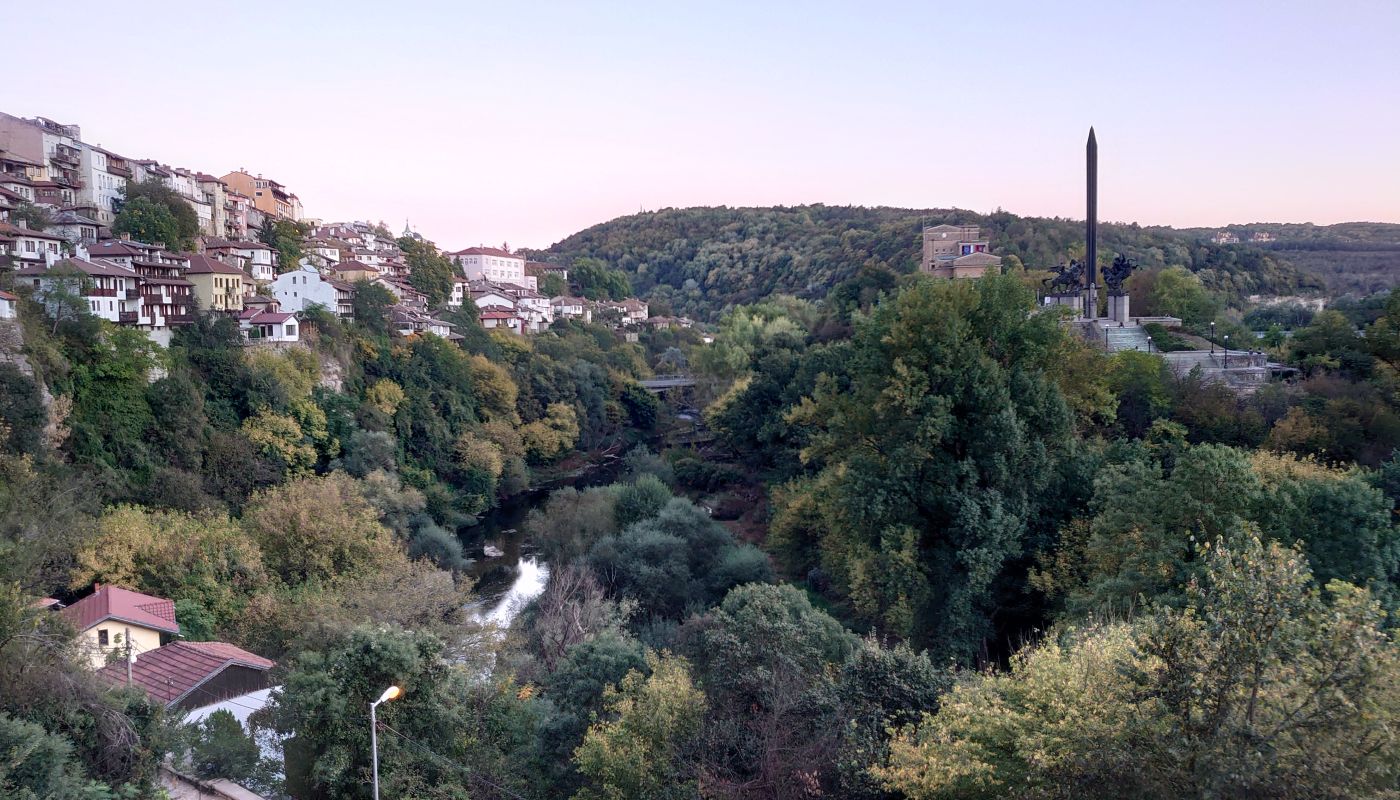
The ancient Bulgarian capital of Veliko Tarnovo (pictured at top) should also be on anyone’s north-eastern itinerary, with its quaint, narrow cobbled streets; the historic Tsarevets fortress; and dramatic river views across the Yantra to the Asenevtsi monument. To explore the diversity of the local wine scene, stop at Vino Veritas wine bar and shop, which was founded by two friends who both have husbands who don’t drink wine, and who love sharing their passion.
No one knows if the ancient Varna culture had wine, but it was wine that brought me to look at developments in the modern wine industry. The north-east corner of the country is often overlooked, with officially just 2,262 ha (5,590 acres) under vine (out of Bulgaria’s total of 28,533 ha/70,507 acres in production by 2022). Though I have tasted wines and met winemakers from the region many times, I hadn’t been there in over 15 years, so I was happy to join a trip organised by the Bulgarian Association of Wine Professionals in honour of International Mavrud Day (though I nearly didn’t make it as London’s Luton airport inconveniently caught fire just before my flight, but a quick dash to Stansted got me there).
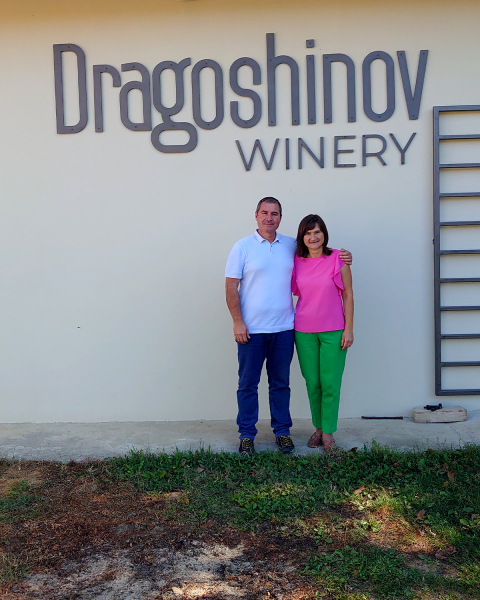
First stop on my itinerary was to a tiny garage project called Dragoshinov Winery in a back garden in the village where owner Daniel’s grandparents had lived. Dragoshinov had worked as a winemaker at several large wineries and wanted to produce wines his own way, buying grapes from growers he visits regularly. The immediate area isn’t a viticultural zone anymore, hit hard by Gorbachev’s uprooting programme in the 1980s. So far, the winery produces a few thousand bottles, including a charming fresh Aligoté from Lyaskovets (a blast from the past for me as I used to buy a quite different wine under this name back in early the 1990s). Daniel is also experimenting with Chardonnay two ways (with acacia and oak) and a floral pale-pink rosé with a small percentage of Bulgarian rose oil (Bulgaria is the world’s biggest producer of rose oil). There was also an intriguing violet- and spice-scented Syrah from a 30-degree slope in the eastern Rhodope Mountains – though this isn’t fruit from the north-east.
Next stop was Yalovo winery, based in a renovated schoolhouse in Yalovo village. The winery was launched in 2013 and winemaker Dimitar Dimov joined originally to help with sparkling wine. (North-east Bulgaria is the only region in the country where whites dominate, making up two-thirds of plantings.) Dimov is passionate about reviving old local varieties and has planted 0.5 ha (1.2 acres) with white grapes Dimiat and Kokorko; the gris Vinenka; and red grapes Gamza (aka Kadarka), Pamid, Rubin, Sifta (aka Papaskarasi), Varnenski Mavrud and Varnenski Gamza, plus some cuttings from his grandfather’s village which haven’t all been identified.
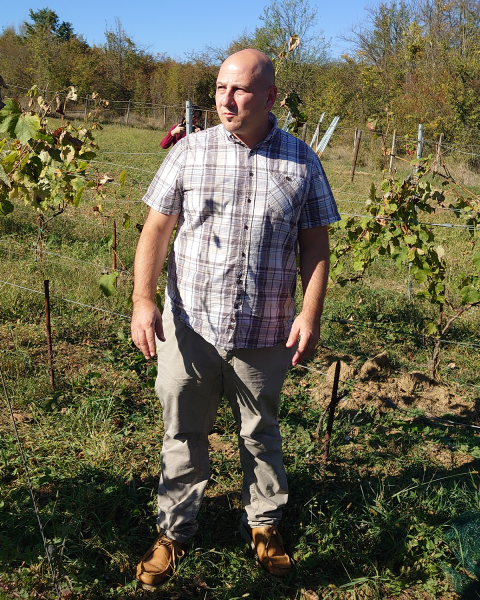
Dimov explained that old varieties were lost in three waves in Bulgaria. The Ottoman era meant wine was limited to home consumption only, then after liberation and the National Revival, wine started to become a business again. Phylloxera caused the next wave of loss and, to help with recovery, the government invited Frenchman Pierre Viala, who brought French varieties. Some of the local varieties couldn’t cope with the grafting process (for instance Sifta) whereas Dimiat and Gamza survived because they proved easy to graft. But Communism brought a switch to high-trained vineyards for yield and ease of mechanisation, so growers favoured vines that suited this system – so Dimiat lost out as it gives much better quality when trained low.
Dimov is farming organically, and winemaking is low-intervention with no-to-low added sulphites, so some wines work better than others. Golden Hands Dimiat, Dimiat Orange and Golden Hands Gamza were top scorers for me, with an interesting work-in-progress Cabernet Sauvignon/Pamid blend and a barrel sample of Rubin 2021 from Yalovo’s own vines looking promising, but in need of a couple of years’ ageing.
The story of Tsarev Brod winery began in 2001 when owner and agronomist Ivan Ivanov planted the first vines, including Bulgaria’s first Sauvignon Blanc of the modern era. To begin, he sold grapes; then in 2015 he opened the winery with one of Bulgaria’s new-wave winemaking stars, Nikolay Krastev, as chief winemaker. The region’s rich black topsoil may not seem ideal for grapes, but underneath is well-drained loess, and with an elevation averaging 250 m (820 ft) and plenty of breezes, this turns out to be a good place for aromatic, fresh whites and lighter reds. Two local crossings, Gergana and Evmolpia, have become the winery’s signature (both were created by Ivan’s lecturer at Plovdiv University).
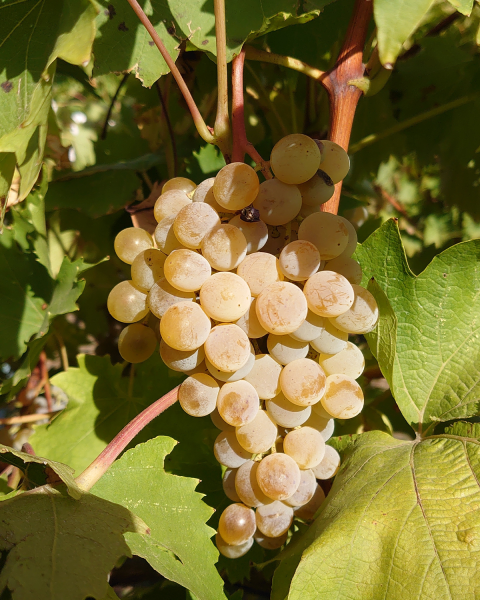
Gergana is a grapey but fresh cross of Muscat Ottonel and Dimiat, and perhaps surprisingly, also makes a rather good traditional-method sparkling (picked early before it gets too aromatic). Evmolpia is a Mavrud–Merlot cross and is more tolerant of the cool climate than Mavrud itself. So far, it’s showing promise for tasty deep-coloured rosé and fruity, medium-bodied reds. The winery also produces good Sauvignon and Riesling (as a refreshing pet-nat, plus luscious ice wine), and was making good Chardonnay until they pulled it out because it’s too hard to sell.
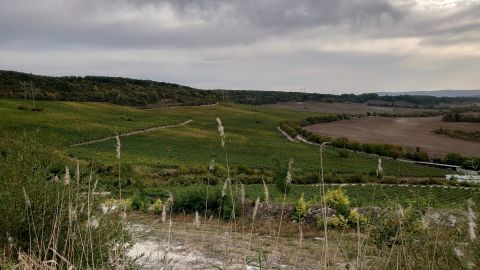
A few years ago, wine estates barely existed in Bulgaria thanks to the Communist-era separation of grape-growing and winemaking, so it’s taken years and a lot of work to create sizeable holdings. Salla Estate had to negotiate with 140 people for its 30-ha (74-acre) plot. Salla’s vines grow on a single slope on chalk, reaching an elevation of 380 metres (1,247 ft). Vines were planted here from 2007, using material from Burgundy. It’s not quite an ‘estate’ winery as the production site is a couple of kilometres away from the vineyards, but it is equipped with state-of-the-art technology and, even mid harvest, the pristine cleanliness is impressive. Long-time winemaker Anelia Hristakieva delivers consistent, whistle-clean wines to match. Traminer, Riesling and Cabernet Franc showed well in recent tastings and previously I’ve enjoyed a wine made from Vrachanski Misket (an aromatic local white grape) though it had sold out by the time of my visit.
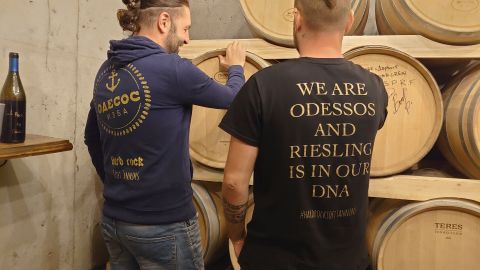
Odessos winery is a tiny project in a basement in the outskirts of Varna and has taken a different route. It’s owned by two brothers (Georgi and Vladislav Vankov) who worked 11 harvests over 5 years around the world before bringing their vision home in 2020. Their philosophy is all about single-vineyard selections (a relatively new concept in Bulgaria), so their priority is finding the right plots and growers to work with, then adjusting the winemaking to match.
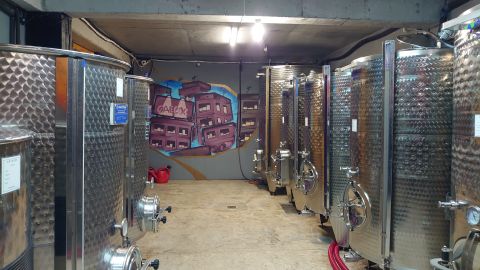
Odessos are producing possibly one of the best versions of Dimiat I've tasted, in a kind of Gavi-meets-Muscadet style from 40-year-old vines on limestone near the coast. Georgi reckons most Bulgarian winemakers are afraid to show the true nature of this rather neutral grape and try too hard to hide it behind winemaking ‘make-up’. There’s also an attractive dark-pink Cabernet Franc called ‘claret’ (that name might not go down so well with Bordeaux lawyers) and two very good, but different expressions of Cabernet Franc, from a cooler location called Kavarna 50 km (31 miles) north of Varna and a warmer inland site called Tzonevo. There’s also a Riesling that channels Georgi’s Eden Valley, Australia experience, and a promising young Pinot Noir.
I should briefly explain the International Mavrud Day story. The Bulgarian Association of Wine Professionals was founded in 2020 as a non-profit independent organisation bringing together like-minded individuals to work on areas such as marketing, developing new PGIs (they are proposing nine zones that reflect terroir differences in a way that the current two PGIs can’t), wine tourism and education. There’s still a huge need to build wine culture in Bulgaria and encourage young drinkers to try local grapes – Bulgaria is no longer a major exporting country and needs to rely on local consumers. As the most important indigenous red, Mavrud is the flagship for this programme, but they are showcasing other local varieties, too. The group holds a press trip every year and four urban wine festivals, with 40 wineries and 17 grape varieties on show. When I visited, a festival in Varna was buzzing with young people wanting to enjoy and learn about wine in a trendy location with live music and food stalls.
North-east Bulgaria is a microcosm of what is happening throughout the country, with the development of new wineries and dynamic approaches, but importantly the best producers are now digging into the details of terroir and exploring the potential of local varieties. Unfortunately, few of the region’s wines are exported, so readers should put north-east Bulgaria on their list of wine places to explore in person for its great food, exciting wine and incredible history. Nazdrave.
Some wines from Tsarev Brod and four from Odessos are available in the UK from The Old Cellar. See our tasting note database for reviews of more than 200 Bulgarian wines.