There is no such thing as sustainable farming
I write this as the arts-educated husband of the PhD who wrote the Sustainable Australia Winegrowing system.
Moreover, the shiniest, happiest and newest term in viticulture, ‘regenerative farming’, is already being misused, abused and diminished by growers, winemakers and wine writers across the world. Terms like ‘practising organic’ (certified or not), ‘biodynamic practices’ (certified or not) and ‘regenerative’ (no one in Australian viticulture is certified as such) are now being recycled and conflated with ‘sustainable’ (certified or not) to a greater extent than ever before both here and abroad. This careless use of language is either deliberate in order to mislead and/or dissemble or it is used unwittingly by those who genuinely don’t know the material difference(s) about any or all of the above terms regardless of their professional qualifications.
Sustainability is the strategic framework used to ensure the continued existence of civilisation understanding that human expectations and population are both increasing over time while recognising that much of our resource base is increasingly finite. Said another way, if resources were not limited, the discussion of sustainability would be moot. While most think sustainability is a destination or state of being we can get to, it isn’t. It is a dynamic concept that requires innovation to be realised. To quote viticultural sustainability expert, winemaker (and my wife), Dr Irina Santiago-Brown, being sustainable ‘is the pot of gold at the end of the rainbow that continually recedes from us the closer we get to it’. Sustainability is the goal, not the means. You can be more or less sustainable, but never sustainable.
While the goal of making sure that civilisation is able to continue to exist applies to all of human endeavour, how we farm (which is in turn categorised by farming approaches or certified farming systems) is one of the biggest variables wine grape growers can manage to pursue the goal of sustainability.
Despite abundant but decreasing resources, the world will be unable to feed itself into the future absent meaningful changes to how we farm. Growing wine and other alcohol inputs is different to other agricultural pursuits in that does not provide food, clothing or shelter for people and is not benign in its externalities to the planet’s health or that of the human species. (There is no such thing as a little heresy.) Given this status in an increasingly resource-constrained environment and including the effects of ongoing climate change, more extreme weather events and declining availability of water, grape growers and grape growing will be put on a riskier and more precarious perch than other agricultural pursuits over time.
Assuming a semi-rational world, to the extent that growing wine grapes and making wine (or other alcohol) diverts resources – land, labour, water, farm inputs and capital – away from these other unfulfilled needs of a growing population is the extent to which wine grape growers will need to utilise their resources at a beneficial level of practice matching or exceeding that of the best of the alternative users of these resources. The extent that wine grape growing does not do so will likely be the extent to which wine grape growers can expect to lose their social, ecological and economic licences to operate in the future, in that order.
Environmental and sustainability schemes developed by industry are initially or eventually diluted to the point of meaninglessness regardless of sector in order to increase relevance or participation and because they are developed by industry players who simply don’t want change. This isn’t a criticism of any particular scheme but rather all industry-developed schemes in all sectors.
With this in mind, industry governance – regardless of country – should be based on the highest standards developed by truly independent experts without industry interference or pressure. These descriptive and dynamic benchmarks need to be set in reference to competitive users of the same resources in a broadly regional context (eg hot-climate and cool-climate regions face different challenges and community benchmarks) and be continually revised over time in light of evolving practices and resource limitations. This won’t be cheap but will be far less expensive than not doing so.
Different systems will be required for growing and making wine, both with respect to others’ best practice in their business segments (eg wineries would potentially benchmark against other beverage manufacturers, etc). If industry governance operates from this framework rather than from the short to intermediate term of its members preferences, it will provide the wine industry the best possible chance to continue as a viable and successful industry for the longest foreseeable period of time. If this approach is adopted nationally, it could become a strategic competitive advantage for the national industry, particularly if other countries do not do something similar. In simple terms, we could actually lead the world in a serious way that we do not at present. Alternately, to not do so will actually increase risks to the members they are meant to represent. As Will Rogers used to say ‘even if you’re on the the right track, you’ll get run over if you just sit there’.
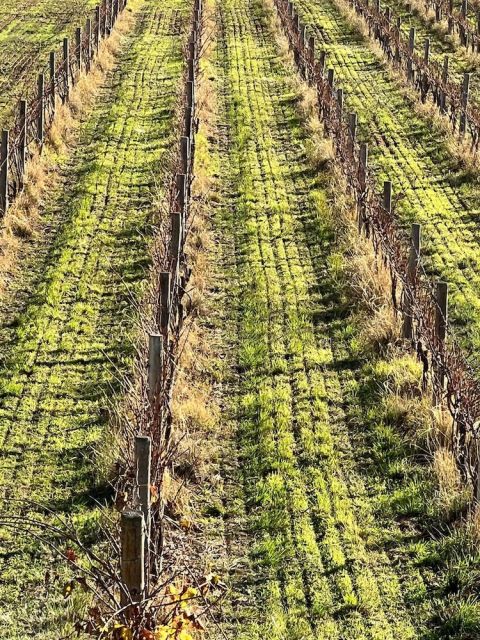
Within grape growing, the dominant vineyard farming approaches or ‘systems’ (if certified) are conventional, organic, biodynamic and regenerative. While practices within these systems frequently overlap considerably, the regenerative approach currently appears to be the ‘best’ pathway to pursue to achieve these ends. The regenerative approach is the only approach that seeks to continually and specifically improve the status of the resource base via diversity of plant and soil life, increasing organic matter and water-holding capacity while simultaneously reducing or minimising the costs of external or off-farm inputs. Practitioners in other sectors report that yields are often similar to conventional approaches while profitability is typically much better than conventional approaches at any level of yield.
And it is not as comprehensively prescriptive as certified organic (all the things you can’t do) and biodynamic (all the things you can’t do + all the things you have to do) systems are. The current Australian sustainability system, SWA, is a mishmash of prescriptive, descriptive and best practices from conventional farming that treats measuring soil health as optional. How can any system that doesn’t mandate rigorously measuring the effects of the endorsed management practices on the resource base be considered ‘sustainable’? Compared to what?
The big idea in the regenerative approach is that if you look after your soil, the soil will look after your vines. If it sounds simple, it (sort of) is. It is based on the insight that the carbon-rich soils of most farming regions in the world were the result of the interactions of plants and animals over time. That these ideas mostly emerged from herding and broad-acre cropping in Zimbabwe, the USA, Australia and New Zealand makes sense in this context. While some vignerons around the world have stumbled into and adopted parts or all of this approach, the heavy lifting emerged from other agriculture sectors, often in far more challenging environments than vineyards experience anywhere. To restore depleted soils to being resilient soils, the idea is that we need to mimic those systems.
For the un-initiated, the core tenets are:
- Keep bare ground covered, even with weeds if necessary. Even that 40% of your vineyard right under your vines.
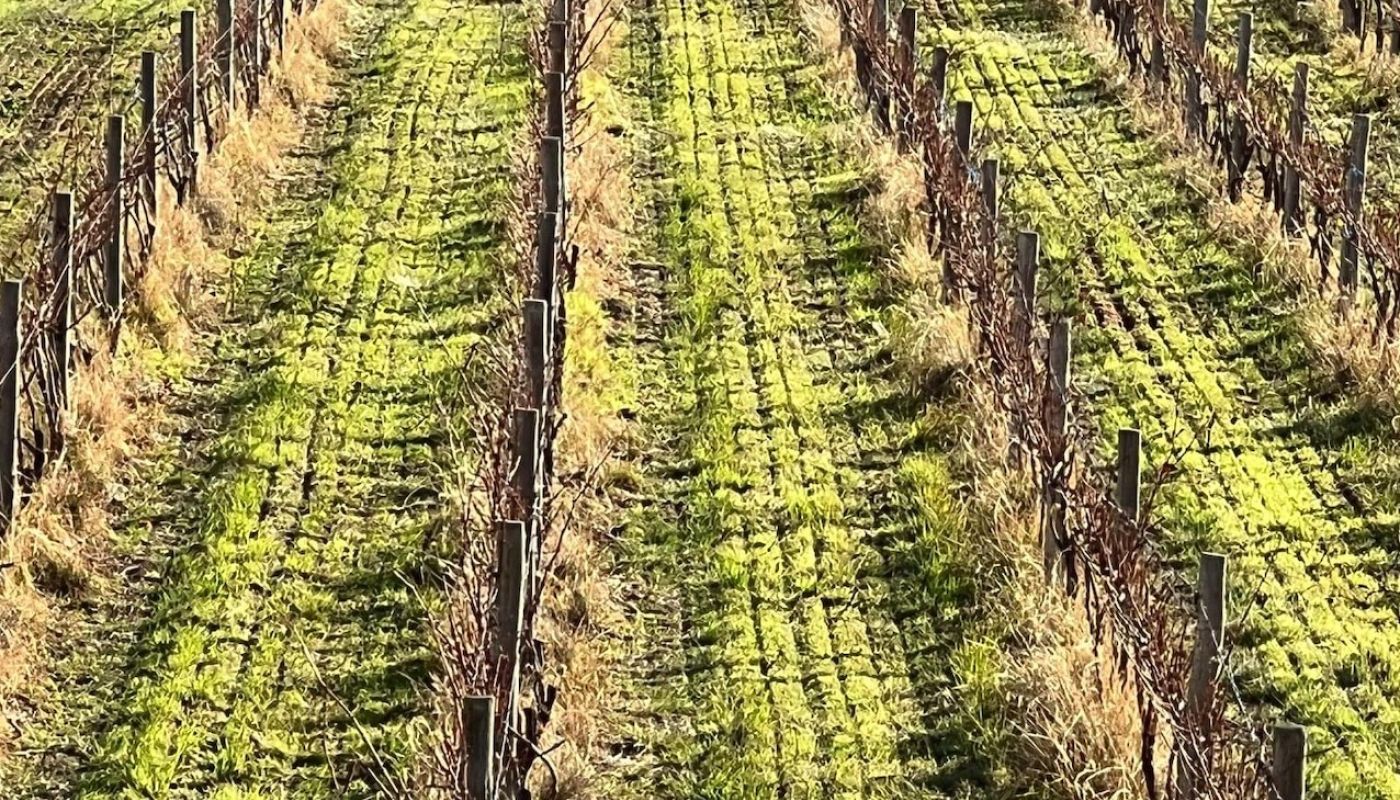
- Have a diverse mix of ground covers (ideally at least seven species from four different plant families, eg grasses, clovers, legumes, brassicas, flowers, root vegetables, etc). This needs to be amended and fine-tuned over the years and seasons.
- Minimise soil disturbance.
- Incorporate grazing animals into your farm system or employ mechanical bio-mimicry if you don’t have grazing animals.
- Minimise or eliminate artificial fertilisers and herbicides – even weeds have a role to play at times.
- To the extent possible, have living plants covering the ground year-round.

There’s more to it of course but the principle is that diverse ground covers activate soil life particularly by encouraging fungi and bacteria to cycle for optimal availability of nutrients, to draw down and cycle atmospheric carbon and nitrogen as well as to prime the air and water cycle in the soil to ensure maximum water retention.
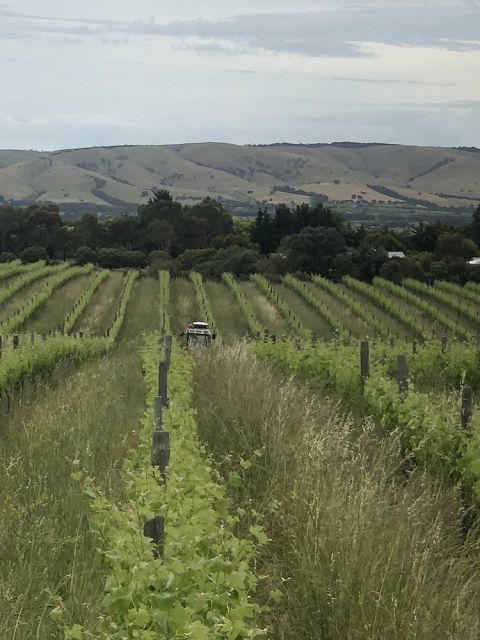
Because the regenerative approach uses fewer off-farm inputs and can reduce tractor passes and possibly foliar spraying, it reduces out-of-pocket costs and financial risk for growers. Beyond a certain threshold, the story of sustainability is usually about ‘better or worse’ rather than ‘right or wrong’. In this respect, the regenerative approach right now appears to be the new ‘better’ approach to reducing costs, improving on-farm and farm-gate outcomes while operating at best-practice levels. To the extent it puts the wine industry on a path to improving the planet by improving soils, drawing down and storing carbon and making better wine, it actually makes our industry more resilient to the shocks that are inevitably headed our way.
Our experience with this approach at Inkwell over the last three years (after having been organic certified for the last seven years and organic in practice for 10+ years) is a noticeable improvement in plant health, fruit quality, expected yields and water retention. Moreover, we are still implementing our approach with full ‘conversion’ occurring this year. Author’s warning – the period of time, absence of a control data-set and recent unseasonably cool seasons do not make for a reliable or scientific comparison. Having said that, we have not experienced nor can we anticipate any serious downsides to this approach. It’s a healthier, more interesting approach that happens to be a hell of a lot more fun.

A great place to start learning more about this approach is from Great Plains rancher and farmer Gabe Brown’s book Dirt into Soil. When you get more interested, Nicole Masters’ For the Love of Soil bears repeated reading as does anything about soil life by Australian soil scientist Dr Christine Jones or Ray Archuleta from the USA (Google them). Dr Jones’s case study of orange-tree dieback from Florida is stunning and could possibly be relevant to vineyard diseases.
Charles Massy’s The Call of the Reed Warbler is an exceptional survey of many regenerative approaches employed in many different sectors and regions of Australia as well as the history of their development. All of these writers, researchers and practitioners have a number of YouTube videos that you can watch right away as well. Another viticulture-specific publication worth reading is McLaren Vale viticulturist Richard Leask’s Nuffield Scholarship report, as it is one of the only resources written by a viticulture practitioner. While we view things differently in terms of terminology, it is another great place to start. Jason Haas’s Twitter feed is another good resource. His Tablas Creek winery in California is the only Regenerative Organic Certified winery I am aware of. Beware, this is one big rabbit hole…
Once you get your head around the regenerative concept (a great deal of ‘unlearning’ is required), your entire business and our industry start to look a lot simpler as well. But, as with all changes in farming methods, it is a multi-year process where the biggest change occurs between your ears. You can’t change everything overnight if you are a long-term user of fertiliser and herbicide without expecting some shocks. If this approach is interesting, read and watch a lot, ask a lot of questions, get help from someone with experience, take it small and slow at first and always measure the results. The social and economic benefits of doing so are a safer, healthier and less expensive approach to farming that is more sustainable to boot.
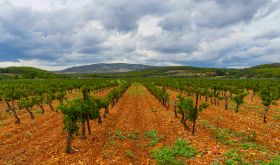
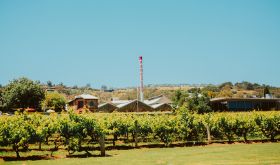
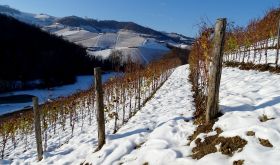
All the photos above are from Inkwell.
This is an edited version of an article that was first published on Dudley Brown's blog The Wine Rules,