
Halfway through my concentrated look at about 300 Châteauneuf 2007s in the village itself at the end of November, I was having a lovely time, but started to wonder whether my drive down to the land of the mistral had really been worthwhile. The usual reason I submit my teeth and liver to assault by tannin is to pick the wheat from the chaff for wine lovers who cannot undertake this research themselves, but with the 2007 Châteauneufs, currently being offered en primeur, the overall quality level was just so high that my scores and tasting notes seemed almost superfluous.
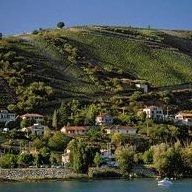
This was in marked contrast to the business of tasting 2007s from the northern wine districts of the Rhône Valley, where an early but difficult flowering was followed by a particularly cloudy, damp summer during which the threat of mildew and rot was never far away and, although the health of the grapes was eventually helped by a windy September, the harvest was late, difficult and generally less successful than in 2006. But one notable feature from my northern Rhône tastings was how delicoius white St-Joseph can be now. It costs much less than Condrieu but in some cases, such as Yves Cuilleron’s St-Pierre bottling, can be just as or even more interesting. And among reds, the stylistic differences within such relatively small northern Rhône appellations as Côte Rôtie (pictured) and Cornas are truly remarkable – although this not a phenomenon specific to the 2007 vintage.
I hope therefore that my 2007 northern Rhône tasting notes will be particularly useful, even if the wines made in the south are very much more consistently good, thanks partly to the much drier summer there.
Of the 2007s from anywhere that I have tasted so far, the southern Rhône looks to be the most blessed wine region of all (even if some of the burgundies I tasted on my way down to the Rhône were much better than anticipated).
I was certainly very agreeably surprised by how relatively easy the southern Rhône 2007s were to taste. I was expecting an onslaught of the sort of dry tannins that so often characterise these wines in their youth, especially after particularly dry growing seasons, and yet I only rarely encountered obviously aggressive tannins, and they more often seemed associated with oak than with the grapes themselves. For Paul-Vincent Avril of Clos des Papes, the ripeness of the tannins is the distinguishing feature of 2007. He argues furthermore that it is the quality of the tannins, far more than the quantity of acidity (which was lower in 2007 than in the two preceding vintages), which is most important for longevity, in his sumptuous wines anyway.
I was also expecting to be almost literally knocked out by the alcohol in these southerly reds. Châteauneuf-du-Pape is notoriously potent. It is the only French wine to have had a minimum alcohol level built in to its regulations from their inception: 12.5%, which seemed quite high in the1920s. Nowadays, thanks to a host of factors including global warming and more efficient yeasts, wines with more than 15% alcohol are commonplace. I usually find such strong wines quite hard work, but surprisingly few of these 2007s had uncomfortably hot finishes and most were surprisingly refreshing.
Almost certainly what helped was the relatively modest temperatures and powerful mistral during the summer of 2007. In July and August there were 30 days on which the thermometer fell below 15 ºC, relatively arctic for this warm, south-eastern corner of France, with particularly cool, refreshing mornings. Nor was there any really excessive heatwave, with only seven days registering a temperature higher than 35 ºC. Summer rainfall was unusually low, just 35mm between mid June and mid September, as opposed to an annual average of more than 160mm during that perios. A few sharp showers fell between 16 and 18 Sep just as the vintage was drawing to a close, but these were far too late to prejudice the health of the grapes. Several producers told me that these were the healthiest, best-balanced grapes they had ever seen. Marie-Jose Michel of Vieux Donjon described the grapes as so beautiful and the tannins so supple that she wondered whether the wines would last all that long.
Although Emmanuel Reynaud of Château Rayas, on being congratulated on the splendour of his 2007s, simply shrugged and said ‘c’est la nature’, man should also share credit for the deliciousness of Châteauneuf’s 2007s. Winemaking there seems to get better and better each year, which also sees an exciting new crop of producers determined to bottle some of their fruit themselves rather than send everything to the local co-op. There were hardly any rustic notes in the 2007s, but nor has there been an invasion of slick modernism making all the wines taste the same. These are wines that proudly express which of the famous 13 vine varieties (many of them in the form of ancient stumps) went into the wine and which of the host of different terroirs that this varied appellation can boast are responsible for shaping their character.
Even the way these wines are aged can vary enormously, with the use of small, new oak barriques à la bordelaise on the retreat in favour of the traditional, huge (3,000-5,000 litre) old oak foudres, especially for the Grenache grapes that dominate the appellation, and even completely neutral concrete vats. Here, the character of the fruit is so strong that it needs little help to express itself. Alsace coopers have played a part in the extensive renovation of old foudres that has been undertaken over the last four or five years.
As for the whites, they continue to present themselves as a delightful alternative to white burgundy if drunk within their first three years or so, but I wonder whether the 2006s were not just slightly more vibrant than the 2007s.
The general tendency now is for producers to bottle a regular, or Tradition, red plus a special cuvée that costs much more, typically from the oldest or best-sited vines – a trend that has spread to the small minority of white wine produced. But it is notable that one of the very finest producers, Clos des Papes, makes but one red and one white – albeit at prices that are now eye-popping – approaching £1,000 a dozen for the red 2007 in bond.
But there is no need to pay anything like this. I have listed some of the wines that impressed me most in my blind tastings. There is room only for those I scored 19 and 18.5 out of 20 but, most unusually, I gave a further 24 wines a score of 18 out of 20, and scattered 17.5s and 17s like confetti for wines that can be found for around £200 a case in bond. And then there is a host of wines carrying such modest appellations as Vacqueyras, Côtes du Ventoux and Côtes du Rhône-Villages selling for a fraction of this that bear witness to the joy of 2007 in the southern Rhône.
Hardly any of the reds and most of the whites were in bottle when I tasted them, although the British supermarkets are already selling négociant-bottled 2007s which are ripe and juicy but are so soft and charming that they will probably best be drunk over the next year or two, but some of the most ambitious reds could well still be going strong in 2030.
I asked how common acidification is in this hot corner of France and was told that it is much less common than it was in the 1980s and 1990s when agrochemicals were much more widely used. When acid is added nowadays it is usually added after the end of the malolactic fermentation. Clos de Papes is now officially certified organic and is, perhaps surprisingly in this dry climate, one of only 15 Châteauneuf producers to be so. Average yields there were 23 hl/ha in 2007, as opposed to just 16.8 hl/ha in 2008, when it hailed on the white grapes. Word is that 2008 is highly unlikely to be better and cheaper than 2007 so stock up on the vintage currently being offered.
My favourite 2007 Châteauneufs
19/20
Perrin, Homage à Jacques Perrin de Château de Beaucastel
Ch Rayas
Stéphane Vedeau, La Ferme du Mont
18.5/20
Clos des Papes
Dom la Barroche, Fiancée
M Chapoutier, Barbe Rac
Dom de la Charbonnière, Mourre des Perdrix
Ogier, Les Closiers
Ch Rayas (white)
Dom Reveirolles, Grenache
Cuvée du Vatican, Réserve Sixtine
18/20
Dom Paul Autard, La Juline
Ch Beauchêne, Vignobles de la Serrière (white)
M Chapoutier, Croix de Bois
Dom Clos de Caillou, Safres
Dom de Cristia, Vieilles Vignes
Ch Gigognan, Clos du Roi (white)
Dom du Grand Tinel, Heres
Dom Olivier Hillaire
Mas de Boislauzon
Dom La Millière, Vieilles Vignes
Dom Moulin Tacussel
Ch La Nerthe (white)
Clos de l’Oratoire des Papes, Chorégies
Perrin, Château de Beaucastel, Vieilles Vignes (white)
Perrin, Château de Beaucastel
Dom de Pignan, Coralie et Floriane
Ch Rayas, Pignan
Dom de la Roncière, Fleur de Ronce
Dom Jean Royer
Dom Jean Royer, Hommage à Mon Père
Dom Raymond Usseglio, Cuvée Impériale
Cuvée du Vatican (white)
Ch de Vaudieu, Val de Dieu
Stéphane Vedeau, Les Deux Rhônes













