6 October 2016 An earlier version of this article, published on 3 October, suggested that Alister Purbrick of Tahbilk had called for stricter asset tests and the abolition of the WET rebate. This is not the case, and the article has been amended accordingly. Our sincere apologies to Alister Purbrick and for any confusion this may have caused.
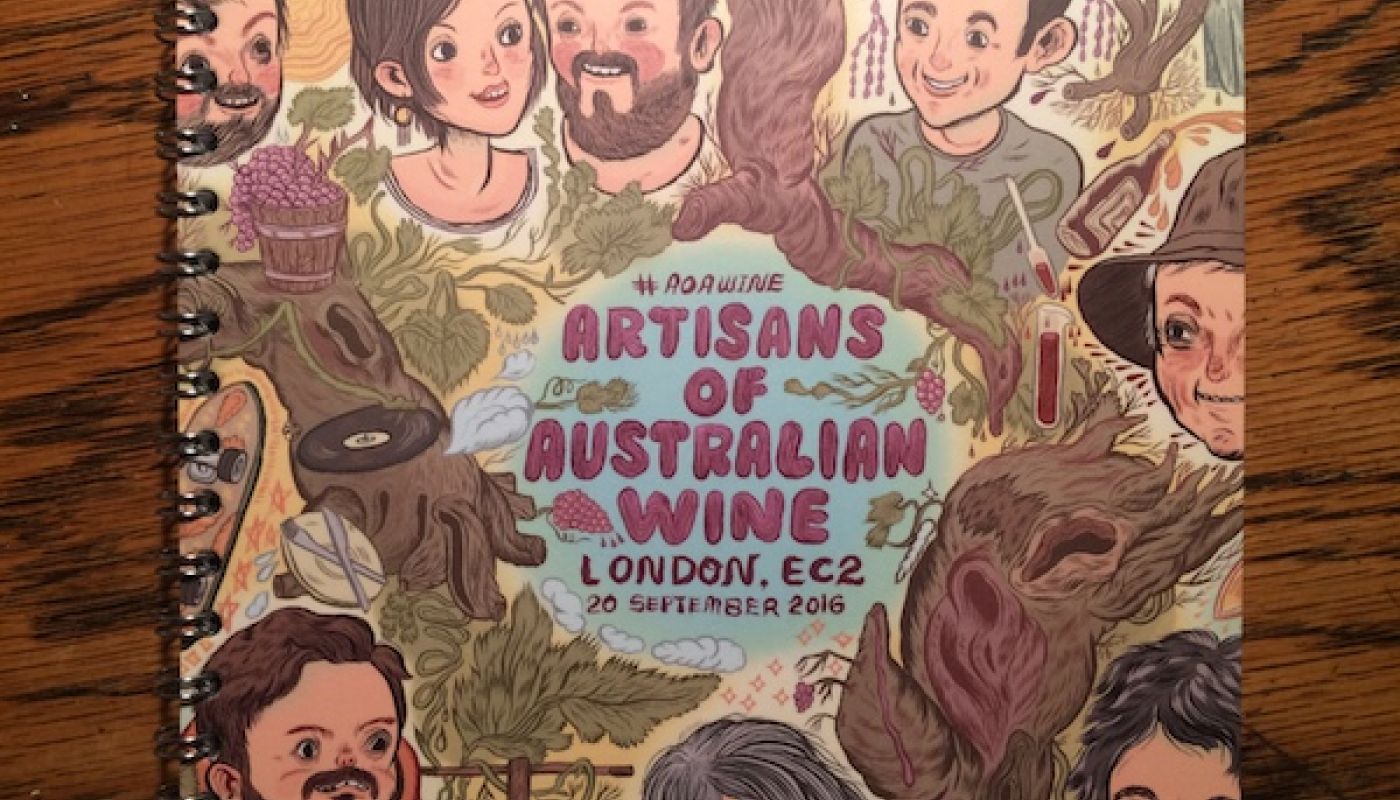
3 October 2016 A group of Australia’s most exciting small-scale wine producers descended on London last month for a trade tasting designed to challenge those who view wine from Down Under as boring and industrial. The Artisans of Australia event, which took place on 20 September in Cargo nightclub in Shoreditch and will be reported on by Richard soon, was initiated by Wine Australia, the federal statutory body charged with promoting the country’s wine around the world. It was, by all accounts, a great success.
Meanwhile, at exactly the same time on the other side of the world, another arm of the Australian government began industry consultations into proposed changes to wine tax – changes that could threaten the viability of most of the artisan producers pouring their wares in London.
‘It’d be funny if it wasn’t so f*cking farcical', says winemaker Damian North.
North is typical of the many small producers who have sprung up here in Australia in the last few years, injecting much-needed innovation and energy – and seriously delicious wines – into the local scene. [See my report on a March 2016 tasting of a wide range of their wares in Off-piste Australians – tasting notes – JR.] A former sommelier, he studied winemaking and then worked for leading wineries in Australia and Oregon before settling in the Yarra Valley and launching his own label, Journey Wines.
Establishing vineyards and buying presses and tanks is very expensive, so North sources grapes from growers in the Yarra and Heathcote and makes his wine at someone else’s winery.
This is a common scenario – bought-in fruit, borrowed winery – and it applies or has applied to most of the producers who featured at the Artisans tasting in London. Even those who have subsequently gone on to plant vineyards and/or set up wineries of their own often started out this way, with few or no assets.
Ironically, it’s precisely this lack of assets that could become a liability under proposed changes to the way wine is taxed in this country.
To explain I first need to give you some history.
In 2000 the Australian government replaced a complicated mess of sales taxes and state licence fees with a single Goods and Services Tax of 10%. Before the introduction of the GST, the wholesale sales tax on wine had been 41%. The government realised it would lose revenue from this change, so it introduced a 29% Wine Equalisation Tax (WET) to make up the shortfall.
Not surprisingly, winemakers thought this was awfully unfair, and eventually managed to negotiate a rebate of the WET capped at a generous $500,000.
The original intention of the rebate was to support small wine producers in rural and regional Australia. And that it does: the vast majority of this country’s wine producers have sales well below the cap, so for them the WET rebate is a significant source of income. Without it, they would go bust.
However, the way the rebate was set up has also led to widespread rorting [an Australian term for ‘engaging in sharp practice’]. Urban virtual winemakers, bulk producers, major retailers and rank opportunists are busily exploiting loopholes in the legislation – producing wine specifically for the purpose of getting the rebate, gaming the system by claiming the rebate without paying the tax in the first place, or claiming it multiple times through associated businesses. It’s impossible to put a precise figure on the scale of these shenanigans, but estimates put it in the region of $150 million.
Government has known about this rorting for a long time and in the federal budget in May this year proposed a number of changes to the WET rebate, including measures intended to tackle the abuse. One proposal was to tighten the eligibility criteria to wine producers who ‘own an interest in a winery’, ensuring (in the government’s words) that that the rebate can be accessed only by people who ‘have a stake in the wine industry’.
That’s when the Shiraz really hit the fan.
Small winery-less producers such as Damian North flocked to social media and to countless hastily called meetings all over the country to complain about the extensive collateral damage such a proposed change would cause. [And I alluded to it last May in my FT article Australia – the wild ones – JR.]
‘Sure, there’s a need to cut out the rorting', he said. ‘But not at the expense of the people who are busting a gut to build legitimate brands.’
Observers pointed out that the new criteria would not only hurt the newer entrants to the industry but would also – perversely – lock out leading producers such as Corrina Wright of Oliver’s Taranga in McLaren Vale, whose family have been growing grapes in the region for 175 years, but who make their wine in someone else’s winery.
Others reminded us that now-legendary winemakers such as Wolf Blass started out with little more than some space in a mate’s shed, a couple of barrels and a handshake agreement with a grower.
And many argued that such a regressive change would make it almost impossible for new start-up producers (like the Artisans who so impressed the trade in London) to emerge.
‘I’m five years in to my business so maybe I can adapt', said David Mackintosh of Arfion Wines in the Yarra (and, with Damian North, one of the co-founders of the Small and Emerging Winemakers of Australia, a group set up to fight the proposed changes). ‘But this will discourage the winemaking talent we know is out there from having a crack at doing their own thing. And that would be seriously detrimental. We’re at a pretty exciting time in Australian wine right now and to squash that would be like shooting ourselves in the foot.’
Government responded to this initial backlash by holding a series of informal discussions with industry about the proposed changes and then announcing an official round of consultations and submissions, which kicked off on 20 September.
I spoke to Tony Battaglene, acting chief executive officer of the Winemakers' Federation of Australia, on 30 September, after the last consultation. He wasn’t able to make any definitive statements (written submissions close on 7 October and the government won’t make its final decision about the proposed changes until after then), but he was upbeat about the prevailing opinion that the ‘owning a winery’ eligibility criteria would probably be modified.
‘The industry seems to have come to a consolidated view that eligibility for the WET rebate shouldn’t require an assets test', he said.
Let’s hope the government sees the wisdom of this view and amends its wording accordingly. Because the alternative – making it harder rather than easier for exciting small producers who are changing the international conversation about Australian wine to thrive – is bleak.
One of the leading lights and most influential players in this new wave of Australian winemakers is Bill Downie. He now has his own tiny vineyard in Gippsland, south east of Melbourne, but started out in the usual way – buying grapes, renting space, etc.
‘If these proposed changes were in place when I started up, I couldn’t have done it', he says. ‘And the more I think about that, the more it breaks my heart that if they go through it’ll stifle the next generation. That’s the tragedy: for the first time in my memory it’s cool to have a bunch of Australian wines by the glass at a fancy restaurant. Why would you want to stifle that?’
Downie has been one of the most outspoken online critics of the proposed changes to eligibility criteria since they were announced in May. A few days ago he launched a petition, calling for the whole process of applying such Band-Aid changes to the WET rebate to be delayed until some proper modelling has been done both by industry and by government.
‘It’s a farce', he said. ‘Can you imagine government pushing through changes to any other industry – changes that might put people out of business – without getting people who are up to the task to do some comprehensive modelling first?’
He has a point. A lot of the proposed changes to WET are based on inadequate data and anecdotal evidence. And this lack of a transparent, evidence-based approach is perhaps one of the reasons many small winemakers have been entertaining dark conspiracy theories about how the larger wine companies are somehow colluding with government or abusing their influence on industry bodies to wipe out the artisan producers that represent a threat to their market share.
The real problem may be the incredibly complex and constantly evolving nature of the modern Australian wine industry. As Damian North puts it: ‘Diversity is the key to the excitement of Australian wine right now – but that same diversity is making it very hard to come up with a solution that’s going to suit everyone.’