
See my tasting notes on Schönleber's favourite wines.
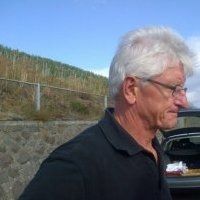
At German wine tastings, the tall, handsome figure of Werner Schönleber, with his chiselled features, shock of white hair and well-cut tailoring, tends to stand out. But for him the most thrilling, and genuinely surprising, phenomenon of the past decade or so has been the slow realisation that it is his wines, both dry and sweet, that now stand out. Virtually unknown in the early 1990s, Schönleber's wines have come to be recognised as some of the finest, if not the finest, in his home region, the Nahe, south west of Frankfurt.
The Schönlebers were originally Swabian sheep farmers who came to the Nahe in search of grazing. Like many of their neighbours they grew a few vines, but as a wine region the Nahe has never had the international fame of the Mosel with names as revered as Egon Müller and J J Prüm, nor the long (somewhat squandered) history of the Rheingau with its grand, aristocratic Schlosses. In fact, give or take an Anheuser or two and the now unrecognisable and privatised state winery, the Nahe didn't have much of an identity in the last century. It was recognised as an individual wine region only in 1930, and even quite recently much of its wine was blended into anonymous liquids sold simply as Rhine wine.
But thanks to the determination and extraordinarily hard work of particularly Helmut Dönnhoff of Oberhausen, who physically recuperated long-abandoned vineyards on slopes too steep for most modern wine producers, top Nahe wines are now recognised as every bit the equal of the best wines from any other German wine region. I clambered through most of Dönnhoff's top vineyards with him the weekend before last and found the slope of the Dellchen vineyard overlooking the river Nahe, the little local railway, and the village of Norheim for instance, almost impossible to climb. How on earth he converted it from abandoned scrub, with pickaxe and saw, I just cannot imagine.
But the narrow, steep-sided Nahe valley in Dönnhoff territory from Schlossbockelheim downstream to Norheim looks very obviously top-quality wine country, with its steep slopes and propitious reflection of sunlight from the narrow river. The Schönlebers are based in Monzingen, about 10 miles further upstream where the valley is much broader and the south-facing slopes less dramatically steep. In fact it is only because the valley here is wide enough to allow warm air in that grapes will ripen in in this, the westernmost wine village of the Nahe. But it's perhaps no accident that Schönleber and Dönnhoff operate on more or less the same latitude as Germany's other most obvious concentration of winemaking talent, the far southwest corner of the Rheinhessen to the east around Florsheim-Dalsheim where Klaus-Peter Keller and Phillip Wittmann have been weaving similar magic – with a similarly glorious combination of ripeness and freshness.
There doesn't seem to be a single magic geographical ingredient in the Schönlebers' success. (I refer to them in the plural since Werner was joined by his equally long-legged son Frank in 2005, after stints on various German estates and with Mitchell Wines in the Australian Riesling hotspot of the Clare Valley – and Werner's wife Hanne is obviously very much part of the team.) I asked Frank at an extraordinary recent event he'd organised to celebrate his father's 60th birthday and the success of his wines to outline for me any changes that had been made to their practices in vineyard and cellar over the years and he was absolutely stumped, volunteering simply that every year they try to understand each little parcel of vines that much better.
The only really dramatic event in the Schönleber family's wine history was their acquisition in the early 1990s, and subsequent painstaking recuperation, of some really choice parcels of Monzingen's two most famous vineyards, the Halenberg and the tongue-twisting Frülungsplätzchen. The family had initially been offered these in the early 1960s but, fortunately, Werner's father and other family members couldn't agree on the wisdom of the purchase. If they had done, they would have been saddled with the succession of disastrous vintages that plagued the German wine industry in the 1960s. Instead, they were just in time to take advantage of the delicious late 20th-century effects of global warming on fully ripening Germany's Riesling vines.
Their chief challenge in these two vineyards is erosion. The clay soil below the friable red sandstone-like slate of the Frülungsplätzchen can get so damp that Werner claims to be able to hear water down below. Certainly there's a bare patch of about 12 feet at the top of one block of the Frülungsplätzchen where the vine rows have simply slipped down the hill. The Schönlebers own about a tenth of the 65 ha that qualify as Frülungsplätzchen – when only 25 deserve to, according to Frank. Halenberg is much more precisely delimited and the Schönlebers have 5.8 ha of the 8.5-ha much more homogenous, steeper slope of a thin layer of heat-reflecting grey slate on top of a conglomerate base so hard it can be difficult to drive posts into it. Erosion is a problem here too.
Much of the produce of vines at the top and bottom of the Halenberg slope goes into the Schönlebers' Mineral trocken bottling that has to be one of German wine's great bargains, while since 2008 (with the exception of the difficult-to-ripen 2010 vintage) the produce of a cobbled plot at the top of the Halenberg which for some silly reason is classified Frülungsplätzchen has ripened sufficiently that the Schönlebers have been bottling it separately as Auf der Lay, or AdL, and selling it in magnums only at auction for sky-high prices.
As we neared the end of the celebrations in the winery that had been stylishly modernised in 2010, we had already tasted 24 dry Rieslings that were excellent on any level and we still had in prospect a chocolate dessert and then, rather incongruously, the seven sweet wines of which Werner is most proud. Typically, at the very end, Werner said virtually nothing about his achievements but went round the table asking each of us dozen wine writers, sommeliers and specialist wine merchants what had pleased or surprised us most – carefully noting down our every word. He just looked genuinely perplexed and moved that all his hard work had paid off.
FAVOURITE NAHE PRODUCERS
Dr Crusius
H Dönnhoff
Kruger Rumpf
Schäfer-Frölich
Emrich-Schönleber
Schlossgut Diel
Martin Tesch
See my tasting notes on Schönleber's favourite wines.













