‘A man’s wine lives after him, bottled, corked and sealed in other men’s memories.’ So wrote C de Bosdari in his book, Wines of the Cape, the third (1966) edition of which I have in my possession and to which I turned while researching this article in order to get a feel for the South African wine industry in the mid-1900s.
According to De Bosdari, examples of men who live on through their wines include Hendrik Cloete of Vin de Constance fame, as well as one Koos Hugo – ‘known throughout the countryside round Worcester as Uncle Koos Mustard-Pot‘ – whose Muscat de Frontignan of the late 1800s was fed, spoon by spoon, to the dying Emperor Frederick by Prince Otto von Bismarck.
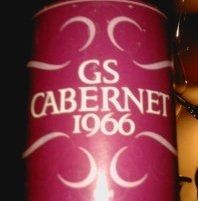
As he wrote his introduction to the 1966 edition, noting advances in the making of white table wines, the emergence of vintage ports, the rationing of sherry, and several mergers taking place in the industry, De Bosdari can have had no inkling that there was a new legend in the making that very year; a Cabernet Sauvignon recently described in authoritative US magazine Wine Spectator as the one true classic wine ever produced in South Africa, right up there with the benchmark wines produced by Max Schubert in Australia and André Tchelistcheff in California – the GS Cabernet [sic] 1966.
It’s impossible to know whether De Bosdari ever met George Spies, the winemaker at Monis of Paarl and then Stellenbosch Farmers Winery (SFW) after the two companies merged in 1966. If so, he would have remembered a very dapper, neatly dressed man. ‘Never a hair out of place,’ recalls his daughter, Ronel Spies. ‘And a great dad.‘
It seems Spies didn’t have any tertiary training but started his winemaking career in the lab at Bellville Winery (started by Monis founder Roberto Moni). ‘Sherries and ports were his forte,‘ recalls Cape Wine Master and SA National Wine Show chairman Duimpie Bayly who worked under Spies at SFW. Bayly also remembers the ‘sherry king ‘ as a ‘terrific dancer‘ while seasoned SA wine and spirit authority Dave Hughes, another SFW contemporary, reveals that he was an excellent horseman: ‘He rode Spanish-style, in full garb.’
It’s the stuff of legend: a wine spoken about in hushed tones of reverence and awe over the years, even before James Molesworth gave it its unprecedented 95-point rating in Wine Spectator, and bearing the initials of a larger-than-life character. It’s a wine marketer’s dream – so why, then, does a Google search fail to find much more than Molesworth’s account of tasting this ‘breakthrough wine’? Why does Hughes scoff at Molesworth’s assertion that Spies’s ‘bosses told him to stop (much like with Max Schubert at Grange)’? And why does Spies’s former assistant refuse to speak to me about the wine? (‘Whatever I say won’t be what you want to hear…‘)
Against the backdrop of a highly regulated industry geared towards bulk production and brandy distillation, I’m hardly expecting the tale of a vigneron tending his grapes and lovingly nurturing them into bottle. But even if the wine wasn’t made by Spies at all; even if it was actually part of an experiment in wine stabilisation, as per one suggestion (‘that’s why it has lasted so well’), the fact remains that it is a stupendous wine and its story deserves to be told.
‘Unfortunately all the records have been lost,’ says Bayly, who was studying at the University of California at Davis in 1966 but was involved when the second (and last) GS Cabernet was made: the 1968. He is quite certain that the wine came from the ward of Durbanville: ‘Monis used to buy red wine from Phil Walker at a farm called Morgenster. The wine was made there, probably very simply, in those big old 1000-gallon stukvate, and once it had been brought to Monis in Paarl, George would ready it for bottling.‘
His recollection is that Spies decided to give this particular Cabernet Sauvignon to the SFW directors on special occasions after the marketing department decided not to sell it. ‘It was actually quite nasty in its youth – a bit like young bordeaux because of its high tannin levels,’ says Hughes.
Nonetheless, he says he has notes revealing that some of the wine was actually sold under a different label. ‘It was called Rendezvous and it was in competition with [cheap local quaffer] Tassenberg,’ he laughs. ‘Mind you, some of those Tassies under cork have developed even better than the GS.’
Hughes thinks it was SFW personnel director Piet Rousseau’s idea to label some of the wine as GS Cabernet (note: not Cabernet Sauvignon). ‘It was almost done as a bit of a joke, with its funny little label, but George liked to hand it out and over time it got a bit of a following.‘George was very generous with the wine,’ agrees Bayly. ‘It was almost our house wine!‘
As to why there was no 1967, Bayly surmises that the vintage probably wasn’t good enough. ‘It was a rule of thumb right into the ’80s that even years were better than odd years.‘And there was certainly no GS as such after the 1968 vintage – by all accounts because Morgenster was sold off and developed around that time. Hughes, however, makes the point that ‘when the wine began moving in caseloads, out of SFW’s stock, the accountants took notice – and so did Customs & Excise!’
Lending weight to the possibility that the GS ceased being bottled due to number-crunching rather than a special vineyard being ripped up is the fact that neighbouring Durbanville farm Altydgedacht also supplied Monis (and later SFW) with wine. ‘When Castle Wines decided to focus on spirits and stopped taking our wines, I was desperate to find somewhere else,’recalls Altydgedacht matriarch Jean Parker, who had been widowed in 1954, aged 29, and left with two young sons to support. ‘Phil Walker suggested Monis, so I spoke to their old lorry driver and he took back some samples. George then came to see me and the result was that we worked together for many years. He was always extremely helpful to me – a former art teacher from the Eastern Cape without a winemaking background! He taught me a tremendous amount.‘
Parker reveals that when Spies retired in 1981, he brought her a couple of cases which he said she’d made – and the plot thickens when she mentions the vintages. ‘I’ve only got one bottle of the ’68 left now,’ she says. ‘The last ones we opened were some ’62 and ’66 and they hadn’t been stored well so had lost some of their character, but they were still perfectly sound after all these years…‘
So was the GS Cabernet sourced from Morgenster or Altydgedacht or both? Does it merely speak volumes about Durbanville’s terroir – that old cliché that wine is made in the vineyard? ‘Well, I’ve never seen a horse win the Durban July without a jockey,’ is how Bayly puts it – in which case, just how much of a role did Spies play in the production of the wines which bear his initials?
He can’t answer, having passed away in 1997 aged 79. ‘In the end maybe the proof that SA can produce classic wine matters more than who did what,’ concludes his daughter Ronel. ‘But isn’t it stunning to have produced something that people are still talking about 40 years later? Isn’t that what art is all about?’
The tasting: GC v Haut-Brion
Wine Spectator senior editor James Molesworth tasted the GS Cabernet 1966 (pictured here by Roland Peens of www.wineguru.co.za) at The Showroom restaurant in Cape Town with David Finlayson, the winemaker and MD at Glen Carlou. His ‘personal’ Cape Winemakers Guild (CWG) auction wine, the Edgebaston GS Cabernet Sauvignon 2005, is named in honour of the GS (and could be destined for similarly great things if a CWG auction price of R589 a bottle, five stars in Platter’s, four stars in WINE magazine and 92 points in Wine Spectator are anything to go by).
‘As a kid growing up on Hartenberg and then Blaauklippen, my dad [Walter] always had this bottle of ’66 GS stored in the linen cupboard, gathering dust. He finally pulled it out when we had Paul Pontallier of Château Margaux here, and it blew us all away.’
When Molesworth said he’d like to try a wine that proved SA wines could age well, Finlayson immediately thought of the GS and asked Dave Hughes where he could lay his hands on some. Hughes in turn referred him to Duimpie Bayly, and they came to an agreement: a few bottles in exchange for a golf game at Pearl Valley Golf Estate!
On hearing about this article, Finlayson generously offered a bottle each of the 1966 and less-hyped 1968 to be tasted by a very lucky few – and threw in a bottle of Château Haut-Brion 1966 for comparative purposes. ‘I thought it might help the GS might move up a bit in the world if it’s in the same league!‘
So was it? The Haut-Brion’s cork was in a significantly better state than the SA Cabs’ crumbly ones, and the wine itself was more rounded and full-bodied – no doubt due to having been aged in small oak barrels (not used in SA until the late ’70s). But the GSs more than held their own, the 1968 a dark russet colour; the 1966 slightly more amber; both still brilliantly clear with only a little sediment. In terms of flavour profile, the 1968 was all bright fruit and Christmas pudding; smooth on the palate with a good tannin grip, nice acid bite and clean finish. The 1966 had all that, plus mushroomy, leathery, forest-floor notes and a slight salty-liquorice aftertaste.
The lighter-bodied 1968 was more instantly appealing, becoming spicier and also tarter over time. But as the powerful, brooding 1966 opened up, it started to dominate, easily standing shoulder to shoulder with the first growth bordeaux.
Julia Harding adds:
GS Cabernet 1966 Durbanville 17.5 Drink +5yrs
Private bottling. Never commercially available. Michael Fridjhon didn’t think this one of the best bottles – quite a bit of bottle variation.
Remarkably dark colour. Rich garnet-brick core. A little minty and herbal and some liquorice, perfumed tobacco. Leathery sweetness on the palate. A little bit tough at the end and slightly metallic on the finish but remarkably youthful and still so much fruit. Coffee and spice on the finish. Tannins and fresh acidity still giving structure and shape.