Sustainability in my early life was not a goal to achieve. It was our way of living.
Growing up on the Great Hungarian Plain in the 1980s was memorable. We lived on the Soviet-controlled side of the Iron Curtain, a fact of which I, as a kid, was blissfully unaware. Rather than buying pork loin in the shop, we slaughtered a pig every December at yet another cousin’s house, chopped and divided every part of it among us by the time only the lard was left to boil (the last step in the pig slaughter process, for the uninitiated). Nose-to-tail eating long before it became the latest trend.
I enjoyed the yearly garbage recycling action/competition at school; we knocked on every door of the village with my schoolmates to ask for paper and metal to be recycled. I remember my Saturday nights starting with going to the local store to return the empty bottles from home to have money for a drink, and the breakfasts made of self-produced curd, practically spoiled milk, left on the shelf.
We had no idea what it meant to be sustainable.
Sustainability for me was a shared experience, which is precisely why I had goosebumps when I heard similar ideas in the interview on I.M.P.U.L.S. radio with Franz Weninger, the Austrian Blaufränkisch-producer.
The Weninger family has two estates, one on either side of the Hungarian-Austrian border. The family acquired the Hungarian estate in 1997, a couple of years after the fall of the Berlin Wall, when Franz Weninger was just old enough to sign the contract for a chateau, but still young enough to believe that he could blaze his own path in winemaking.
Franz Weninger is the third generation in his family to make wine. The way he tells it, it was he who convinced his father in 2000 to make wine without additives. The first vintages were disastrous. Thousands of liters of vinegar and obviously an angry father. After researching the possible causes, Franz realized that conventional grape growing exploited the soil so far that the plants were not able anymore to absorb the nutrients. The Weningers did not give up. They started enriching the soil, and their efforts were rewarded. They are certified organic since 2006, and in 2016 they also achieved the biodynamic Demeter-certification.
In 2018, Weninger started a provocatively sounding 'Rage Against the Machine' campaign, a bold effort to keep manual harvest alive. He eschews mechanization to keep fruit quality high and to avoid soil compaction and stressing the plants, thus avoiding interventions to fix what the machines destroy. In addition, and maybe more importantly, Weninger states that manual harvests are a way of keeping a tradition, a cultural asset alive, as the picking process brings together folks who share stories and experiences, sit together for meals and a celebratory dinner at the end, which is still in practice in their vineyards. This connection between people is worth saving, and brings humanity back into the bottle.
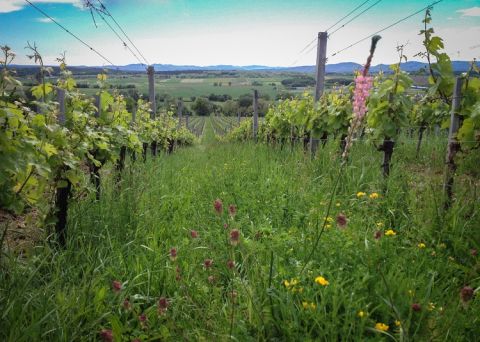
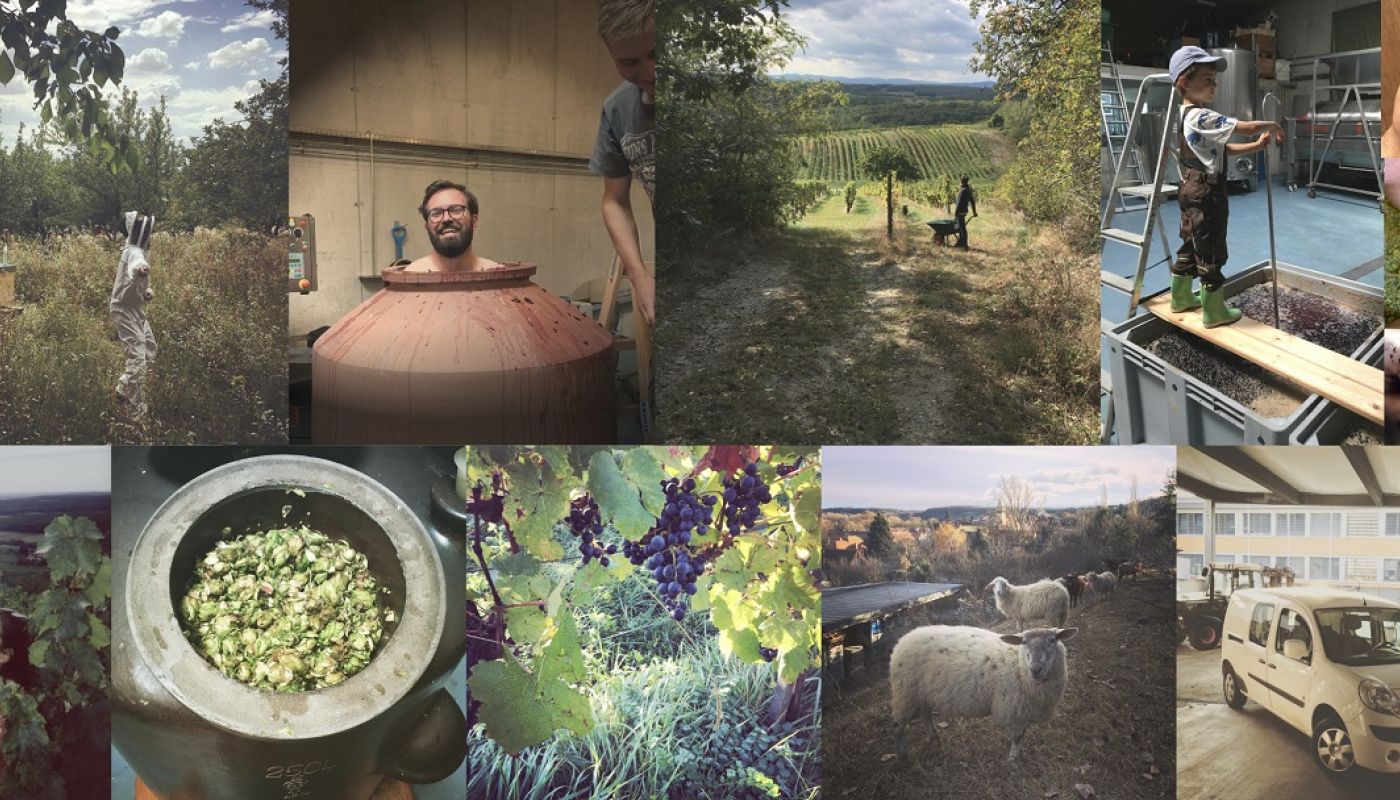
Certainly, where such philosophical ideas are born and able to survive, more practical achievements towards sustainability are also easy to find. On Weninger’s website, the list of efforts toward reaching a closed, self-sufficient system by modern environmental warriors gets longer every year. These include his approach to soil fertilization, blending with the natural environment, and product packaging.
Carbon dioxide is stored in the soil through fertilization with manure and the build-up of humus with biochar. The vineyards are fully green-covered, which not only protects against soil-erosion, but, as Weninger believes, lets the cover crops act as a natural way of yield-control.
The Weninger vineyard blends in perfectly with its rural environment. There are ecological compensation areas allowing Mother Nature to host swarms of insects, bees, planted bird-nesting boxes, with trees and hedges to give refuge to animals, and pastures to welcome sheep walking among the vines.
Further down the product lifecycle, the bottles are sourced in Austria and, once filled with wine, packaged into cleverly folded cases made from recycled paper; no need for adhesive tape.
The winemaking conditions also respect nature. According to Weninger:
'Not only the work in the vineyard or in the cellar but also the social interaction and energy use at the winery must be sustainable. For heating, we use wood from our forest. We have a natural cellar. We use groundwater for cooling. We generate electricity with solar panels, and we drive to our vineyards in electric cars. We look forward to the first electric tractors, but we are well aware that it is not technology that preserves our environment but the thoughtful application of it.'
Becoming actively sustainable is like wearing a tattoo on your face: you really must believe in it. It is beautiful to learn about such committed people, but it may not be sufficient: in order to make a living selling their products, they need the same support from their customers that they give to the environment.
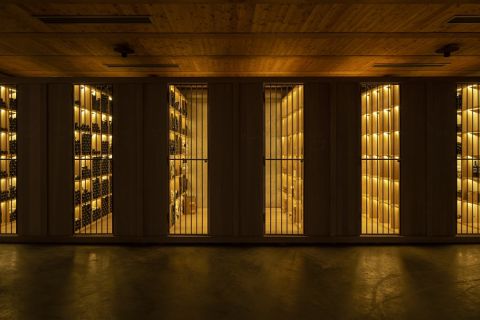
Weninger offers a yearly subscription based on the American model of community-supported agriculture popular in the 1960s. For 33 Euros a month, every subscriber gets a bottle of every wine of the vintage (between 19 and 24 bottles) stored in their personal compartment in the wine archive, delivered once a year.
To my thinking, this final human connection closes a perfect Steinerian loop, where not only do the producers think of the environment and their crop, but the customer is also linked into the sustainability chain to assure that this system will stay alive, hopefully for many decades. Since what is the final goal of sustainability if not to make the earth a better place for us, wine-drinking earthlings?