
At the risk of straying into other writers' territory, I cannot help pondering the nature of fashion, and in particular how it affects wine consumption. I can easily understand why a few years ago hundreds, if not thousands, of wine drinkers fell in love with Cloudy Bay Sauvignon Blanc from New Zealand. It had a completely new and very distinctive taste, and a thoroughly novel and attractive label.
But why has pink champagne become so popular over the last year or two that many important labels are currently rationed or even unavailable? The rosé market leader Laurent Perrier has just been able to raise its suggested UK retail price to an almost incredible £37.99 a bottle. It was only £24.99 as recently as the late 1990s. So strong is demand for it that the Waitrose champagne buyer, for example, was able to tell me proudly last week that her allocation has been increased so that she will soon be able to offer it in perhaps as many as a dozen of their 130-odd stores.
I am as mystified as Andrew Willy, wine buyer at Selfridge's, arguably Britain's most important retailer of fine champagne, who was so surprised to see that sales of his own-label rosé champagne had risen by 46 per cent last year that he queried the figures.
In 1995 rosé champagne represented 3.2 per cent of all the champagne shipped to Britain. Last year the proportion was 5 per cent, and that was of a record-breaking total volume of champagne which crossed the Channel. And it is not just the British who are wallowing in the pink. The French and to a certain extent Americans are buying unprecedented quantities of rosé champagne too.
One theory is that it is a natural side-effect of prosperity. If people feel expansive, they expand into what we might call white champagne and if they feel very expansive apparently they might try the other colour. "It's a mood thing", according to one Master of Wine employed by a prominent champagne house. There was a previous spike in consumption of pink champagne, particularly in the drinking dens of London's financial district, during the Nigel Lawson loadsamoney era of the late 1980s, but the current wave of enthusiasm is even more marked.
When I expressed doubt to Laurent Perrier's Champagne Charlie that these testosterone-fuelled bars really tolerated a colour as frivolous as pink in their glasses he just leered. "The nice thing about rosé is that the boys don't mind it and the girls love it."
It is true that, not before time, pink wine in general is enjoying the spotlight of fashion, but I still wonder what it is that presses the button. Some cite behemoth Moët & Chandon's recent specific advertising of rosé. Others point to high profile consumption of pink champagne in the lifestyle magazines devoted to the public lives of footballers and pop stars. The official line among champagne producers is that we are simply growing up and realising that champagne comes in different styles. These same observers report a smaller but distinct increase in demand for sweeter, demi-sec champagnes to drink at the end of a meal – and certainly many a rosé is suitable for drinking with food.
But on the basis of tasting nearly 70 pink champagnes in London last week, I have to say that some rosés are pretty unsuitable for drinking in any circumstances. Some producers seem to feel that the way to jump on the rosé bandwagon is simply to blend in a bit of red wine for colour and much more sweetening than usual before final bottling. A disappointing proportion of rosé champagnes simply seemed too uncomfortably sweet to my palate, while others were based too obviously on underripe, astringent or stale fruit – and the colours varied wildly.
Unlike still wines, pink champagne can be made perfectly legally by blending red and white wine – indeed it is the most common production method in the Champagne region. Some rosé champagnes however are made from the dark-skinned Pinot grapes that constitute the majority of those grown in the region and tinted to the desired colour by leaving the juice briefly in contact with the skins. They are often labelled Rosé de Saignée, which might crudely be translated as bleeding pink.
There seem to be several valid styles of rosé champagne. There is a handful of seriously fine wines that happen to be pale pink. The most obvious examples are the pink versions of Billecart Salmon non vintage, Charles Heidsieck 1996, Jacquesson's Grand Vin Signature 1995, Krug, Laurent Perrier Grand Siècle 1997, Louis Roederer's still-youthful 1998 and Taittinger Comtes de Champagne 1996. These wines represent truly conscientious wine-making and luxury wine-tasting in bottle. Prices tend to be ultra-luxurious but the (currently very youthful) Billecart-Salmon rosé can be found for £32.95 a bottle from Berry Bros & Rudd (www.bbr.com) – the really high price is reserved for Billecart's top Cuvée Elisabeth Salmon Rosé. All these wines can be served with food as well as before a meal, and unlike most rosés can benefit from bottle age.
Then there are bumptiously fruity wines that work (as opposed to stale and/or sickly ones than do not). Good examples of these include Henri Abelé Cuvée de Prestige Rosé, Cru des Riceys NV (as much of a mouthful as its name), J Charpentier's Rosé Brut NV (just £14.99 from the Village Vintner of East Tisted, Hampshire), Delamotte NV, Duval Leroy's Fleur de Champagne NV, Gardet's 1998, Alfred Gratien's Cuvée Paradis NV, Jean Moutardier Brut NV (£16.95 when Great Western Wines of Bath receive new stocks at the end of this month), Alain Thiénot's precocious 1999, Pierre Vaudon Premier Cru NV from the adept Union Champagne co-operative and de Venoge NV.
Then there are particularly distinctive styles of rosé champagne such as grower Larmandier-Bernier's very dry NV which basically tastes like sparkling red burgundy, Pol Roger's big and fleshy 1996, Pommery's particularly delicate and silky NV and Tarlant's strangely tomato-flavoured, big-boned 1996.
Current rosé non vintage champagnes I have tasted but cannot recommend even as the height of fashion are Beaumet, Alexandre Bonnet, Philippe Brugnon, Guy Cadel, Canard-Duchêne, Guy Charbaut, Veuve A Devaux, Heidsieck Monopole, Jeeper, Lenoble, A Margaine, G H Martel, Moutard Père et Fils, Nicolas Feuillatte, Pannier Egerie, J P Secondé, Tribaut and Vollereaux. (If enough purple pagers tell me they would like full tasting notes and ratings of the 70 pink champagnes I tasted, I will publish them.)
Pink champagne – fashionable but too often dire
Friday 26 March 2004
• 4 min read
选择方案
会员
$135
/year
适合葡萄酒爱好者
- 存取 289,030 条葡萄酒点评 & 15,887 篇文章
- 存取《牛津葡萄酒指南》及《世界葡萄酒地图集》


核心会员
$249
/year
适合收藏家
- 存取 289,030 条葡萄酒点评 & 15,887 篇文章
- 存取《牛津葡萄酒指南》及《世界葡萄酒地图集》
- 提前 48 小时获取最新葡萄酒点评与文章
专业版
$299
/year
供个人葡萄酒专业人士使用
- 存取 289,030 条葡萄酒点评 & 15,887 篇文章
- 存取《牛津葡萄酒指南》及《世界葡萄酒地图集》
- 提前 48 小时获取最新葡萄酒点评与文章
- 可将最多 25 条葡萄酒点评与评分 用于市场宣传(商业用途)
商务版
$399
/year
供葡萄酒行业企业使用
- 存取 289,030 条葡萄酒点评 & 15,887 篇文章
- 存取《牛津葡萄酒指南》及《世界葡萄酒地图集》
- 提前 48 小时获取最新葡萄酒点评与文章
- 可将最多 250 条葡萄酒点评与评分 用于市场宣传(商业用途)
More Free for all
Free for all
在较为奇特的葡萄品种中备受青睐的选择。本文的简化版本,推荐较少,由金融时报 发表。 与甚至仅仅10年前相比...
Free for all
维多利亚州查尔默斯酒庄 (Chalmers Wine) 和查尔默斯苗圃 (Chalmers Nursery) 的 金·查尔默斯 (Kim...

Free for all
在伦敦勃艮第周之后,如何看待这个特殊的年份?毫无疑问,产量很小。而且也不算完美成型。本文的一个版本由金融时报 发表。请参阅...
Free for all
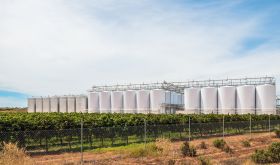
世界上充斥着无人问津的葡萄酒。本文的一个版本由金融时报 发表。上图为南澳大利亚的葡萄酒储罐群。
读到关于 当前威士忌过剩...
More from JancisRobinson.com

Wine news in 5
此外,潮湿天气使加利福尼亚25年来首次摆脱干旱,并在杜罗河谷的葡萄园留下积雪——这让保罗·西明顿 (Paul Symington) 的狗奥托...

Wines of the week
如果说有一个国家在性价比葡萄酒方面表现出色,那一定是葡萄牙。这又是一款支持这一理论的葡萄酒。价格从 7欧元,11.29美元, 20英镑起...
Tasting articles
这是第 13 篇也是最后一篇进行中品鉴文章。有关此年份的更多信息,请参阅 勃艮第 2024 年份 – 我们的报道指南。
索迈兹...

Tasting articles
这是第 12 篇也是倒数第二篇进行中品鉴文章。有关这个年份的更多信息,请参阅 勃艮第 2024 年份 – 我们的报道指南。
夸尔酒庄...

Inside information
本月的冒险之旅中,本 (Ben) 前往北方的丹麦、瑞典和挪威。
我们抵达了一个国家,那里的北欧棱角被一层洁白的雪毯所柔化。蓝白色的...

Tasting articles
13 篇进行中品鉴文章中的第 11 篇。有关此年份的更多信息,请参阅 勃艮第 2024 年份 – 我们的报道指南。
阿涅丝·帕凯酒庄...

Tasting articles
13 篇进行中品鉴文章中的第 10 篇。有关此年份的更多信息,请参阅 勃艮第 2024 年份 – 我们的报道指南。
马真塔公爵酒庄...

Tasting articles
13 篇进行中品鉴文章中的第九篇。
皮埃尔·拉贝酒庄 (Pierre Labet)(博讷 (Beaune))
...