Volcanic Wine Awards | 25th anniversary events | The Jancis Robinson Story

Behind the scenes when a Brunello vintage is rated

Monday 29 January 2018 • 3 min read
Image

Each new vintage of Brunello di Montalcino is given an official rating of up to five stars. Alessandro Torcoli, editor of the Italian wine trade publication Civiltà del Bere, was part of a small group of Italian wine writers allowed for the first time to witness the process. (Walter couldn’t make it.) Perhaps articles like this may encourage a slight redesign of the score sheet?

How many stars will the 2017 Brunello get? In the end it has been decided that it’s a four-star vintage but we’ll come back to this later. 

We entered the control room where the average level of a vintage from one of the most prestigious DOCGs in Italy gets decided. For the first time ever, last Thursday, a few journalists were admitted to the conclave of wine technicians and we took part willingly in order to understand and reflect on the method that determines whether a vintage is good (three stars), excellent (four) or outstanding (five).

Let me explain how it works: the Consorzio asks for samples from all the members who voluntarily take part. The organisation chases up a few particularly important wineries so that they can get a representative basis for assessment. This means wines from the whole territory, which, in the case of Montalcino, is not homogeneous due to the significant differences in climate and soil between the northern and southern slopes.

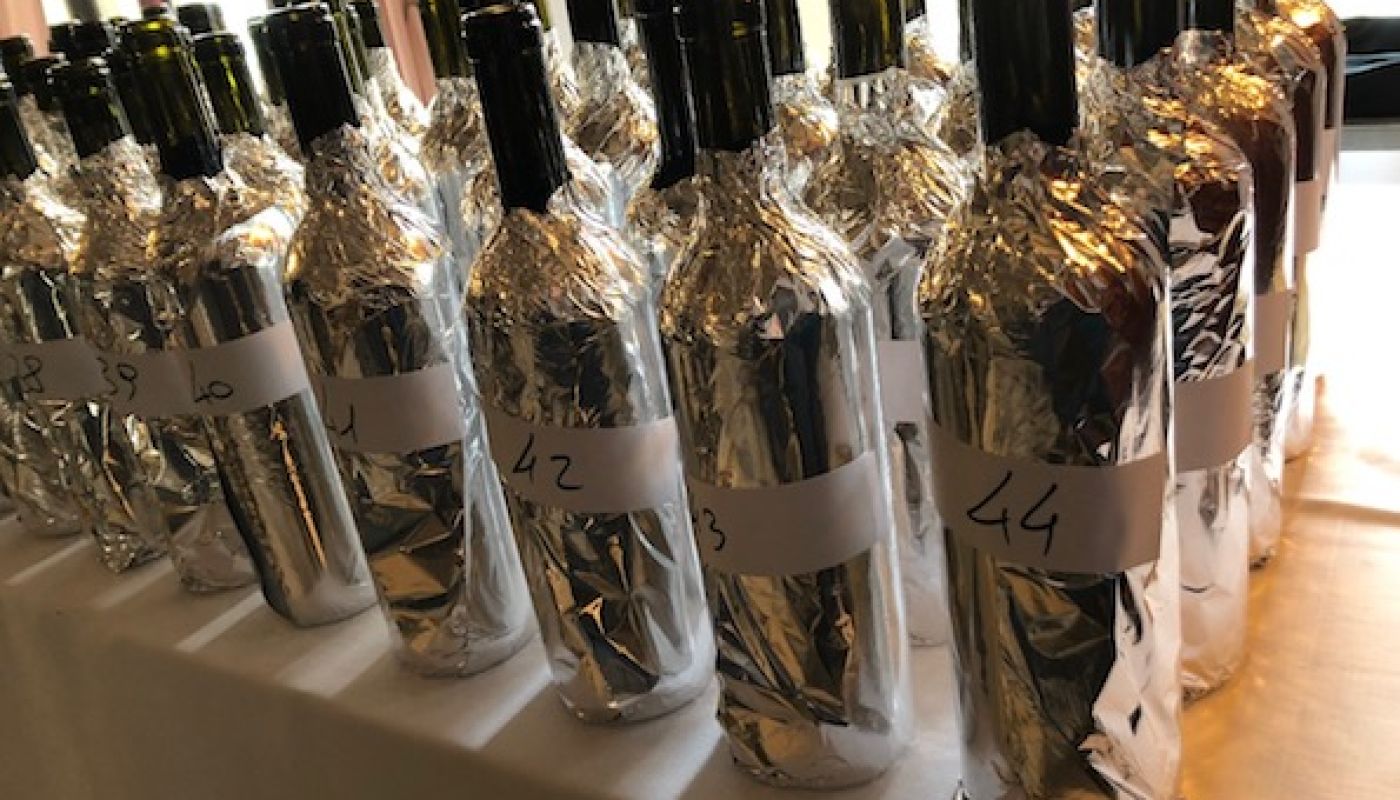
This year there were 44 samples, similar to previous years, representing 80% of production (basically including the Brunello giants). The 44 wines are bottled for the occasion, seeing that the wine will have to age patiently for two years in wood and a further three years in bottle before reaching the consumer. Basically we tasted wines that you ordinary mortals will only be able to try in 2022.

It is very difficult to predict how a wine will evolve over the next five years. The samples that seemed lightweight and edgy will probably relax, while the invigorating and muscular ones may become flabby. This calls for us to take a look at the method. Although there is a conflict of interest when the winemaker judges a wine from his own area, he or she is certainly going to be better able than most to interpret how the wine will evolve. It’s their job. The wine critic much less so. Of course, the critic hangs around wineries and often tastes immature samples from barrel, but, except in rare cases, it’s not a regular occurrence. They prefer to assess the wine when the bottle is about to reach the consumer, which makes sense. Wine critics write for themselves, not to give advice to the winemaker.

In short, our combined score was 89.5 (an exact average of the 44 scores) which would qualify it for a five-star ranking (from 86 to 100). So why did we say it was a four-star vintage? Mainly because the score on the assessment sheets puts a lot of emphasis on colour. Considering that it is rarely awful, the appearance alone counts for an average of 14 to 18 points. This is enormous compared to the much lesser weight a wine critic gives to an intense or pale, bright or dull ruby red, without counting the purplish hint of any four-month-old wine. Now, if the colour parameter were not considered, all the others would need to be reset. We are not saying that our average of 89.5 would automatically become 74-75, so two stars (from 71-75 points). However, the average would definitely drop. Imagine for a moment that we eliminated just one score given to the wine’s appearance (currently there is both intensity and tonality but let’s suppose we kept just a general ‘colour’), we would arrive at a score of around 81-82 points, so four stars (from 81 to 85).

Four stars seems fair enough: we tasted about ten excellent wines, a few mediocre samples and the average was pretty good. It’s another matter to comment, not on the level of the wines, but on their style, which varied a lot between elegant and fresh, and muscular and mature. We know that finding many differences is a typical feature of all the Italian DOCs (Barolo and Valpolicella, for example) and we need to reflect on this. Can a mature designation allow itself such freedom? The answer could be cryptic: yes and no. Yes, if such differences correspond to differences in cru or area (like the differences in Bordeaux and Burgundy). No, if we want to pretend that Brunello has a uniform personality. It is now generally accepted that it has just one father, Sangiovese, but that there are several different children.

Choose your plan
Member
$135
/year
Save over 15% annually
Ideal for wine enthusiasts
  • Access 289,030 wine reviews & 15,888 articles
  • Access The Oxford Companion to Wine & The World Atlas of Wine
Inner Circle
$249
/year
 
Ideal for collectors
  • Access 289,030 wine reviews & 15,888 articles
  • Access The Oxford Companion to Wine & The World Atlas of Wine
  • Early access to the latest wine reviews & articles, 48 hours in advance
Professional
$299
/year
For individual wine professionals
  • Access 289,030 wine reviews & 15,888 articles
  • Access The Oxford Companion to Wine & The World Atlas of Wine
  • Early access to the latest wine reviews & articles, 48 hours in advance
  • Commercial use of up to 25 wine reviews & scores for marketing
Business
$399
/year
For companies in the wine trade
  • Access 289,030 wine reviews & 15,888 articles
  • Access The Oxford Companion to Wine & The World Atlas of Wine
  • Early access to the latest wine reviews & articles, 48 hours in advance
  • Commercial use of up to 250 wine reviews & scores for marketing
Pay with
Visa logo Mastercard logo American Express logo Logo for more payment options
Join our newsletter

Get the latest from Jancis and her team of leading wine experts.

By subscribing you agree with our Privacy Policy and provide consent to receive updates from our company.

More Free for all

White wine grapes from Shutterstock
Free for all Favourites among the quirkier vine varieties. A shorter version of this article, with fewer recommendations, is published by the Financial...
Kim Chalmers
Free for all Kim Chalmers of Chalmers Wine and Chalmers Nursery in Victoria is no stranger to JancisRobinson.com. She was an important influence...
J&B Burgundy tasting at the IOD in Jan 2026
Free for all What to make of this exceptional vintage after London’s Burgundy Week? Small, undoubtedly. And not exactly perfectly formed. A version...
Australian wine tanks and grapevines
Free for all The world is awash with unwanted wine. A version of this article is published by the Financial Times. Above, a...

More from JancisRobinson.com

The Sportsman at sunset
Nick on restaurants Nick denies an accusation frequently levelled at restaurant critics. And revisits an old favourite. Those of us who write about...
Otto the dog standing on a snow-covered slope in Portugal's Douro, and the Wine news in 5 logo
Wine news in 5 Plus, wet weather makes California drought-free for the first time in 25 years and leaves snow on Douro vineyards. Much...
Stéphane, José and Vanessa Ferreira of Quinta do Pôpa
Wines of the week If there’s one country that excels at value-priced wines, it would have to be Portugal. This is yet another wine...
Benoit and Emilie of Etienne Sauzet
Tasting articles The last of our alphabetically organised tasting articles: reviews of wines tasted by Matthew in the Côte d’Or and by...
Simon Rollin
Tasting articles The penultimate of 12 alphabetically organised tasting articles: reviews of wines tasted by Matthew in the Côte d’Or and by...
Iceland snowy scene
Inside information For this month’s adventures Ben heads north to Denmark, Sweden and Norway. We’d arrived in a country whose Nordic angles...
Shaggy (Sylvain Pataille) and his dog Scoubidou
Tasting articles The 10th of 12 alphabetically organised tasting articles: reviews of wines tasted by Matthew in the Côte d’Or and by...
Olivier Merlin
Tasting articles The ninth of 12 alphabetically organised tasting articles: reviews of wines tasted by Matthew in the Côte d’Or and by...
Wine inspiration delivered directly to your inbox, weekly
Our weekly newsletter is free for all
By subscribing you're confirming that you agree with our Terms and Conditions.