Yesterday was World Sauvignon Blanc Day, which may well have come and gone without your noticing.
I’m aware of it only because a couple of weeks ago I took part in a fascinating blind tasting in anticipation of the great day. A small group of wine professionals compared pairs of Sauvignons from its homeland the Loire and its (New) World centre of operations New Zealand. Exercises of this sort are usually organised by the upstart region or country, eager to prove that they are the equal of the established practitioner. But in this case, New Zealand Sauvignon is so popular – worldwide – that New Zealand winemakers could hardly be described as upstarts in this respect. The tasting, unusually and delightfully, was organised and hosted by both interested parties acting in unison.
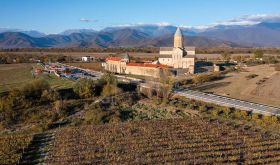
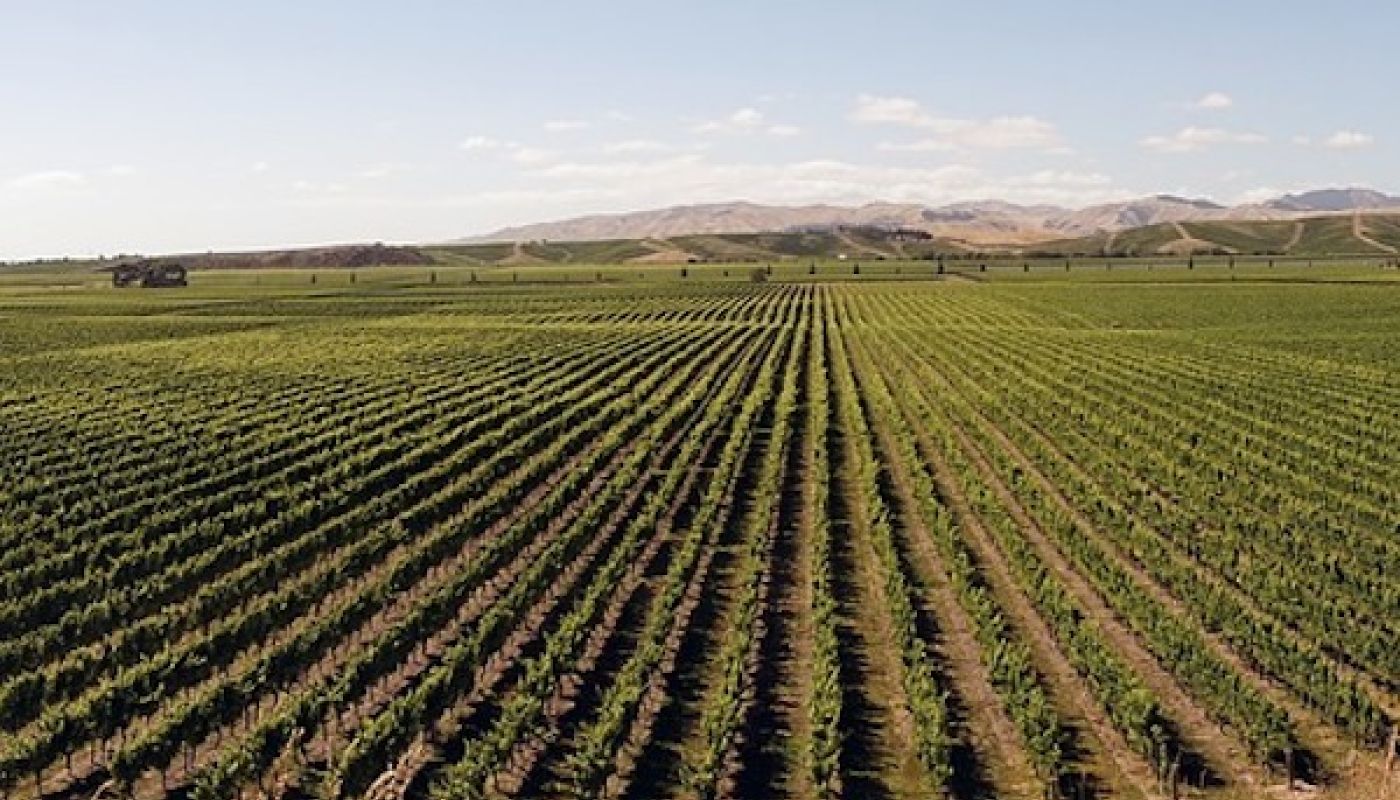
Marlborough in the north of the South Island (pictured) is the powerhouse of NZ Sauvignon production, producing 80% of the country’s wine. From a standing start – the first vintage of Marlborough Sauvignon Blanc was 1979 – New Zealand Sauvignon has been so successful commercially that it accounts for almost 90% of the country’s wine exports. Nowadays Marlborough Sauvignon is as popular with Australians (Australians! – who call it Savvy) and Americans as with the British who first fell in love with Cloudy Bay back in the mid 1980s. But it could not be accused of unpredictability. Its generally monotone nature – pungently perfumed, unashamedly tart, immediately recognisable and, often, a little bit sweet – has made it beloved by regular wine drinkers and rather despised by us jaded, fussy wine professionals.
Thanks partly to all the Sauvignon Blanc planted in Bordeaux, France is the world’s leading grower of the variety, but producing NZ SB can be so profitable (no expensive oak ageing; wine sold at only a few months old) that total New Zealand plantings of Sauvignon Blanc have been catching up fast. (Chile, inspired by the New Zealanders’ success with the variety, has the world’s third biggest total of Sauvignon Blanc acreage.)
France’s most famous Sauvignon Blanc appellations are all in the Loire: Sancerre and Pouilly-Fumé with their outlying villages Reuilly, Quincy and Menetou-Salon, plus Touraine whose whites are invariably based on Sauvignon Blanc. The theory goes that Loire Sauvignons are more subtle, more reticent, drier, longer lasting and more likely to taste mineral than fruity, so they should be easy to distinguish from the New Zealand newcomers.
In terms of average temperatures, Marlborough is very similar to the Loire, but there’s a crucial difference. Depletion of the ozone layer over New Zealand means that ultraviolet radiation levels are 40 times higher than its latitude would suggest, and this, together with the long hours of sunshine and an atmosphere far from industrial or even urban pollution, seems to imbue the wines with their almost blinding brightness of fruit. Average annual rainfall is also about the same in the Loire and Marlborough but the Marlborough soils hold so little water that most growers there irrigate their vines. Only a handful of European-influenced producers such as the Swiss-founded Fromm and Clos Henri, owned by none other than the Bourgeois family of Sancerre, are trying to farm without added water.
The six pairs of Sauvignons for our blind tasting were chosen by wine scientist Jamie Goode of wineanorak.com, who has studied Sauvignon Blanc in considerable scientific detail, and one-time New Zealand resident, author of The Wines of New Zealand and Master of Wine Rebecca Gibb. One intriguing finding is that grapes picked by machine, as virtually all are in underpopulated Marlborough, rather than by hand, have 10 times more of 3MH and 3MHA, two of the key thiols, aromatic compounds associated with Sauvignon Blanc (see Battle of the Sauvignons).
Mind you, so many grapes are now machine-harvested in the Loire as well, that some producers there have taken to boasting of hand picking on their back labels. Furthermore, many younger producers in Touraine, where land costs are a fraction of those in well-established Sancerre, have travelled to New Zealand to absorb their winemaking methods – which often include picking grapes at different levels of ripeness, underripe for freshness and just overripe for lusciousness – and then blending them. So while I find Sancerre still tastes like Sancerre because it can afford to, some of the Touraine Sauvignons can be eerily New Zealand-like. Indeed a brand of Loire Sauvignon Blanc called Kiwi Cuvée was born as long ago as the last century.
Despite this, it was pretty obvious in most cases in the blind tasting which was the northern and which the southern hemisphere wine. Any trace of sweetness tended to indicate New Zealand, whose wines generally tended to be paler than the Loire examples that, counter-intuitively, seemed to age faster than the New Zealanders. Fellow wine writer Steven Spurrier confessed halfway through the tasting of wines served in masked bottles by a sommelier at the wine-minded club 67 Pall Mall that he had noted the difference in bottle tops carefully. Those that had obviously been screwcapped he assumed to be from New Zealand.
This didn’t work with the fourth and fifth pairs, however. The fourth pair, both cork stoppered, consisted of an example of a Sauvignon Blanc made in each of Marlborough and Sancerre by the same family, the Bourgeois. And the New Zealand one, the Clos Henri 2016 Marlborough, was my favourite wine of the tasting. I thought it had the finesse of a top-quality Sancerre and noted that it was so dominated by terpenes, floral and citrus flavour compounds, that it almost tasted like Riesling. (There is no greater compliment in my book.) The Bourgeois, Monts Damnés 2017 Sancerre, seemed a bit heavier on its feet.
Nor did the screwcap test work on the next pair since the Loire example was made by Joel Delaunay, a screwcap pioneer in Touraine. And the sixth pair included an exception too, Sauvignon from the North Island region of Hawke's Bay, made by one of the first ambitious wine producers in New Zealand, Te Mata, Brit John Buck. Te Mata’s Cape Crest has been made since 1991 and nowadays is made following a recipe that’s more Bordeaux than the Loire, fermented in oak and incorporating some Sémillon and Sauvignon Gris in the blend.
So, the tasting showed that, even with Sauvignon Blanc (as with so many styles of wine), there is no longer a gulf between the Old and New Worlds and, with the exception of Villa Maria Private Bin, NZ wines tend to be more ambitiously priced.
TRANSHEMISPHERICAL SAUVIGNONS
The wines are listed in my order of preference. Most of these wines are available from several other UK retailers and in other countries.
Clos Henri 2016 Marlborough
£21.99 The NZ House of Wine
Te Mata, Cape Crest 2018 Hawke's Bay
£19.99 The NZ House of Wine
Joel Delaunay 2018 Touraine
£12.50 Noble Green Wines
Greywacke Wild Sauvignon 2016 Marlborough
£25.50 Eton Vintners
Domaine de Renaudie 2018 Touraine
£12.50 Wine Cellar Club, Berkshire
Bourgeois, Côte de Monts Damnés 2017 Sancerre
£310 a dozen Millésima
Domaine Denis Jamain, Les Fossiles 2018 Reuilly
£14.99 Virgin Wines
Domaine du Pré Baron, Vieilles Vignes 2017 Touraine
£10.59 All About Wine
Villa Maria, Private Bin 2018 Marlborough
£9.40 Noble Grape. £10.99 Majestic and many, many more
Domaine Delobel, Cuvée Exponentielle 2017 Touraine
Brancott Estate, Chosen Rows 2010 Marlborough
Cause & Effect 2017 Marlborough
£17.49 Naked Wines
For tasting notes see Battle of the Sauvignons.