
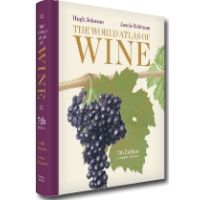
The following is an enhanced extract from the forthcoming 7th edition of the classic reference work The World Atlas of Wine by me and Hugh Johnson. It will be published as a book and an iBook on 7 October. Find out more, including how to order a copy, from www.worldatlasofwine.com. As too often, publishers were unable to agree on the jacket design. The US jacket is shown below right and the UK jacket is on the left. The content is identical, but rather differently presented in the iBook.
One of the more potent symbols of the westernisation of China has been the extent to which the staggeringly numerous Chinese have taken to wine. Consumption is rising at such a rate, estimated at 15% a year, that not just Shanghai and Beijing but the so-called second-tier Chinese cities have become even more popular destinations for French wine exporters than New York and London. So effective has the Bordeaux sales machine been that a considerable proportion of the fortunes recently made in China have been spent on red bordeaux – especially the grandest names and particularly, for a while, the first growth Ch Lafite – with a direct inflationary effect on global wine prices. Then, as the Chinese discovered France’s second most famous red wine, burgundy prices rose, too. China’s new connoisseurs have even begun to invest in foreign wine estates themselves, typically for hard-nosed commercial reasons. According to Bordeaux estate agents Maxwell Storrie Baynes, more than 50 local wine châteaux are already in Chinese hands and demand continues unabated.
The vine is not entirely new to the Chinese however. It was known to gardeners in far western China at least as early as the second century AD when wine, very possibly grape wine, was certainly made and consumed. European grape varieties were introduced to eastern China at the end of the 19th century, but it was only in the late 20th century that grape-based wine insinuated itself into Chinese (urban) society. China’s love affair with grape wine – putaojiu as opposed to mere jiu, meaning any alcoholic drink – was so effectively encouraged by the state, partly in an effort to reduce cereal imports, that according to the most recent OIV [Organisation Internationale de la Vigne et du Vin] figures, China’s total vineyard area (including those devoted to fresh and dried grape production) nearly doubled to an estimated 1,384,000 acres (560,000 ha) between 2000 and 2011. Those same figures suggest that China has been the world’s sixth most important wine producer since the turn of the century. Independently verified Chinese statistics are hard to come by, however, and Chinese wine bottlers have notoriously bumped up production with imported wine, grape must, grape concentrate, and even liquids completely unrelated to grapes.
Throughout the early years of this century, it was difficult to find wines labelled as Chinese of any real quality. So fashionable was anything presented to Chinese consumers as a fair copy of red bordeaux (for linguistic and cultural reasons, the average Chinese consumer has so far insisted that wine must be red) that there was little incentive to try very hard. Cabernet Sauvignon, and to a lesser extent Merlot and Cabernet Gernischt (Carmenère), dominated plantings, but wines were typically under ripe and over-oaked. By about 2010, however, a small elite of carefully made, truly Chinese-grown wines finally emerged.
China’s vastness can offer a staggering range of soils and latitudes. Climate is more problematical. Inland China suffers typical continental extremes so that most vines have to be painstakingly banked up every autumn to protect them from fatally freezing temperatures in winter. This adds considerably to production costs, not least because a certain proportion of vines are lost each year as a consequence of being manhandled, but is currently just about affordable. The continued movement of the Chinese from countryside to cities, however, means that increased mechanisation of this laborious operation is surely likely.
Meanwhile, much of the coast, especially in southern and central areas, is subject to monsoons at inconvenient times for grape-growing. On the face of it the Shandong Peninsula in eastern China looks one of the more likely places to grow European grapes. With a truly maritime climate that requires no winter protection of vines, it offers well-drained, south-facing slopes. The first wineries and vineyards of the modern era were established there. Storms can strike inconveniently at any time between flowering and harvest but winters are mild. This is where about a quarter of China’s hundreds of wineries are now based, but fungal diseases in late summer and autumn are the main drawback.
Changyu was the Shandong pioneer and is still by far the dominant producer while Ch Changyu-Castel is a separate joint venture with the Castel family of Bordeaux. When, in 2009, the owner of Ch Lafite decided to establish a serious winery in China, in conjunction with the Chinese giant company CITIC, rather to the surprise of industry observers, it chose Shandong’s Penglai Peninsula. Further inland, Hebei province has the advantage of being even closer to Beijing, and its viticultural potential is probably not yet fully unlocked, but ambitious wine producers have been moving systematically west.
Hong Kong-owned Grace Vineyard was established in Shanxi province in 1997. By 2004, it was producing some of the finest wines in China but has since, like many others, been exploring Ningxia, Shaanxi, and Gansu provinces further west. Indeed, Ningxia’s local government is determined to make its reclaimed land – at around 3,300ft (1,000m) altitude on the gravelly east-facing banks of the Yellow River – China’s most important wine province. Pernod Ricard and LVMH (for sparkling wine production) have already been lured to set down roots here, and both the tentacular giant COFCO and Changyu, originally based in Shandong, are becoming significant producers in Ningxia. Berry Bros of London currently offer the debut 2008 vintage of Ch Changyu Moser XV (right), a Ningxia joint venture with Lenz Moser of Austria, at a cool £39 a bottle for this ornately packaged Bordeaux blend. Boutari of Greece has invested in Gansu, although soils can be less well-drained here.
In Xinjiang province in the far northwest, where much of the population is Muslim, ingenious irrigation systems harness meltwater from some of the highest mountains in the world, but the growing season is short – sometimes too short for wine grapes to ripen properly (many of the vines planted are for table and drying grapes) and the vineyards are thousands of miles from most consumers.
Hunnan/Yunnan province in the far south near Tibet is almost as far away, but its latitude means that winters are much milder. The privately owned Shangri-la winery is producing premium Cabernet Sauvignon, with both Chinese and Australian expertise, at well over 9,800ft (3,000m) altitude on the Diqing Plateau. A new frontier indeed.
CHINESE PICKS
These are names to be found on labels of wines from China that have pleased me more than most. The list is dominated by Ningxia names partly because that is the region I visited most recently, just over a year ago.
Ch Changyu Moser XV
Grace Vineyard
He Lan Qing Xue
Helan Mountain
Jade Valley
Silver Heights













