21 September Walter Speller assesses the life of the giant of Sicilian wine.
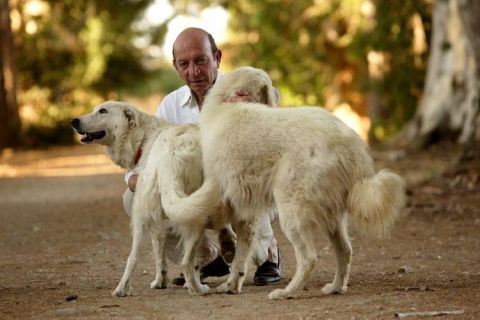
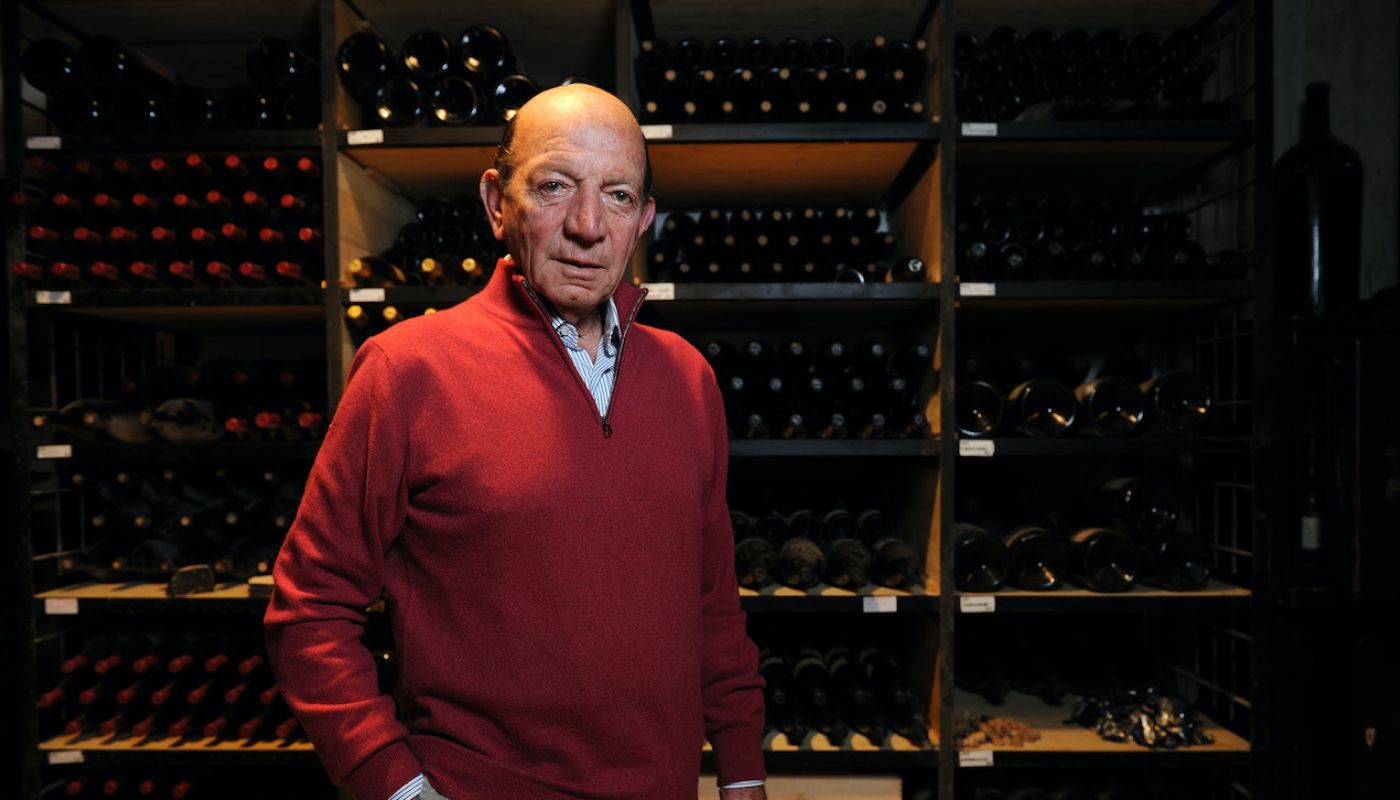
Diego Planeta, who played a key role in the modernisation of Sicilian viticulture and wine production, died at the age of 80 on Saturday 19 September. Sicily, as well as Italy, mourns a man who was both a highly talented entrepreneur and a visionary. Under his influence Sicilian wines changed (for the better) beyond recognition. He also helped turn around the fortunes of Sicily's indigenous varieties such as Grillo, Nero d'Avola and Nerello Mascalese, which in the last two decades have cemented Sicily's image as a producer of high-quality wines.
From 1973 until his retirement in 2011 Planeta had an extraordinary long run as the president of Sicily's largest co-op, Settesoli, which has over 2,000 members and is located in Menfi in the province of Agrigento. One of the first things he did was secure the help of Giacomo Tachis, at that time Italy's undisputed star consultant oenologist. Tachis was a self-proclaimed disciple of Professor Émile Peynaud, who, in turn, helped to modernise Bordeaux's winemaking. From that moment on it was clear that Diego Planeta had something similar in mind, the difference being that he was managing a giant co-op rather than a cru classé or a small estate in Tuscany.
It was Carlo Corino, hired in 1989, who put Planeta's vision in action. Before his appointment at Settesoli, this Piemontese oenologist had worked in Australia, and he immediately began to modernise the co-op by introducing new technologies such as temperature-controlled, stainless-steel tanks and the crusher-destemmer machines he had worked with there.
Following Corino's suggestion, Planeta began planting international grape varieties, such as Chardonnay and Merlot, and encouraged Settesoli members to do the same while supplying them with the necessary plant material. At that time, the international market had no interest in Sicily's indigenous grape varieties, which were often associated with dilute and inferior wines or were discreetly used to boost meagre wines and vintages in the north, with Germany and France being notable purchasers of Sicilian wine in bulk. The new Settesoli wines became an instant international success and Diego Planeta's name would forever be associated with this co-op's high-quality output at fair prices.
The same methods Planeta also applied to his large family estate, which he then handed over to his daughter Francesca and his cousins Alessio and Santi Planeta. Under their aegis the estate became one of the emblems of modern Sicilian wine, riding high on the international varieties wave. But being thoroughbred Sicilians, the Planetas soon began to produce blends of international varieties and local ones, in an effort to increase the latter's visibility as well as quality, and in doing so they opened the door to indigenous varietal wines. Over the last two decades this strategy has paid off, and soon the wines made from indigenous varieties, especially but not only Cerasuolo di Vittoria and Etna whites and reds, became as successful as their international counterparts and have now begun to overshadow them.
Planeta sensed that modernising Sicilian winemaking and viticulture was only part of the answer for an island where huge volumes of wines were often produced merely to attract the European Union's distillation subsidies. Together with Lucio Tasca d’Almerita and Donnafugata's Giacomo Rallo, Planeta set up Assovini Sicilia. In the absence of any effective official consorzio, this private initiative fills a void with a large-scale, annual event in which international wine media explore each Sicilian wine region during a three-day tour, followed by a presentation of new wines and vintages.
In over a decade the Assovini event, often copied unsuccessfully by other Italian wine regions, contributed immensely to raising Sicily's image as a quality wine region. It also became the stepping stone for the foundation of the Consorzio di Tutela Vini Sicilia DOC in 2014, with its first uphill battle being to get the bottling of Sicilian DOC wines outside the island outlawed. This has now become a reality.
Diego Planeta's passing is a tremendous loss for both Sicily and for Italy as a whole, but the legacy he leaves behind will remain relevant for generations to come. And while doubtless many monuments will be erected in his honour, he doesn't need any. Sicily and its wines and where they stand today represent the life-long contribution of Diego Planeta – the greatest monument of them all.
See our coverage of Planeta and its wines.
Message from Settesoli
My professional life has not been hard: it has been a pleasurable challenge and a taste of redemption, and perhaps the thing that helped me most was patience, so simply defined by Giacomo Leopardi as 'the most heroic of virtues, just because it does not have anything heroic.'
This is the opening of the Lectio Magistralis entitled: “Vino e metamorfosi del territorio. Una Case History: Menfi e le Terre Sicane” (Wine and the metamorphosis of the territory. A Case History: Menfi and the Terre Sicane). It was 2004 and this story was being told during the awarding of an honorary degree to Diego Planeta by the Università degli Studi di Palermo.
An award given to the farmer, not to the businessman, the knight or the nobleman. It was how he felt, how he defined himself. This showed his respect for the land, for the men who cultivated it with hard work and pride, his muddy car, his emotion at the first load of grapes arriving in the cellar, his ability to listen to the rhythm of the seasons.
Because Diego Planeta deeply loved his land, this fertile land where his roots lie, this generous countryside, nestled between the sea and the hills that is Menfi, but even more he loved that agricultural community that has been able to protect its own beauty and identity with determination.
Thanks to his guidance and intuition, today, in this strip of coast of Sicily, there is a unique story to tell, made up of men, vineyards and ideas.
This is our story, the story of Cantine Settesoli, a community of 2,000 winemakers that has been taking care of a wonderful 6,000-hectare vineyard every day for over 60 years, defending its biodiversity and producing distinctive wines with a unique character, distributed in over 45 countries.
Without his vision, the 5,000 families of the Terre Sicane district would not have contributed, supported and made that metamorphosis possible, initiating that social and economic transformation that is the fulcrum of the Lectio Magistralis within which Cantine Settesoli assumes a central role.
Diego Planeta used to say that of all his creations, Cantine Settesoli was the most loved, and after translating the enormous potential of the territory into a fruitful company, investing, experimenting and innovating together with the men and women of the community, after demonstrating that big is beautiful and that it can produce quality, in 2011 he 'stepped to the side' as he liked to call it; just like a good father who at some point lets his son walk alone and travel the world. The results achieved today are the fruit of these elements: a cohesive shareholder structure, the quality of the management approach that increasingly looks to quality and internationalisation, the awareness that it is necessary to work hard to build and guarantee an income for winemakers.
Giuseppe Bursi, President of Cantine Settesoli, says: 'Today Cantine Settesoli has certainly lost a charismatic figure. An important chapter of its history ends, because Diego Planeta represents the history of this winery. His teachings and his intuition are the roots and the outline of our future.'