
See my tasting notes on Beaujolais and a few Muscadets and Richard on Muscadet.
France has two wine regions famous for whites and reds respectively that are nowhere near each other but whose histories have been spookily similar. Muscadet and Beaujolais were staples on shelves and wine lists not so long ago but this century have rather faded from view – and therefore offer some of the wine world's great bargains. So much so that vine growers in Muscadet are seriously worried about the viability of their appellation (see
this thread in our Members' forum), and Beaujolais producers are so fearful for their future that they hardly dare raise their absurdly low prices. Where else could you find a wine made with French finesse from vines that are 70 years old for under £11 a bottle? (I am thinking specifically of Lagneau's Régnié 2011 which Stone Vine & Sun will be selling for £10.95 from next month.)
Neither Muscadet nor Beaujolais traditionally fits the recent fashion for wines with relatively high alcohol, super-ripe fruit, low acidity and some marked oak. One other small coincidence is that both wines are made from a single grape variety – Melon de Bourgogne and Gamay Noir respectively – which have exactly the same parents, Pinot and Gouais Blanc. These two prolific breeders also gave us Chardonnay and Pinot Noir, grapes that are generally much more widely respected than Melon and Gamay. In fact as long ago as 1395, when Gamay was making incursions into Pinot vineyards in Burgundy proper to the north of Beaujolais, it was dismissed as 'bad and disloyal' by the then Duke of Burgundy Philippe le Hardi.
And in Muscadet at the mouth of the Loire, the more famous Chardonnay is seen as a bit of a saviour. Wine sales have been so sluggish that the total area of Muscadet vineyard has fallen from 13,000 to under 8,000 hectares of vineyard in the last five years. Loire wine broker Charles Sydney reckons that '50% of Muscadet vignerons have either gone bust or given up since the start of the recession'. Partly under pressure from the merchants who buy and blend so much of the wine, there are moves afoot to allow Chardonnay, and possibly Sauvignon Blanc, into Muscadet, thereby presumably changing its character, too. As if to complete the transformation of Muscadet into a generic mass-market white wine, they are also proposing to allow much higher sugar levels in this quintessentially crisp, dry wine whose classical character is as a vaguely saline, quintessentially Atlantic mouthful, the perfect foil for oysters.
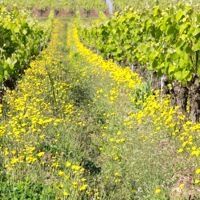
Apart from a handful of over-performers such as Guy Bossard of Domaine de l'Écu (vineyard photo above taken from their website) and those listed below, Muscadet is a decidedly tough sell. This is a great time to buy top-quality Muscadet, however, since 2012, the vintage just making its way on to the market, is the finest for a very long time. The best wines, those (unusually) picked by hand rather than by machine, which in 2012 tended to include too high a proportion of leaves in this region without many sorting tables, should be able to provide exciting, vibrant, truly thirst-quenching drinking for the next two or three years at least.
Some producers are trying to revitalise the appellation by using obvious oak ageing and/or the new special cru names for individual subregions, but arguably Muscadet's great virtue is its unadorned, appetising simplicity.
Much the same phenomenon can be observed in Beaujolais, another undervalued appellation, and one that has long had a system of special crus in place. Indeed, so established are crus such as Morgon, Moulin-à-Vent, Fleurie and Juliénas, all villages in the Beaujolais hills, that their wines, perhaps confusingly, don't even have the B-word on the label. The total area of Beaujolais vineyard has been falling, too: from 23,000 hectares in 2000 to 17,000 hectares today and the number of growers has fallen even more steeply, from more than 3,600 at the turn of the century to fewer than 2,200.
Just as in Muscadet, some Beaujolais growers have been turning to oak in the hope of making their wines more sellable – not always successfully. I recently tasted nearly 100 current beaujolais from a range of different vintages, mainly the last three. There were some lovely wines, mainly 2011s and all underpriced, but the most recent vintage 2012 clearly posed some real problems. The run of three years from 2009 that at long last delivered both quality and quantity came to a juddering halt. The total 2012 crop was halved by frost and hail, and the weather during a protracted vintage was far from kind. Some growers clearly had difficulty getting their grapes to ripen at all. Unfortunately for them, too few producers had taken advantage of the charms of the concentrated 2009s, succulent 2010s and lively 2011s to raise their prices to more sensible levels (yes, it is rare for me to complain wine prices are too low) and few wine buyers would be happy about a premium for the small but hard 2012 crop.
My favourite 2012 beaujolais were those not trying to be a burgundy. In fact most of my favourite beaujolais are not trying to be burgundy and it's a particularly dangerous ploy in a vintage as light and low in fruit as 2012. Except in exceptionally ripe vintages such as 2009, beaujolais' charm is in being refreshing and not too heavy. There is no need for a long maceration or oak ageing for a wine designed to be drunk relatively young. Ambition is not always an asset in a Beaujolais producer.
My beaujolais tasting had a special subsection of wines made by young people with old vines, and was extremely heartening. There was a particularly impressive range from Jeannine and Didier Lagneau in their thirties, whose Beaujolais-Villages vines are 65 years old while their Côte de Brouilly vineyard is 80 years old.
Beaujolais suffers from a crisis of identity. As many people ask me, 'What happened to Beaujolais Nouveau?' This was the pear-drop-scented product of fatally rushed vinification which left the wine with far too little real personality but the ability to be shipped and sold within two months of the harvest. It is not just producers but also consumers who need to reacquaint themselves with the ineffably fruity, crunchily appetising appeal of properly made – but not over-engineered – beaujolais that represents the apogee of Gamay grapes. Just as Muscadet can demonstrate the apogee of Melon de Bourgogne. Neither of these grapes shines anything like as brightly anywhere else in the world.
SOME RECOMMENDATIONS
Muscadet
With some ex-cellar prices
Bruno Cormerais, Clisson 2009 Muscadet-Sèvre et Maine
Fief Guérin, Vieilles Vignes Sur Lie 2012 Muscadet-Côtes de Grandlieu
Dom la Haute Févrie, Sur Lie 2012 Muscadet-Sèvre et Maine £9.95 Berry Bros
Luneau-Papin, Terre de Pierre 2010 Muscadet-Sèvre et Maine €13
Le Pallet, Jubilation 2009 Muscadet-Sèvre et Maine
Dom de la Moutonnière, Sur Lie 2012 Muscadet-Sèvre et Maine €3.35
Beaujolais
Jean-Marc Burgaud 2012 Régnié
Cédric Chignard, Les Moriers 2011 and 2009 Fleurie
Dom André Colonge et Fils 2012 Beaujolais-Villages
Dom de La Combe au Loup 2012 Chiroubles
Dom Lagneau 2011 Beaujolais-Villages, Régnié and Côte de Brouilly Stone, Vine & Sun
Lucien Lardy, Les Thorins 2012 Moulin-à-Vent
Manoir du Carra, En Bottières 2011 Juliénas, and Les Burdelines 2011 Moulin-à-Vent
Dom Matray 2012 St-Amour
Julien Sunier 2011 Fleurie £18.95 Roberson
See my tasting notes on Beaujolais and a few Muscadets and Richard on Muscadet.













