I have never yet devoted this column to a restaurant I have not previously eaten in. But such is my enthusiasm for the aspirations that lie behind Gustu in La Paz, Bolivia, which opened on 18 April and is already employing 30 young, marginalised Bolivians, that I trust I will be forgiven on this occasion.
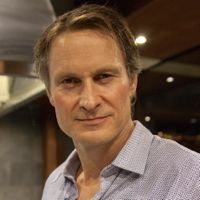
My interest in Gustu began over a plate of roast duck with sage and onion stuffing and a glass of Fontodi Chianti 2009 on the eve of the inaugural Ballymaloe Literary Festival of Food and Wine in Cork, Ireland, in early May when Claus Meyer (pictured here by ⁞Stephan Gamillscheg), the creator and co-founder of Noma, Denmark, slid his empty wine glass across the table towards me.
As we talked over this weekend, the close financial and aspirational ties between these two restaurants became clear despite the fact that they are separated by a plane journey of over 36 hours.
Meyer may not have the fame of René Redzepi, his partner and chef at Noma, but he is one of the world’s most influential and successful figures in food and restaurants. When I asked him when Noma restaurant became profitable after it opened in 2003, he smiled and replied, 'We made a small profit in our first year and it is now about 10% of turnover.' This is as unusual as it impressive.
More impressive still is the financial return on his investment. Meyer fell in love at first sight with the restored wooden building by the waterfront that had once been a warehouse for goods shipped from Greenland 300 years ago that he believed would make an exciting restaurant; he had only to invest what he described as a ‘very modest amount’. He laughed as he added that almost a decade later, Noma, which seats no more than 40, is handling 100,000 requests for reservations a month.
Meyer is a man of extremely strong convictions who believes in the power of restaurants to do good, whether by teaching us to appreciate the ingredients Nature provides as in the case of Noma or by beginning to harness the as-yet-untapped energy of Bolivia’s youth, a role he intends Gustu will fulfill.
What set Meyer on this path was a combination of the very bad and the exceptionally delicious. He grew up in Denmark in the 70s and 80s when, he recalled with sadness, his country’s food culture was at its nadir, the consequence of tasteless, greedy quasi- monopolies and their impact on bacon, bread, butter and vinegar, in particular.
His life changed when, aged 18, he stayed in Agen, France, with a couple who owned a pâtisserie. They opened his eyes and stomach to the pleasures of good, Gascon food and the bonhomie this generates.
The 1990s saw Meyer importing French ingredients, running successful French restaurants in Copenhagen but beginning to appreciate that what particularly distinguished food in France was not just its ingredients or its chefs but what he refers to as ‘its eternal fundamentals'. 'The importance of "terroir"; the classifications of food and wine; and the range of France’s suppliers were, I realised, what underpinned everything', he explained.
As Meyer began to appreciate that his fellow countrymen were beginning to crave a style of cooking that was more distinctly Danish, he also realised that Denmark was too small to be able to furnish enough of the necessary ingredients all year round to satisfy this latent demand.
Hence, the boat journey he undertook in 2003 with Redzepi to the Arctic Circle in search of what he described as ‘mythical ingredients’. They returned convinced that by harnessing the region’s foragers, farmers, hunters and fishermen they could establish their own supply chain.
What also convinced Meyer to open Noma and to set out the admirably ethical manifesto for New Nordic Food was his conviction that he had to lead a counter-revolution. He had become fed up with the elitism of the French and wary of the too scientific approach of the leading Spanish chefs. It was time for Scandinavia’s chefs to redefine the role of the chef in the modern world and to return the credit for what they were cooking to the glory of Nature.
 By 2009 Meyer appreciated that the success of Noma and the speed with which its principles had been so widely accepted left him free to take on an even bigger challenge: could he apply this Nordic approach to another part of the world?
Meyer set up a small research group and used his connections at government and NGO level to produce a short list of potential countries that included Ghana, Tibet, Vietnam, Mongolia and Bolivia.
La Paz was eventually chosen because of its low criminality (‘I do love my family’, Meyer quipped); its proximity to Machu Picchu as an established tourist destination; and, above all, for the potential of its natural biodiversity. 'I am excited by what the chefs Michelangelo Cestari and Kamilia Seidler will be able to make of the produce from the salt lakes, the Andes and the fruits of the Amazon', Meyer added.
Despite five visits to La Paz and a donation of over £450,000, Meyer is yet to eat at Gustu. But the success of the first street food fair last autumn that attracted over 40,000 comforts him. As do the initial figures. 'Our opening budget was 135 guests spending $37 and we’re serving 100 spending $55 so I’m happy', Meyer concluded with a smile.