
In the early 2000s Ferran Adrià, the chef/proprietor of El Bulli in Spain, was unquestionably the world’s most respected and recognised chef. And although his style of cooking, molecular gastronomy, has waned, his widespread influence has not because Adrià was the pioneer of the major change in how restaurant menus are written today. The tasting menu is now ubiquitous.
I recall once, in the mid 1990s, eating à la carte at El Bulli, but that was the only occasion, of quite a few, that I was able to choose what I ate. After that, the chef was in charge, as chefs have long been in Japan with the kaiseki menu.
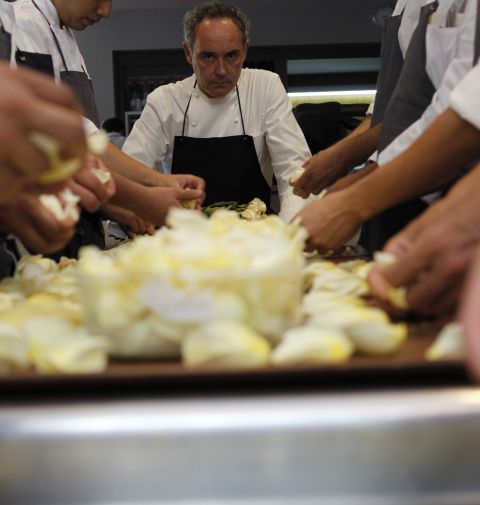
Tasting menus are still in vogue because they work for everyone involved. The restaurant secures a higher spend; the customer enjoys a variety of seasonal tastes and dishes; the kitchen gets to show off; margins are improved; wastage in minimised; the service is slightly simplified; and there is the added bonus of extra theatre. I have rarely chosen a tasting menu over à la carte choices but they are popular. According to Chris Bassett, chef at our son’s Portland restaurant, the tasting menu is ordered by 20% of his customers at the beginning of the week, a figure that rises to between 60% and 70% on Friday and Saturday evenings.
The ubiquity of the tasting menu also has a parallel in wine service: the universal prevalence today of wines offered by the glass.
This has been an option for many years but was highly restricted. Looking back at a L’Escargot wine list from the mid 1980s I can see three house wines by the glass at £1.10 each, and that was the limit. (On the same list, Château Cheval Blanc 1980 was £30 a bottle – and this was the era of the TBL, the two-bottle lunch.) Then along came a wealthy Frenchman and an American, followed a couple of decades later by an American biomedical engineer, who changed all this.
After the late Baron Philippe de Rothschild teamed up with Robert Mondavi to create Opus One, they encountered a sales challenge. Their wine had appreciated in price to such an extent that its bottle price became excessive once a restaurateur had added even a cash margin. And it certainly became too expensive to convert the neophyte wine drinker.
According to Stu Harrison, marketing director of Opus One, in its early days when the wine was priced at $50 a bottle, the same as Mouton and three times that of other California Cabernets, glass sales were the answer.
‘Our first by-the-glass programs appeared in the late ’80s or early ’90s. It was implemented in a nationwide program through the Robert Mondavi salesforce (100-strong at the time), first with customised “mini-decanters” (dubbed “pee-pots” by the French due to their shape and size). Actually, they were Libbey-Owens creamers, used primarily in coffee service! Before long, however, we were customising them nationwide for many of our best clients. At one point we were sending out 10,000 carafes a year to restaurants all over the country. From there, with a partnership with George Riedel, we offered participating restaurants six Riedel glasses, and a host of silver-plated accessories to facilitate the program. Over the course of the program, we sent out hundreds of sets per year. The impact of the program was not overnight. In fact, a lot of people thought we were completely crazy at the time … “Wine by-the-glass for [as much as] $8 a glass [in the 80s]?!”. But it captured in restaurants something that before then was not obvious. Restaurateurs, at the time, were looking for a way to differentiate themselves from their competition, particularly in their quality offerings.’
And then came the Coravin. Creator Greg Lambrecht explained in an email to me:
‘My desperation for a great glass and esoteric technical skills with needles resulted in the first prototype. Friends persuaded me to launch it commercially and we did so in the US in 2013. Today we are in 80 countries. 1.3 glasses of wine are poured with a Coravin every second – about a million glasses every 10 days … Today, the Coravin system is used by over 100,000 restaurants worldwide to offer greater variety and less waste.’
While these two major changes were the result of several individuals’ initiatives, the next major change in the UK was introduced by government legislation. At some stage in the ordering process, waiting staff in Britain have to ask whether anyone at the table has any allergies. Allergen rules for restaurants in the UK were primarily introduced by the Food Information Regulations 2014, which came into force on 13 December 2014, and required caterers to provide information on the 14 major allergens. This is definitely a major improvement in caring for the customer.
Two other significant changes are obvious on today’s menus. One is a new category called ‘snacks’, and then there is the pricing of course.
Snacks, inevitably salty crisps (potato chips in the US) and nuts, have long been one aspect of any bar’s offerings but these came to an end with the prevalence of known allergens and the ensuing legislation. Today, many aspiring restaurants’ menus will open with a short list of snacks that are as different from the crisps and nuts of yore as it is possible to be. Again, they are a way of any restaurant distinguishing itself and allowing its kitchen to show off. They tend to feature playful, deconstructed or ingredient-focused snacks such as seaweed and sesame crisps or crisp chicken-skin cones filled with ingredients such as foie gras. They are time-consuming to make and contribute to pushing up the final spend: ideal dishes for any aspiring chef to offer.
And then there’s pricing.
Langoustines £29
Cull Yaw Mutton £44
Wood Roasted Duck £45
Hereford Beef Sirloin £75/£85
Angus Beef Rib £118 (1.5 kg)
Whole Turbot £140 (1.2 kg) £200 (1.8 kg)
John Dory £40
Mallard £35
Wild Venison Chop £42
Dover Sole £49
This list of main courses taken from a recent menu at Brat in Shoreditch, a restaurant that stresses the importance of provenance and simple if expert cooking. The principal surprise is that both the rib and turbot dishes easily break the £100 barrier that was something of a psychological limit, at least for me.
Demand is the culprit for the large increase in the price of fish, particularly the most sought-after varieties such as Dover sole, sea bass and turbot. The larger specimens of these fish, once common, are increasingly rare and therefore increasingly expensive. And while demand has also been a major contributory factor in the rise in the price of meat as so many follow a high-protein diet, there are numerous other factors such as climate change and in the US the recently imposed tariffs (see Susannah Savage’s recent excellent article in the FT, The soaring price of a steak).
By way of compensation, the service is likely to be friendlier, more knowledgeable and less fussy than it used to be. Many British restaurateurs have faced the challenges of Brexit and have been training young chefs, waiters, waitresses and managers to fill the many gaps left by the exodus of European staff. Many more young people dine out today than used to, so there is a good chance that serving staff today have experience as customers, too. This is surely a virtuous circle.
This week I learned a fact of restaurant life currently that I should have included in last week’s article – that, for many restaurants, Tuesdays are today busier than the Fridays that were once the busiest day of the week. Now, however, many potential diners work from home on a Friday – testament to just how much there is to learn about this business.
Having said this, I would conclude by saying that the changes over the past quarter of a century have been profound, perhaps more significant than in any other similar period of 25 years.
Kitchens are now more open to even idle inspection; cooking skills are higher than ever; waiting staff need to be more knowledgeable and efficient; and a restaurant’s wine selection needs to be impressive from the very first day. At the same time, the barriers to entry into the restaurant business seem to be even higher than they were, the capital required even more onerous, and the pressures on the food and drink margins ever more challenging.
Despite the fact that the cost of eating out in most restaurants today has never been higher, the rewards of pleasure and satisfaction have perhaps never been greater. But as it was in my day, in the 1980s, the life of a restaurateur is not one for the faint-hearted.
Every Sunday, Nick writes about restaurants. To stay abreast of his reviews, sign up for our weekly newsletter.