Today the Financial Times publishes its annual supplement on wine investment. My contribution is below, but if you are seriously interested in this topic, I suggest you buy the paper itself, or look up the expanded version of the supplement on ft.com.
One of the most absurd aspects of the current fine-wine market is how expensive young wine is in comparison with mature vintages. While too many Bordeaux proprietors have seemed regrettably tempted to price their non-stellar 2011 above their non-stellar 2008, you could take a look at my notes on about 80 of the less rapaciously priced 2011 Médocs, but it is perhaps more appropriate to turn our backs on this vintage and turn the general observation on its head.
One of the most attractive aspects of the current fine-wine market is how inexpensive mature vintages are in comparison with their callow, unformed infant counterparts. This is particularly true of serious, classic wines such as classed-growth bordeaux and burgundies carrying a grand cru or superior premier cru classification. There is simply no point in paying the prices asked for such wines unless you give them the opportunity of attaining their full splendour and nuance by ageing them for many years in bottle. You want all the youthful elements to knit together to form much more complex compounds that have flavours that are simply never found in young wine, wine under 10 years old, say.
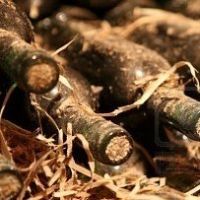
But the pleasure of drinking wines much older than this is huge. This is what distinguishes wine from other drinks: its ability, partly because of the alcohol content, partly because its charge of tartaric acidity helps protect it from harmful bacteria, to last and, thanks to the complexity of its makeup, to do more than that – to improve with age. A fine wine from the 1980s or older will offer a much, much wider array of scents than the simpler, more brutal appeal of a young wine – and it is likely to change considerably in the decanter or glass so that the experience of drinking mature wine is one of the most intellectually and sensually rewarding acts of consumption I can think of – akin to experiencing a particularly entrancing painting or musical performance. But, unlike a work of art, a bottle of wine has necessarily to be destroyed to be enjoyed, so we owe venerable examples alertness and due attention.
As I have written, perhaps ad nauseam (see for example Fighting fakes and Reacting to wine fraud, and Maureen Downey's riveting recent additions to the Authenticating wine thread on our Member's forum), the most glamorous and expensive vintages of the most famous wines proliferate in the marketplace. They are extremely expensive and enormous care is needed to ensure their authenticity. If you want to minimise the chances of encountering a fake, and maximise the chances of securing a bargain, head for second-tier wines and second-division vintages.
In Bordeaux, for example, the second-division vintages I would recommend for current drinking of fully mature wine at classed growth – a good-value notch below first growth – level are 1996, 1995, 1994, 1993 (right bank), 1988, 1986, 1985, 1983, 1981, 1978, 1975, 1971, 1964, 1962 and 1952. Other vintages in the second half of the twentieth century tend to be either too expensive, too disappointing or too young.
Because most bordeaux is made in such quantity, it is not too difficult to find mature vintages of it still lurking on wine lists around the world. The brilliant and improving wine search engine Wine-searcher.com is an invaluable aid to locating old wines. You can refine your search by bottle size, location, whether you are prepared to buy at auction, name of the wine or appellation and even the sort of price you are prepared to pay.
I listed some of my favourite suppliers of fine wine in Reacting to wine fraud quite recently, and you can always check up on how a given wine is tasting currently by checking out the free CellarTracker.com or subscription websites such as erobertparker.com, winespectator.com and, ahem, JancisRobinson.com – all of which have tens of thousands of dated tasting notes.
The grander the wine, the longer it is likely to be able to last, although some generalisations may be in order such as that St-Estèphes tend to be particularly slow to unfurl, Margaux and lesser St-Emilions much quicker. Sauternes and Barsac, the great sweet white wines of Bordeaux, are practically indestructible.
There is another sort of wine that it is crazy to broach too young and which can last even longer than a classed growth bordeaux and that is vintage port. Drinking young vintage port is really no more fun than drinking a much cheaper single quinta port of roughly the same age. But a fully mature vintage port is a miraculous thing, with every bit as much nuance as the finest mature table wine.
Sadly for those dedicated, some would say demented, individuals who spend their lives making the rich, fortified wines of the Douro Valley, in the last few decades vintage port has not appreciated in value nearly as much as the most respected table wines – nor as much as it deserves to have done. And, because vintage port is, alas, not a fashionable drink, there is plenty of it on the market – not least because the Oxbridge colleges and gentlemen's clubs have been divesting themselves of their holdings of it. So, if you are seeking a fine 1983, for example, you could get a bottle of 1983 vintage port, already drinking well but nowhere near its peak, from one of the top shippers, for around £50 a bottle, whereas that sum would get you only the most modest 1983 red bordeaux.
Other fine wines, particularly burgundy and to a certain extent the Rhône, tend to be made in smaller quantities, so locating fully mature examples of good provenance is much more difficult (although see How to buy older burgundy). But at least the secondary market for all but a handful of names is virtually non-existent so it is possible to pick up bottles bought from private cellars where they have spent most of their days. Generalising about Burgundy vintages is a mug's game which I am loth to play. Suffice it to say that superior burgundy tends to have two periods of drinkability, one in its youth (youthful charm is a more common attribute in burgundy than in the more obviously tannic wines of bordeaux) and one in grand old age. You might just strike lucky and find a delicious example of the latter.