
Dinner on the Friday night we arrived in Paris and lunch on the Sunday before we headed home could not have been more enjoyable nor more different. Both meals also provided fascinating but yet again very different insights into the dedication that is vital to success in the restaurant business.
Our first meal was at Astrance, the three-star Michelin restaurant run by restaurateur Christophe Rohat and chef Pascal Barbot. In many ways this meal was definitively French, despite several Japanese influences and ingredients, including the large, highly aromatic, white truffle from Piedmont on the reception desk. Nor, at 230 euros for the multi-course tasting menu, could it have been any more expensive.
Sunday lunch, at 32 euros for three courses, at Fish la Boissonerie on the Left Bank, expressed not just unbeatable value but also a highly cosmopolitan partnership in this quintessentially Parisian location. Fish is owned by New Zealander Drew Harré and American Juan Sanchez (whose parents are originally from Cuba) while the chef is Ollie Clarke, a talented 23 year-old Englishman.
As we walked to Astrance from Passy metro station along Avenue de New York, the Eiffel Tower across the Seine, lit up in all its splendour, towered above us. Yet having turned into the cobbled rue Beethoven that slopes steeply uphill with the bow-fronted Astrance on the right, both my wife and I had the feeling that we were in San Francisco.
How Astrance came to settle here in this somewhat unlikely setting became clear after we had been sitting at one of the two tables on this intimate restaurant's small mezzanine for about 30 minutes, during which we enjoyed watching Rohat in action. Wearing a dark suit, an open-necked white shirt and waistcoat, he patrolled, intervened, explained and obviously trained his staff, particularly sommelier Alexandre Jean, who has been with him for seven years, to a very high standard. Once Rohat had laid out the cutlery for our next course, I asked him how they had discovered Astrance's discreet home.
'Pascal and I worked together at L'Arpège and then for chef Pierre Gagnaire before we decided to go on our own in 2000. We looked at over 30 possible sites and then were shown this one that had even been completely redecorated by the former owner. It is such a lovely, quiet part of Paris that I have now moved here too with my family', he added with considerable satisfaction.
Although only a third of the way through the mandatory surprise menu, we were also pretty satisfied by this stage. Our first course was Barbot's signature dish of a mille-feuille of raw mushrooms interlaced with foie gras, followed by a dish whose combination of ingredients may seem highly unlikely but proved to be stunning. Centre stage was a raw scallop next to a raw oyster alongside bone marrow, sea urchin and konbu, the seaweed that is the essential ingredient in Japanese dashi or stock.
Two very different fish dishes, a steamed fillet of turbot with chrysanthemum flowers and green shiso, another Japanese influence – this time a member of the mint family, followed by a thin ravioli layer on top of an intense bowl of spicy crab, were excellent. The former showed a real lightness of touch while the latter was rich and intense.
By contrast, the two subsequent meat courses, a round of lamb with black olive and liquorice and a piece of Challans duck with miso-flavoured aubergine, were somewhat disappointing and arguably a little too similar in terms of texture and flavour. Desserts and tiny chestnut madeleines signalled a return to form alongside a considered plate of sliced fresh fruit.
Two very different factors had by then supplemented our pleasure. The first was the wine list that Jean has cleverly assembled, solving the challenge of so many different flavours emanating from Barbot's kitchen by sourcing older vintages from some of France's less well-known regions whose complexity enhances the complexity of the food. We drank two mature Loire wines, a Montlouis, Le Volagré 2007 from Stéphane Cossais then a Saumur-Champigny, Le Clos 2004 from Clos Rougeard, collectively a reasonable (by three-star standards) 110 euros.
The second was the impact on our senses because of our elevated table. Firstly, it allowed me a view of the tables below, particularly one of seven French gastronomes enjoying a game dinner where main courses were horse, then woodcock and, finally, hare à la royale. There was also the opportunity to inhale the lovely aromas that ranged from the costly white truffle to the far less expensive, but nevertheless delicious, smell of well-sautéed onions.
Astrance and Fish share this twin-level layout, although only the cooks occupy the latter's first floor, from which the food, as so often in Paris, is despatched by lift to the cramped ground floor. Ollie Clarke does not allow this physical separation to stand in the way of delivering characterful dishes, dishes at our Sunday lunch that ranged from a pungent fish soup with mussels to a fillet of mackerel with harissa and hake with fregola, a Sardinian pasta, and walnut relish. Best of all was a fillet of John Dory with salsify, two ingredients particularly fiddly to prepare at home.
But most inspiring to me was seeing the expressions on Clarke and his two chefs' faces as they sat by the bar preparing for that night and the following day's business. They were full of enthusiasm and delight in their profession, cognisant of the hard work it involves but also of the huge pleasure it generates.
Astrance, 4 rue Beethoven, 75016 Paris; tel +33 (0)1 40 50 84 40
Open Tuesday-Friday only
Fish la Boissonerie, 69 rue du Seine, 75006 Paris; tel +33 (0)1 43 54 34 69
Open lunch and dinner 7 days
Paris – dedication on both banks
• 4 min read
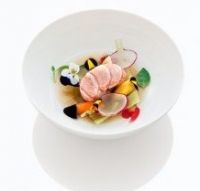
This article was also published in the Financial Times.


Choose your plan
Member
$135
/year
Ideal for wine enthusiasts
- Access 297,331 wine reviews & 16,161 articles
- Access The Oxford Companion to Wine & The World Atlas of Wine
- Access askJancis, our AI wine assistant


Inner Circle
$249
/year
Ideal for collectors
Everything in “Member”, plus:
- Early access to the latest wine reviews, 48 hours in advance
- Early access to the latest articles, 48 hours in advance
Professional
$299
/year
For individual wine professionals
- Access 297,331 wine reviews & 16,161 articles
- Access The Oxford Companion to Wine & The World Atlas of Wine
- Access askJancis, our AI wine assistant
- Early access to the latest wine reviews & articles, 48 hours in advance
- Commercial use of up to 25 wine reviews & scores for marketing
Business
$399
/year
For companies in the wine trade
Everything in “Professional”, plus:
- Commercial use of up to 250 wine reviews & scores for marketing
- Access to submit wines for review
- Offer memberships to your employees and manage them from a single place
- API access available for an additional fee
More Nick on restaurants
Nick on restaurants
An international institution in the southern Irish countryside. In 2011 I travelled to Ballymaloe House, a 40-minute drive from Cork...

Nick on restaurants
An exciting new addition to the East London restaurant scene. Above, Sally Abé. Everything is on the small side at...
Nick on restaurants
Le Saveur de Poisson in Tangier is well worth the (slightly challenging) trip. Of the many sorts of restaurants in...
Nick on restaurants
It’s not so easy to open a second restaurant, however successful the first. Nick ventures from the West End into...
More from JancisRobinson.com

Free for all
In this moving entry to our 2026 wine writing competition, Charlie Geoghegan writes about selecting a great pairing for the...
Free for all
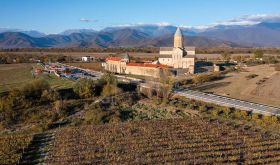
The wines of Georgia continue to be surprising. A slightly shorter version of this article is published by the Financial...
Wines of the week
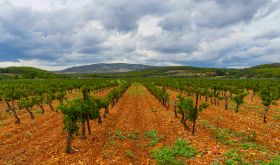
Domaine Lafage’s Moutou from the Côtes Catalanes is not only delicious but also supports environmental research in this hot, dry...
Tasting articles
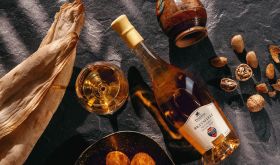
Jancis plunges into these distinctive wines, if not the distinctive country. Above, from producer Dugladze’s website, characteristically Georgian amber Rkatsiteli...

Tasting articles
Big reds continue to rule in Penfolds Land, but changes are on the horizon. Penfolds’ Magill Estate is pictured above...

Tasting articles
Concluding Walter’s report on this notably accessible vintage. Today, reviews of wines from the southern and eastern villages of Castiglione...

Tasting articles
A final report on a tricky vintage that produced some remarkably fresh and accessible wines. Today, reviews of wines from...

Inside information
Mexico’s wine industry offers lessons in dealing with climate challenges, says Mexico-based journalist and sommelier Carlos Borboa. Above, vineyards in...