The southern Rhône grape variety Grenache is currently all the rage in Australia, having been regarded as a lowly workhorse only a few years ago. Few examples are as robust as a typical Châteauneuf-du-Pape, France’s most famous Grenache-based red, however. The majority of Australian producers of Grenache seem to be using Spain’s new wave of rather Burgundian versions of the grape, called Garnacha in Spain, as their model.
Australian Grenache is now more likely to be pale, aromatic, fruity and approachable rather than big, tough and bold, although there are exceptions. Unfortunately Grenache needs quite a time on the vine to develop flavour and sufficiently ripe tannins, which means that low-alcohol Grenache is a rare beast indeed. Only Alkina, Robert Oatley, Kalleske and Ochota Barrels managed to field a red under 14% in a recent tasting of 45 Australian Grenaches in London – and that at a time when UK importers are desperate to minimise specified alcohol levels now that duty is so precisely calculated on the basis of them.
As with fine Zinfandel in California, old bush vines are key to the charm of most of these wines, and Barossa Valley and McLaren Vale, respectively north-east and south of Adelaide in South Australia (as shown on this World Atlas of Wine overview map), are the hotspots. McLaren Vale Grenache was the first to become fashionable, even though Shiraz is far more widely planted there. As Jane Lopes and Jonathan Ross report in their 2023 book How to Drink Australian, less than 7% of McLaren Vale vineyard is planted with Grenache – chiefly because 40% of it disappeared thanks to the vine-pull scheme of the 1980s when virtually the only buyers of Grenache grapes were Adelaide’s Italian families for their home-made wines.
An even higher proportion of Barossa Valley vineyard is devoted to Shiraz, about 70%, despite old Shiraz vines suffering like old Grenache vines in that same vine-pull scheme, when the Cabernet Sauvignon of France seemed – temporarily – so much more glamorous. Although Barossa is more readily associated with Shiraz, Barossa Valley Grenache has recently been making waves, too. The Barossa Valley is the location of possibly the world’s oldest Grenache vineyard, Cirillo’s planted in the mid nineteenth century. Also in the Barossa Valley, the South Australian family group Yalumba make their Tri-Centenary Grenache from a block of bush vines planted in the Vine Vale district in 1889.
In McLaren Vale, thanks to the tenacity of the Smart family, some centenarian Grenache vines have somehow managed to survive. Their vineyard in the Clarendon district planted in 1922 is now especially celebrated and fruit from it surfaced in the London tasting in wines from Willunga 100 and Ministry of Clouds. It’s a miracle that all these old vines have remained in the ground.
An important factor in the lightening up of Australian Grenache in both regions has been the switch from ageing it in the sort of small, new oak barriques used in Bordeaux and Burgundy, which can concentrate flavour, to using either much older, larger casks or, increasingly, ageing the wine in concrete tanks, clay vessels or even ceramic egg-shaped containers.
While the ‘gentle Pinot Noir’ style of Grenache is very charming, versatile and flattering to taste, I suspect many of these wines will have a relatively short life. I found more ambitious examples – still alluring but with a bit more structure and complexity – in such wines as Chapel Hill’s MV 2020, the MMAD 2022 from the sandy Blewitt Springs district, all the S C Pannell wines (although the vines in the Little Branch vineyard the Pannells have recently personally acquired are a mere 30 years old), the Willunga 100 examples, Thistledown’s Fool on the Hill 2022 from the Eden Valley above the Barossa valley floor, and all the wines from Yangarra, one of the earliest adopters of unconventional vessels for ageing.
Yangarra was founded in 2001 by Americans as a member of the international group Jackson Family Wines, long before Grenache was fully respected. (Lopes and Ross report that it was not until 2020 that grape prices for McLaren Vale Grenache overtook those of Shiraz.) It makes good use of a block of Grenache vines planted in 1946 with cuttings from the original Smart vineyard. For the full story of Yangarra and the Smart family, see here.
Other incomers to ‘the Vale’ have been much more recent. MMAD, formed by the team behind Shaw + Smith of Adelaide Hills to the north, bought their old vines, some planted as long ago as 1939, in 2021. Robert Oatley Wines, with sizeable operations in both New South Wales and Western Australia, started to make an unoaked McLaren Vale Grenache in 2017, and in 2023 added the much more serious Finistere Grenache based on fruit bought from an 80-year-old vineyard in Blewitt Springs.
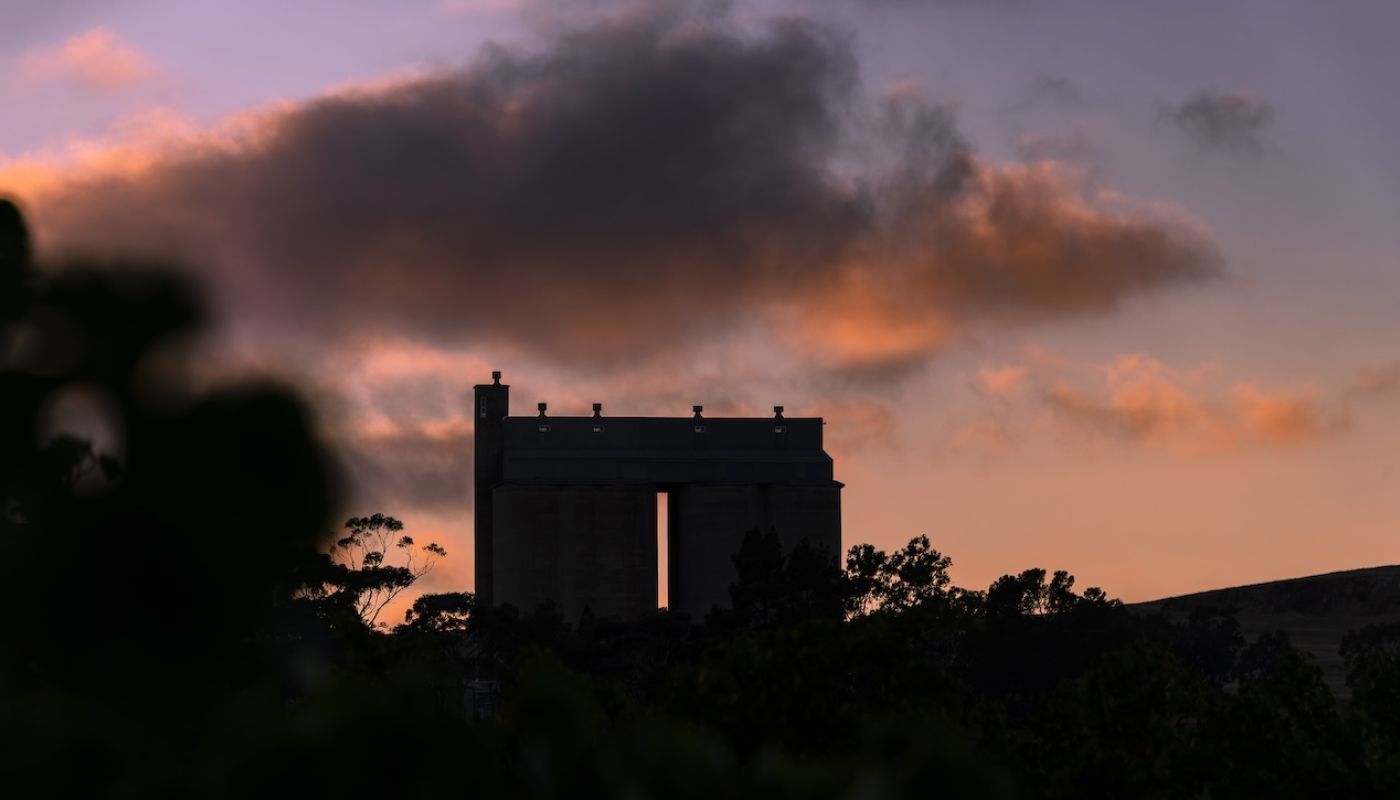
Mark Bulman, who won the prestigious Jimmy Watson Trophy when at Turkey Flat in Barossa, has just launched Bulman Wines’ single-vineyard, old-vine Grenaches, one from Eden Valley and one from McLaren Vale, aged in what he describes as sandstone amphorae, both wines more youthful than most and apparently made for the table rather than the wine bar. He describes the image at the top of this article, taken from Bulman Wines' website, thus: 'The photo is of the now-abandoned Stockwell (town in the Barossa) grain silo (for storing harvested grain back in the day), taken from a vineyard where I source Grenache for my rosé.'
In Barossa Valley, Alkina is an interesting newcomer. Argentine oil and gas billionaire Alejandro Bulgheroni owns a total of 14 wineries in Uruguay, Argentina, California and Tuscany, with Alberto Antonini as his roving winemaking consultant. He also hired peripatetic Chilean wine-specialist soil-scientist Pedro Parra to divide the Barossa land he bought into small, homogeneous parcels they call polygons. They planted more Grenache nine years ago but 80% of the Estate Grenache 2024 that very much took my fancy was made from vines planted in the 1950s. They pursue strictly regenerative farming techniques and local winemaker Amelia Nolan uses nothing but concrete for ageing her Grenache, even Alkina’s Polygon 3 Grenache 2023, which sells for almost AU$300 a bottle in Australia.
Prices of Australian Grenache have risen across the board along with its reclame. On their website, Yangarra charge AU$300 for the current, 2021 vintage of their top-of-the-range High Sands Grenache bottling from that 1946 block.
Probably the best-value Grenache in the London tasting, apart from the Tim Smith wine I recommend below, was the Barossa Bush Vine Grenache 2022 in Yalumba’s Samuel’s Collection range, which is made from vines that are 60–105 years old. I tasted the 2021 vintage afterwards and can thoroughly recommend it at £17 from London End and no more than £20 from Fraziers and Australian Wines Online. The 2022 is expected to replace it in a month or two. To maximise freshness, 10% of the grapes were picked early and 10% of the stems were retained in the fermentation vat. To maximise flavour, 30% of the many different ingredients in this blend were macerated with the grape skins for nearly three months. This seems to be a successful recipe for combining the characters of both South Australia and the Grenache grape.
Grenache is the main grape of most Provençal rosés and two of the pink wines in the Australian tasting were very winning indeed. Chaffey Bros’ Lux Venit Rosé 2023 was made from 75-year-old vines while Ochota Barrels’ Surfer Rosa 2024, with its 3% Gewürztraminer, was based on vines planted in 1946. With respective recommended retail prices of £21 and £32, these are definitely worth seeking out by those looking for pink wines with real character.
The tasting, like the Australian Grenache scene, may have been dominated by particularly sustainability-conscious McLaren Vale, and Barossa Valley (where many of the vines had been organically and/or biodynamically grown, too), but there were also examples from much cooler Frankland River in Western Australia and Clare Valley. Australian Grenache is enjoying its moment in the sun.
South Australian Grenaches
All of these earned at least 17 points out of 20 from me.
17.5
Tim Smith, Grenache 2022 Barossa 14.5%
£27.50 Lea & Sandeman
Willunga 100, Smart Vineyard Clarendon Grenache 2023 McLaren Vale 14%
£28.95 Brunswick Fine Wines & Spirits
Alkina, Estate Grenache 2024 Barossa Valley 13.5%
£39 Raeburn Fine Wines from August
SC Pannell, Little Branch Blewitt Springs Grenache 2022 McLaren Vale 14.5%
£49.95 NY Wines
17
S C Pannell, Basso Garnacha 2021 McLaren Vale 14%
£22.75 Alexander Hadleigh
Chapel Hill, The MV Bush Vine Grenache 2020 McLaren Vale 14.5%
£23 Australian Wines Online
Ochota Barrels, The Fugazi Grenache 2024 McLaren Vale 13.1%
£35.10 Parched Vine
Dylan Grigg, Vinya Vella, Old Bush Vine Grenache 2022 Barossa Valley 14%
£41.36 Clark Foyster
MMAD Vineyard, Blewitt Springs Grenache 2022 McLaren Vale 14%
£43.95 NY Wines
Thistledown, Fool on the Hill Grenache 2022 Eden Valley 14.5%
£49 Drinkmonger
Torbreck, Hillside Vineyard Grenache 2021 Barossa Valley 15%
£58 London End
Yangarra, Hickinbotham Clarendon Grenache 2020 McLaren Vale 14.5%
£62 Fareham Wine Cellar
For tasting notes, scores and suggested drinking dates, see New-wave Oz Grenache – the wines. For international stockists, see Wine-Searcher.com.
Back to basics
| All about Grenache |
|
Aragón is probably the birthplace of the grape variety the Spaniards call Garnacha, although Sardinians, who call it Canonnau, claim it originated on their island. Pale-skinned mutations Grenache Blanc and Grenache Gris exist but by far the most common is the dark-skinned Garnacha Tinta/Grenache Noir, which, under various aliases, is grown all over the world – but strictly in warmer regions because it ripens too late for cool ones.
Its skins, where grapes’ colouring matter is to be found, are not usually that thick so the wine produced is not typically as deep-coloured as, say, the barrel-aged Cabernets and Tempranillos that used to be so revered. But now that tastes have changed towards lighter, fresher wines, Garnacha/Grenache has come into its own – especially in Spain, where there are plots of old bush vines (not trained on wires) in much of the country.
In France it’s most commonly found in the southern Rhône Valley as the main ingredient in rich, spicy reds such as Châteauneuf-du-Pape, Gigondas and Côtes du Rhône, in which other grape varieties such as Syrah deepen the colour.
Another factor in making the variety increasingly popular is that it can thrive in dry, not to say, drought conditions. There has been a significant move in Australia and parts of California in particular to favour ‘Mediterranean’ varieties such as Grenache. |