
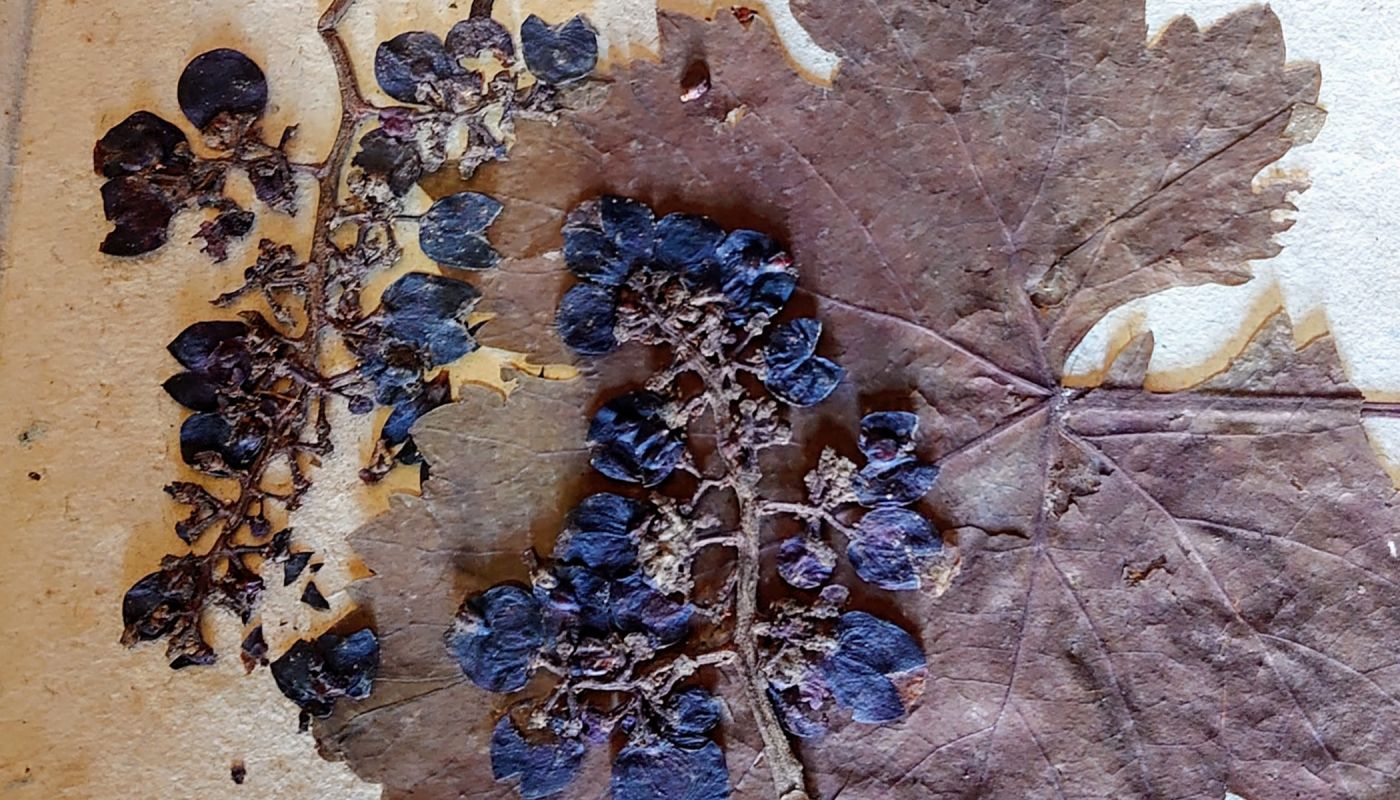
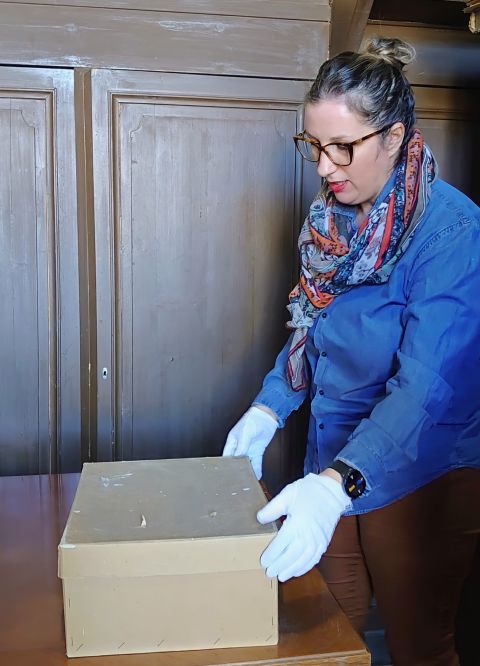
A dusty metal cupboard in a back room in a school library in the northern Serbia town of Sremski Karlovci seems an unlikely location to uncover the world’s second-oldest grapevine herbarium samples. But that’s exactly where researcher Milica Rat came across an old box containing this treasure trove of grapevine genetics and pre-phylloxera wine history in Serbia. Even knowing what I was about to see when I visited the Sremski Karlovci grammar school earlier this year, it sent shivers down my spine seeing these two-century-old specimens of dried grape leaves and fruit, so I can imagine how exciting it was for her to become the first person in decades to gaze on this precious find. As she explains, ‘I was thrilled! You know the simple delight when you find something new. My first comment was that this discovery should not go to the media directly because everyone, especially winegrowers, will have a lot of questions and it will take time for us to come up with an answer’.
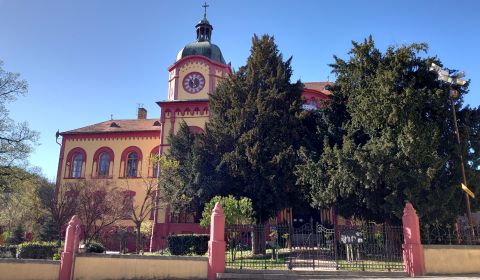
The story behind this herbarium collection began with Slovak-born polymath Andrej Volný. He was born in 1759 and went on to study medicine and natural sciences in Bratislava then philosophy in Budapest. His next move was to Serbia to become a professor and teacher, and then principal at the Sremski Karlovci grammar school from 1793 to 1816. This school first opened in 1791 and for the last three decades it has been a language school, currently teaching 600 pupils. Volný himself was a highly regarded botanist and mineralogist who believed in the value of teaching through visual demonstration. He was a great collector of plants from around the Fruška Gora region, some of which was organised into three collections called Centuria, entitled Flora Sirmiensis seu Plantarum in Florae Sirmiensis. Completed between 1797 and 1801, each volume contained 100 specimens, labelled in Latin, plus German, Slovak, Hungarian and Serbian names if known, with details of flowering time, location and any economic or medicinal use. Volumes I and III are still preserved while volume II has been lost or destroyed.
Other researchers continued to collect samples after Volný – reaching some 7,000 herbarium sheets by the end of 19th century when the collection was closed. Due to its historical and cultural significance, it was protected by the state in 1950, but it then remained largely untouched until Rat arrived in 2017 to start digitising and recording these botanical records.
It was during these studies that Rat opened the forgotten boxes which revealed an ampelographic collection of grape varieties grown on the Fruška Gora Mountain at the beginning of the 19th century, collected from around 1812 to 1824 – long before the arrival of phylloxera. This makes it the second-oldest such collection in the world (the oldest is dated 1803–1804 and is kept in Spain).
Rat was totally amazed to find 122 sheets recording 55 Vitis varieties, some from multiple locations – and of these 75 still retain pressed samples of grapevine leaves and dried fruit with seeds. The preservation of seeds is especially significant as these are the best source for DNA to match samples to present-day varieties. Some of the samples are so well preserved that it’s possible to check for the presence of fine hairs and to analyse soil particles to check the soil type. Leaf-infecting fungi have also been spotted, so researchers are trying to identify these.
DNA results (in partnership with Spanish researchers) so far have revealed that a grape labelled srebrno grožđe (silver grape) is none other than Furmint, and on one sheet is the earliest written mention of Grašac (spelt Graschaz at that time) suggesting Fruška Gora as a probable origin for this important Central European grape. Other herbarium finds include the true Tamjanika Bela (the Central European variety, not Muscat Blanc à Petits Grains), collected in 1823, and samples of Skadarka (aka Kadarka) and Black Graschatz (it’s thought this could be the rare Hungarian variety Fekete Járdovány), and more still-unidentified grapes, so there remains a lot to uncover. It’s also been possible to match some of these varieties to descriptions in the 1816 book by Bolić (Soveršen Vindolec or The Perfect Winemaker) which described 35 varieties grown in Fruška Gora including Kadarka, black Grašac, white Grašac, black and white Tamjanika, Slankamenka, Malvasia and more.
Rat is clearly frustrated by the impoverished state of viticultural research in Serbia, made harder by the loss of a historical grapevine collection in the vineyard at Bukovo in 1967, and the current academic emphasis in Serbia on research into grapevine phenolics. There’s still much to do, but precious little funding for researching this priceless resource. The Balkan Peninsula appears to be an important centre of plant and grapevine biodiversity in Europe, and Serbia lies at the centre of that. Proper research into the sensational materials in the Volný Herbarium could put Serbia firmly at the heart of wine in Europe – a story worth shouting about.
Wines of Serbia: A New Chapter, written by Caroline Gilby with wine writer Igor Luković, is due out in early 2025.













