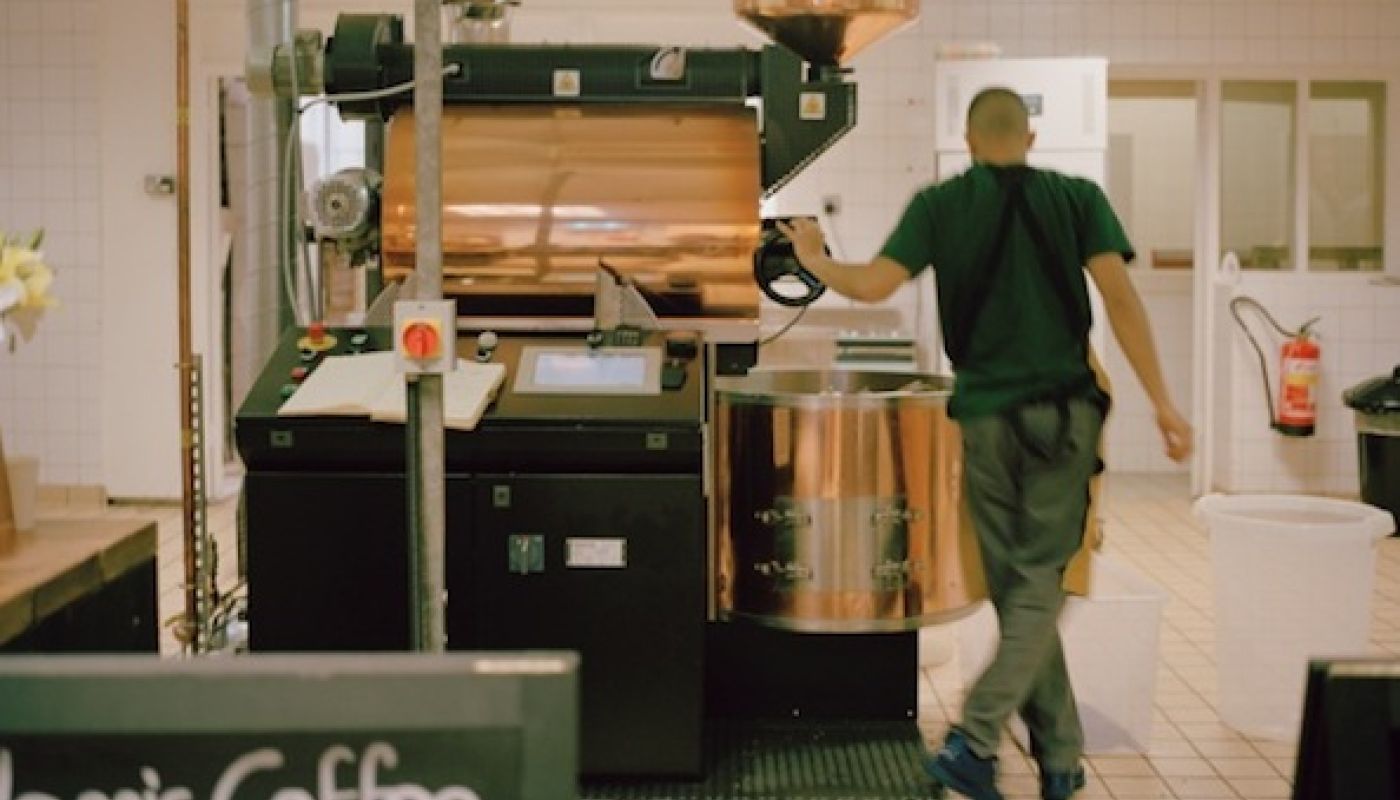
The scene was fairly typical of that in many a city. Two baristas, both with short hair and one with tattoos running up his arm, were making lattes, having tamped down the coffee before they carefully filled the cups and then slid them across a blue mat.
Behind them a colleague was pouring beans into a state-of-the-art Petroncini roaster from sacks of coffee that lay on the floor, carefully stamped Mercanta, The Coffee Hunters. A couple of customers were waiting by the coffee bar next to packets of the roasted coffee beans that the café sold.
But in fact everything about this scene is unusual. I was in the Redemption Café inside HM Prison, Aylesbury, built in 1847 (pictured below) and now accommodating young offenders, 17–21 years old, serving long sentences. I was thoroughly enjoying the experience of sitting in the world’s only coffee roaster located within a prison. From here, and under the telling name of Redemption Roasters, the coffee roasted is packed into kilo bags, bearing the names Aylesbury and 1847 inter alia, before being despatched to the company’s warehouse in Dorset and from there to their growing number of wholesale and retail customers in the UK and Germany.
The seeds of this improbable association were sown in April 2016 at the London Coffee Festival when Lee Johnson, then Head of Reducing Reoffending at the prison, approached Max Dubiel and Ted Rosner, who had a coffee wholesaling business with a seemingly innocent question: would they consider working with prisoners with a view to the prisoners being able to work as coffee baristas on their release?
The two of them thought the proposition over and then wondered if they could take it a stage further and actually roast their coffee in a prison. Roasting your own coffee gives the wholesaler much greater control over the finished beans but finding and financing a coffee roaster can be a heavy financial burden. While Johnson considered this, Dubbiel and Rosner merged their wholesale business with that run by Harry Graham (below right).
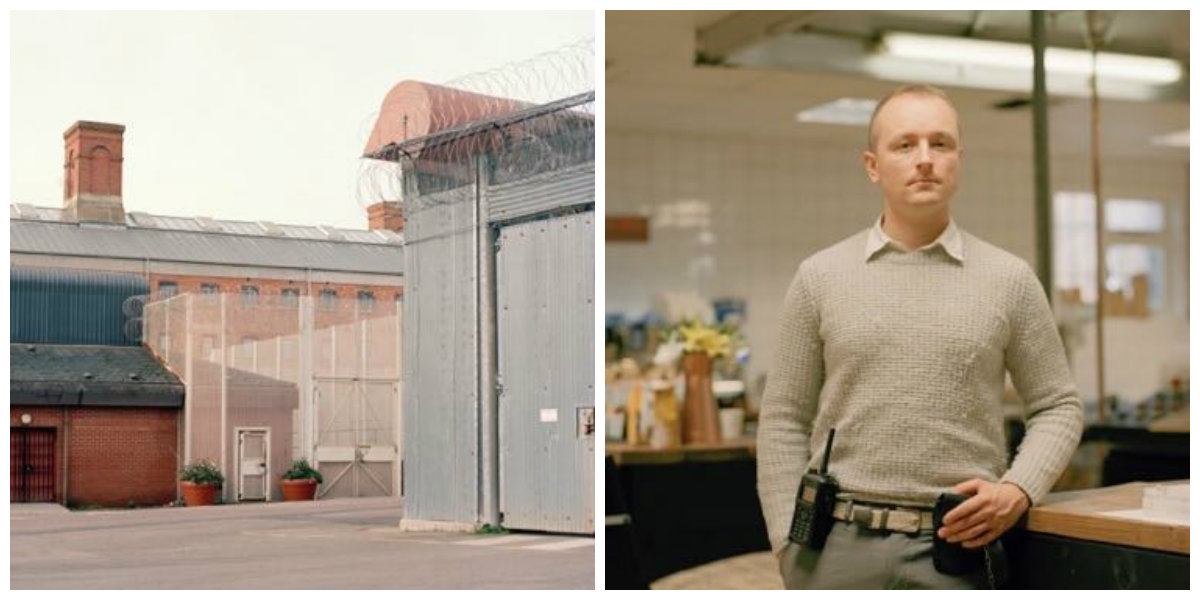
Whether his looks played a part in this merger, it is difficult to say, but Graham looks every inch a prison officer. Dressed in a grey jumper and grey trousers, with short cropped hair, and his trousers concealing a large ring of keys the prison trusts him with, he is clearly someone with whom nobody in their right mind would bother to argue. When it comes to coffee, nobody does. Nor when the prisoners, 10 at a time, learn to roast the beans, master basic English and arithmetic (skills many of them sadly lack), as well as how to speak in a comfortable and relaxed manner with their customers and how to become baristas once they are released.
Graham was predictably forthright about why they chose Aylesbury and how they financed the roastery. ‘The prison offered us this space which was a former kitchen and had some of the necessary ventilation', he explained. ‘The transformation cost over £80,000, money we raised via our backers. This was not easy as the prison has a fairly restrictive code of practice on even which plumbing company can be used. But now we’re established and are roasting up to three tons of coffee beans a week.’
Graham quickly swept away the notion that this process exploited cheap labour. Redemption Roasters pay the prison a rent with which they in turn pay the prisoners, but the ongoing costs of shipping large quantities of raw materials in and out of prison can be as much as three times higher than in a normal commercial situation. Their van has to arrive completely empty and can often be kept waiting for long periods of time, he added.
As though to reinforce this unlikely workplace, behind the baristas and Graham stood Marc Wioland, dressed in black and with his official prison warder’s badge pinned next to the radio on his black jacket. A warder for nine years, Wioland escorts the prisoners to their wings at lunchtime, but he has been adopted as Graham’s right-hand man on this project. As such, he has been able to monitor the immediate effects of the café and roaster on the inmates. ‘When you are in here, you are treated like an employee not like a prisoner because you are fulfilling a real-life job.’
The 10 students lucky enough to be chosen for each course begin their apprenticeship on a classic FAEMA E61 coffee machine that is used as their training bar. Here they learn about coffee beans, how to set up and dismantle the coffee grinder, how to grind the beans, how to clean the espresso machine, effectively how to make a top-class cappuccino. After a fortnight they are given a test and must answer questions on the origins of the coffee, the make up of the most common drinks, a test that they must pass with at least 8 marks out of 10. Once they have passed, they are rewarded with their own barista kit, a tamper and an apron, which can be embroidered with anything. Graham showed me one on which DON’T FORGET THE CUP had been embroidered for one prisoner who used to let the coffee overflow.
Once they have passed, the prisoners can move on to the ultra-modern FAEMA espresso machine and are free to make their own drinks. With this apparently comes the first change in their mentality and attitude. This extra knowledge of coffee imbues the prisoners with a sense of self-respect that is a distinguishing feature. ‘You may be Mr Big on the wing but that means nothing in here', one young offender explained to me. ‘It may be a jail out there but in here it is a café.’
Creating this semblance of normality is one major step on the road to rehabilitating these young offenders, many of whom continue to face several years in prison. And this form of rehabilitation by coffee seems to be one that has all the potential of being highly successful.
In a small room to the side of the café, I sat with Cornai, who still had eight months left of his sentence to fulfil. He seemed quietly confident of a future in coffee. ‘I have learnt so much working in here and I believe now I have a set of skills that will allow me to earn a proper living on the outside. Once I get released and get to my home in south-east London I intend to find a job putting into practice all that I have learnt.’
These sentiments, had she overheard them, would have delighted Laura Boyle, Johnson’s successor at the prison. Standing in the corridor that leads to the roastery, flanked by walls covered with posters that set out Level I English pronunciations and Maths calculations and others that reveal what baristas earn at Pret A Manger, Costa, Caffè Nero within Harrod’s and at Soho House, she beamed with pleasure at the café’s obvious popularity. ‘I love this project', she confessed, ‘for everything it stands for. What you have to understand is that the young men we receive here can be as young as 15 and they have turned their back on education and therefore employment in the future. The first thing any future employer will ask for when one of my guys shows up for an interview is what have they been doing for the past three or four years. Once they are out of here, having completed this course, they at least have a fighting chance of making a living for themselves.’
One example from this course that seems to have proven Boyle and Graham right is Talib, who left the prison a few months ago and has found a job in Redemption Roasters café on Lamb's Conduit Street in central London. He is so excited to be working, to be part of a team, to earn a living and to turn his back on crime that he regularly turns up for work an hour early, apparently.
The early prospects for this project seem promising as it appears to be working successfully for all parties: for the prison, for Redemption Roasters and most especially for the prisoners who are leaving Aylesbury with a set of professional skills increasingly needed in today’s world.