
See our 650 reviews of Rhône 2010s.
Buy Rhône before the Chinese do! We already have strong indications that Chinese fine-wine lovers are turning their well-heeled attentions from bordeaux to smart burgundy. Wine lovers in search of great French wine whose prices have not (yet) been inflated by demand from Asia are currently able to choose from two great vintages in the northern Rhône.
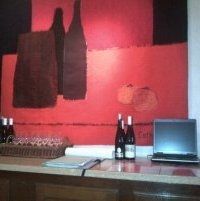
According to Jean-Louis Chave (whose office is shown here), viticultural guardian of the rock of Hermitage and, increasingly, the most interesting steep combes of the St-Joseph appellation, the lauded 2009 vintage in the northern Rhône was dominated by the sun, whereas the 2010 wines are dominated by the soil, or at least the character imbued by the many different soil types in this increasingly fashionable wine region. This is as good a summation as any of the character of these two current vintages.
While the 2009s are unusually plump and ripe – particularly attractive attributes in a region whose Syrah vines sometimes struggle to ripen fully – the 2010s are devoid of puppy fat and are better at expressing terroir. The juiciness of wines grown on sand, the freshness of those from limestone, and the majestic concentration of those from vines whose roots try to penetrate granite are all particularly evident in the 2010s. (This generalisation of the two vintages can also be applied to a certain extent, incidentally, to 2009 and 2010 in Burgundy and Bordeaux.)
In the notably dry summer of 2009, some northern Rhône vines, especially the younger ones with shallow roots, failed to ripen their tannins properly so that some of the wines can be a bit drying on the finish, but the summer of 2010 was much cooler, especially at night, and yields much lower, so that the ripening process seems to have been slower, steadier and more complete. After a cold winter, spring 2010 was usefully wet, but the flowering in June was unusually extended in changeable weather so that an exceptionally low proportion of potential grapes was fully formed on each bunch. It was this coulure above all that resulted in much lower yields than usual but because of this, the crop was not thinned in summer and, while average yields were low, some younger vines were left overloaded with berries and undercharged with flavour, colour and tannins.
Overall, however, the northern Rhône 2010s are delightful – ripe but fresh and silky. After a reasonably but not uncommonly dry summer, early September rains usefully propelled vines towards full ripeness and an easy harvest in late September and, in many cases, early October. Purist Jean-Marc Jamet decribes 2010 as 'really perfect'. Certainly the bunches with their reduced number of berries were loose enough to stave off any rot or disease and such grapes as were picked were very healthy.
This, 2010, is the best vintage I can remember for the increasingly exciting whites of the northern Rhône. Condrieus, the archetypal Viogniers of the wine world, have real structure and attack, and white wines based on Roussanne and especially Marsanne grapes from such appellations as St-Joseph, Crozes-Hermitage and St-Péray are now so well made that they can offer serious and interesting alternatives to white burgundy. The greatest, and certainly most age-worthy, whites of the northern Rhône – indeed of south-eastern France – are the whites produced on the hill of Hermitage by the likes of J L Chave and, in a truly flamboyant style, by Chapoutier. But they are made in such small quantities that the top bottlings can cost over £1,000 a dozen.
If lovers of wines such a Hermitage and Côte Rôtie have two excellent but differently styled vintages to choose from, there is a much wider gap in quality between the 2009s and 2010s of the southern Rhône. In my usual extensive blind tastings of Châteauneuf-du-Pape, Gigondas and Vacqueyras 2009s this time last year, I found many wines with rasping, uncomfortably drying tannins on the finish, suggesting that the phenomenon of incomplete phenolic ripeness was even more widespread than in the northern Rhône in 2009.
The same exercise this year, however, showed much riper tannins in the 2010 southern Rhône wines and also, thanks to the unusually cool summer nights, much more freshness and acidity. This was just as well, however, since the alcohol levels of the 2010s, especially the Châteauneufs, seem to be even higher than in 2009. Of the reds for which an alcoholic strength had been supplied by their producers (only a minority are bottled and labelled), a small handful of the regular 'Tradition' bottlings cite 14% whereas the average is 15% with many reaching 15.5%. A literally mind-boggling 16.5% is cited for several of the special cuvées, the premium bottlings that, some argue, rob the regular ones of their finest ingredients.
The 2010 growing season in the southern Rhône was very similar to that in the northern Rhône with the crop level reduced by coulure to one of the lowest in recent memory. Although a useful amount of rain had fallen in winter and spring, July and August were drier than almost any recent year other than 2007 and ninth driest since records began in 1871, apparently. Growers particularly keen to avoid the dry tannins of 2009 tended to keep the grapes on the vine until the phenolics, of which tannins are some of the most important, were fully ripe. But the combination of the dry summer and coulure severely restricted yields, which averaged only 27 hl/ha throughout Châteauneuf and were a mere 18 hl/ha at Clos des Papes, according to Vincent Avril (who always seems to complain about how low his yields are).
For Vincent Avril, 2010 is like a blend of the richness of 1990, the elegance of 2005 and the power of 2007 – which sounds almost impossible to me but, yet again, his wines tasted from foudre and not finally blended were exemplary, despite their exceptional potency. Marc Perrin of Château de Beaucastel agrees about the first resemblance. While the 2009s remind him of the 1989s, he reckons the 2010s are like the 1990s. (By coincidence I was served a Château de Fonsalette Syrah from the southern Rhône blind from these two vintages recently and the 1990 was showing much, much better than the 1989.)
A number of UK merchants are currently offering 2010 Rhône wines en primeur, hoping to encourage orders before their flurry of 2010 Burgundy tastings next week. The 2009 Rhônes, now in bottle, are still widely available in most markets and certainly in both the UK and US.
These were some of my top-scoring wines among our 650 Rhône 2010s reviewed.
Côte Rôtie
Guigal, La Mouline
Jamet
Hermitage
Chapoutier, L'Ermite
J L Chave (red and white)
Châteauneuf-du-Pape
Clos des Papes
Cuvée du Vatican, Réserve Sixtine
Ch Fargueirol, Prestige
Ch Pegäu, Da Capo
Ch Rayas
Tardieu Laurent, Vieilles Vignes
Dom Tour St-Michel, La Tour du Lion













