29 March 2008 See also Some great South African wine buys.
One of the great mysteries of the world of wine is why South African wine is not more celebrated. The best examples offer wine lovers some of the finest value in the world today yet they remain a secret relative to the wines of, say, California or Australia, even though it is only relatively recently that Australia has made more wine than the Cape.
South African wine producers increasingly need friends abroad. The domestic market has been shrinking. Meanwhile the quality of South African wine, never shameful in a global context even in the shameful apartheid era, just goes on getting better and better as a new generation of winemakers travel, and learn as much as they possibly can from their frequent visitors from foreign wine regions.
Prominent Bordelais who have established a base, a serious label or a major consultancy in South Africa include May-Eliane de Lencquesaing of Ch Pichon Lalande (Glenelly), Pierre Lurton (Morgenster), Paul Pontallier of Ch Margaux (Plaisir de Merle in its infancy), Bruno Prats of Ch Cos d’Estournel and Hubert de Boüard de Laforest of Ch Angélus (Anwilka), Christian Dauriac of Ch Destieux (Marianne Estate), Alain Moueix of Ch Fonroque (Ingwe) and Michel Rolland of just about everywhere (Bonne Nouvelle). Younger South Africans are particularly keen to learn. Alexandre Thienpont of Pomerol’s Vieux Château Certan commented after his first visit to the Cape with its exhaustingly curious wine producers, “I’ve never felt more like a lemon being squeezed until my pips squeaked”.
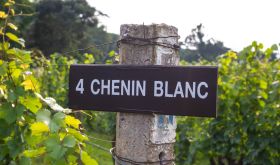
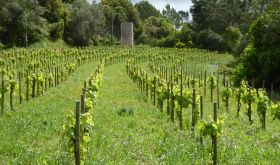
Although all of these French wine producers are best known for their reds, I believe that South Africa is one of the very few non-European wine-producing countries with an outstanding track record for white wine production. Chenin Blanc has for long been the country’s most planted vine variety and is still present in the form of ancient bush vines that can yield outstandingly concentrated yet crisp Chenins rivalled only by the best of the Loire Valley, while some of the more basic South African Chenin Blanc goes into the world’s best value dry white.
One reason why South Africa seems undervalued may be that red wines are today so often (unfairly in my view) seen as a country’s calling card but Cape reds have long lagged behind the whites. South Africa’s vineyards were more recently planted with today’s fashionable red wine grapes than happened in most other New World wine-producing countries – and as though younger vines were not handicap enough, the country still suffers a serious virus problem which particularly afflicts vines for red wines, sometimes preventing the grapes from ripening fully. South Africa’s best reds are admirable but many of the lesser ones can taste strangely earthy to foreigners. Having gone through a Cabernet Sauvignon phase, South African wine producers and wine lovers themselves are currently besotted by the grape they call either Shiraz, if made in full-on Australian style, or Syrah if lighter and more perfumed à la française.
But at least the South African wine scene is extremely easy for outsiders to understand. I can think of no other country which has a single annual, thoroughly comprehensive and recognisably definitive guide to the wines produced there. Ex foreign correspondent turned winemaker John Platter gave his name to it even though he is no longer involved in Platter’s South African Wine Guide.
The pinnacle of vinous fame in South Africa is to be awarded five stars in ‘Platter’. The 15 respected tasters who divide all the wines between them for assessment for the guide, generally giving them a one- to four-star rating, nominate their very top wines as candidates for five stars. The tasters then get together, taste all of these blind and vote as to whether they deserve the five-star rating or not. Those that miss out on a majority vote are given 4.5 stars. In the current 2008 guide a total of 21 wines, including five made in the image of port, are given five stars and 312 are given 4.5.
A couple of weeks ago I tasted a selection of Platter 5- and 4.5-star wines in London, and very impressed I was too – especially in view of the retail prices which are a fraction of what similar quality California wines would cost, and many look very good value compared with their Australian counterparts. Following modern mores, and as is my wont on my website, I gave each wine a score out of 20. I am habitually stingy with point so 17 is a very good mark for me. (For example, I gave a mere 55 out of the thousands of red bordeaux 2004 a mark of 17 or above.) I tasted a total of 55 wines that had been awarded 5 and 4.5 stars and ended up giving a score of 17 or more to one Chenin Blanc, five Sauvignon Blancs (an impressive total), five Chardonnays, two Sauvignon/Semillon blends, one Pinot Noir, two Shiraz/Syrahs and a full eight Cabernet Sauvignon/Bordeaux blends, making that 44% of all wines tasted.
This was all the more impressive in view of the fact that the average (pre-Budget) retail price of the Sauvignons was only just over £10 a bottle and the average Chardonnay price was only about £13 for quality that would not be out of place in the Côte de Beaune. In fact there were a number of wines I would love to see blind alongside their European prototypes, such as both of the Sauvignon/Semillon blends with a fine dry white Graves, and the Hamilton Russell Pinot Noir 2006 alongside (an admittedly more mature) red burgundy. In general the whites are much better value than the reds, with Simonsig, a 5-star regular, still seriously undercharging for its wines. Even Anglo American’s wine estate Vergelegen, whose very top bottlings are very expensive, offer their other wines at very reasonable prices in view of their quality.
Another great aspect of buying wines from a country that seems, unfairly to me, unfashionable, is that it can be relatively easy to find mature vintages. Waterford Cabernet Sauvignon 2003, for example, is a lovely drink now, beautifully made and already quite complex, but costs only £14.50 a bottle from Berry Bros. Another delicious Bordeaux blend from this particularly successful vintage for South African reds is Buitenverwachting, Christine 2003, which is hardly more expensive.
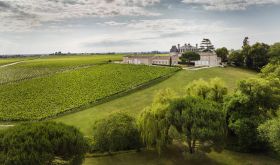
The top Platter wines I tasted were only a selection of these emblems of the best of South African wine. Many other of the names emerging via the annual Platter rating process as South Africa’s first growths such as Boekenhoutskloof, Cape Point, De Trafford, Sadie Family, Steenberg and Tulbagh Mountain Vineyards were not even represented in my tasting. Those who have not yet discovered the joys of South African wine should do so.
International stockists from www.wine-searcher.com. UK specialist retailer www.sawinesonline.co.uk.
See my full tasting notes on all these wines.
SOUTH AFRICAN TOP SCORERS
Below are the wines available in the UK to which I gave more than 17 points out of 20 with approximate retail prices.
WHITES
Ken Forrester, FMC Chenin Blanc 2006 Stellenbosch £17
Vergelegen Chardonnay Reserve 2006 Stellenbosch £13
Oak Valley Chardonnay 2006 Elgin £15
Vergelegen White 2006 Stellenbosch 2006 £22
REDS
Hamilton Russell Vineyards Pinot Noir 2006 Walker Bay £23
Rustenberg, Peter Barlow 2004 Simonsberg-Stellenbosch £23
Thelema, The Mint Cabernet Sauvignon 2005 Stellenbosch £20
Buitenverwachting, Christine 2003 Constantia £16