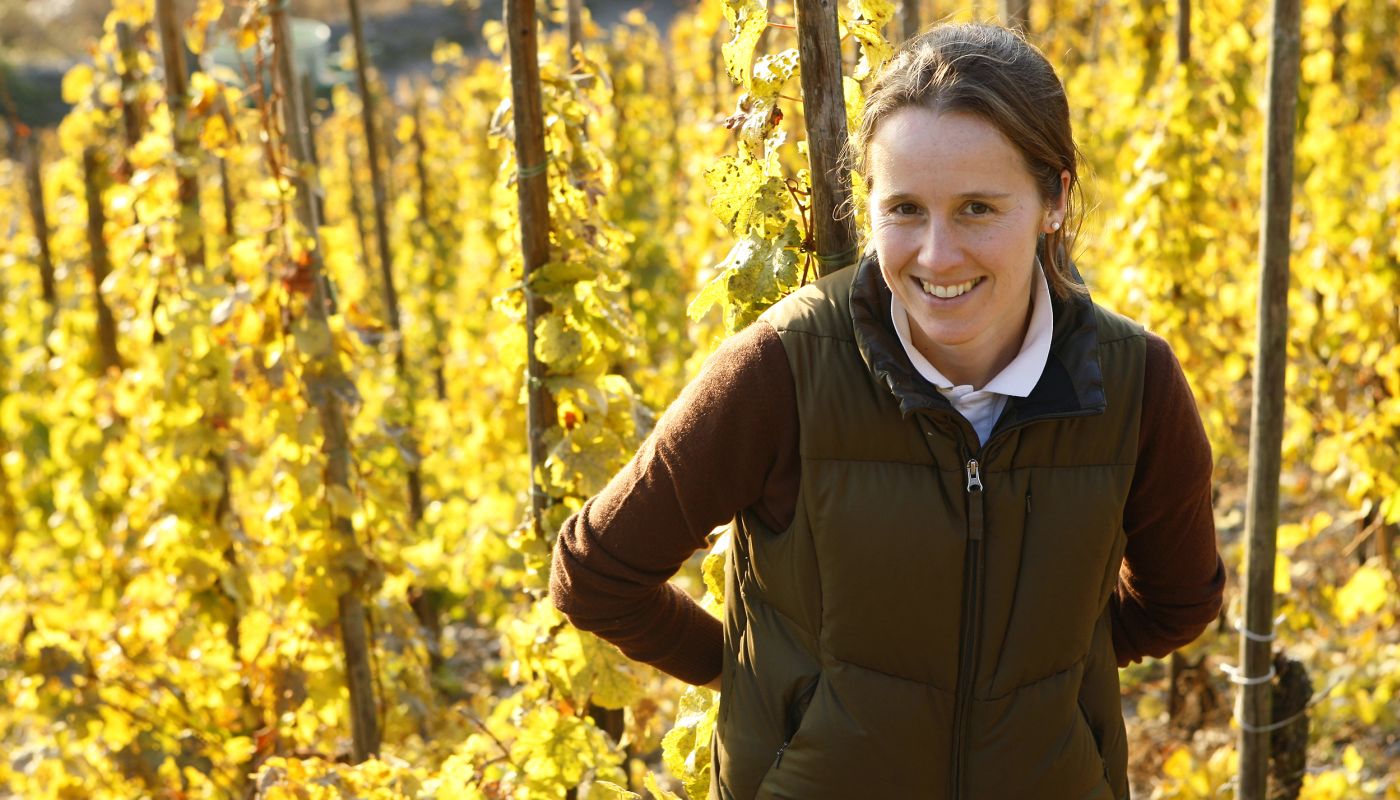
Jancis writes Do women have a different way of producing wine? What are the special hurdles they must overcome?
Matthew O’Connell of London fine-wine merchant Bordeaux Index and I hatched a plan to interview some of the top women in wine to find out. We hoped to bring more attention to the fact that many of the best wines in the world are made, or at least guided, by women. We also wanted to encourage other women in wine, showing them what’s possible, and perhaps draw out some lessons, good and bad, from these established stars.
Victoria Mason MW, then working for Bordeaux Index while pursuing her MW studies, interviewed at length seven of wine’s highest achievers who also happen to be female.
Over the next two months, we will be publishing a shortened version of each interview; the full texts can be found on Bordeaux Index.
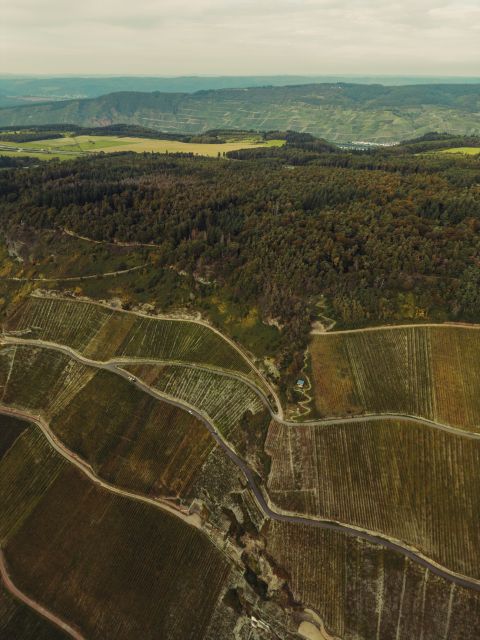
Victoria writes Dr Katharina Prüm is the fourth generation of her family to manage the Joh Jos Prüm estate, a founding member of the VDP with holdings in many of the Mittelmosel’s most famous historic sites. Since 2005 Katharina and her father Manfred have been co-owners of J J Prüm, established by Katharina’s great-grandfather Johann Josef Prüm in 1911. They farm 22 ha (54 acres) of Riesling, and Katharina is responsible for winemaking.
Tell us about your upbringing.
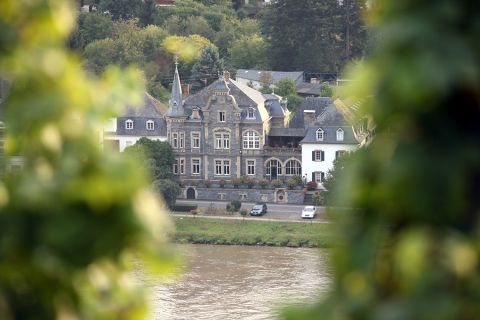
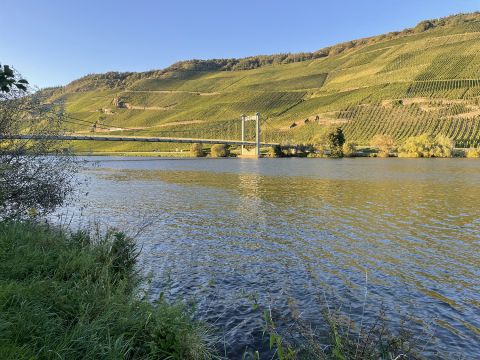
I grew up in the village of Wehlen, right in the winery itself. Our family lived just above the tasting rooms and cellar. Wehlen is a small village in the middle of the Mosel, an hour from Luxembourg and the French border. Living in a winery was normal for me, surrounded by vineyards and in constant contact with the team. As a child, it felt more like a playground than something I actively reflected on.
Do you recall a point when you started to become actively interested in wine?
There were different moments. My father would let us blind-taste wines when we were around 15, encouraging us to describe them and to guess their characteristics. It was more of a fun thing to do then, rather than anything that was professionally challenging. But the turning point was when my father broke his leg during harvest, which was not the best timing, and I had to step in and learn about winemaking processes. I was in the second year of my high-school degree so would spend my evenings learning how to use the press and learning which buttons did what. I liked having the small amount of responsibility I was given at the time but it wasn’t something that I was actively considering for my future. It was a gradual process of becoming actively involved but I enjoyed it from the start.
After your high-school studies, you explored various jobs in London and Spain. How did this influence your perspective on wine?
It was crucial for me to experience different professions, people and regions. I had too many ideas and needed to try some of them out. I worked in London at Fortnum & Mason in the wrapping department in the cellars and later in the wine department. I also worked at a wine merchant, and then an art gallery for a couple of months. I went to Spain to improve my Spanish. Subsequently, I decided to study law, following my father’s recommendation as he is also a lawyer and felt he’d learned a lot from that experience. I went to Münster in northern Germany where there are zero wine regions. Of course, it’s improving now but at the time there was very little good wine to be found. I also went there as it enabled me to do international law studies and American law. It was so important to get to know a completely different profession, as well as to meet different people.
As part of this qualification, we had to do an internship, so I chose to work in a small law firm in Oklahoma. There were options to work in larger firms in the bigger cities but I thought that I might feel quite lost and would end up getting tea for people or manning the mailbox. The firm I ended up in had only four lawyers, so I had a very rounded experience, while also getting to know the American lifestyle outside of the big cities. Since the US has always been an essential market for us, and because my father didn’t like travelling, I also attended wine tastings during my time there. Meeting people passionate about our wines, hearing their stories, and experiencing their enthusiasm shifted my perspective on the wine industry. I found it really touching. It made me realise the joy and connection that wine brings to people globally.
I finished studying in 2003 and after my exams I decided to go back to my family’s estate and begin working there, bringing my contacts and experience from America with me. Wine, in general, is a more colourful business. You work a lot with nature, starting from scratch, making decisions, and having a close connection with Mother Earth. Then, there’s the finished product that you export to many countries, connecting with people globally. It’s both the distance from the estate and understanding the impact and joy it brings to people that made me want to work here.
Do you think your father being hands-off helped you make your own decisions rather than being told what to do?
Absolutely. If he had pressured me into following a certain path, it wouldn’t have worked for me. It allowed me to make my own decisions and discover what I really wanted to do. And that was, in the end, to work at the family estate.
How did your role evolve?
Initially, it was a learning and assisting role. I grew up around the estate, but it was more like playing around than having a specific job. In 2003, which was an unusual vintage, I observed, assisted and learned from discussions with my father and others. Over the years, my role evolved from passive assistance to more active involvement. No one in my family has had a professional winemaking education so there has been a lot of learning on the job, which has been fantastic.
How would you say you and your father make agreements together and share the winemaking responsibilities?
One aspect that is important to understand is that I’ve never wanted to do something just for the sake of being different or just to make my mark. I struggle with the term winemaker because I don’t see us as winemakers. Nature is the winemaker and it’s our job to understand nature each year to make the best wine out of it. I’d describe my role as an observer and assistant, facilitating the vines to express the uniqueness of our piece of land, especially during our ever-changing climate. My father and I have the same approach in this way so I wouldn’t say we have any fundamental disagreements, but we had discussions about when we should pick which parcel, for example. There can be lots of discussion into the smaller detail – for example, concerning the exact amount of residual sugar there should be and so on. It’s more questions we pose to one another, rather than any disagreements.

What challenges do you face in viticulture?
Every year is different, and challenges vary. For example, in a dry year, we may decide to do more green harvesting to ensure the vines’ health and guarantee quality. There’s no fixed formula. It’s about understanding nature, observing closely, and facilitating the vines to produce the best possible fruit in a given year. Working in wine, you cannot compare with other years because weather conditions are so different, and you cannot predict what will happen in the future. We always meet after harvest to talk about the vintage and what our impressions are and to share our experiences. This helps us to see what we might have done differently. But our aim every year is to get as close to optimal as possible.
What are your ambitions for J J Prüm in the future?
The key is to improve on all the little things. We also want to continue focusing on sustainability as it’s a crucial aspect to our business and industry. There’s no recipe book for perfect sustainability (although I wish there was!); each wine estate must find its own system. Sustainability encompasses various aspects, from vineyard work to packaging and selling. For example, we’re considering the weight of bottles and even the necessity of travel in terms of CO2 emissions. Sustainability is a broad topic, and there’s no one-size-fits-all solution. The entire process, from vine production to packaging and selling, requires careful consideration of its environmental impact.
Another side of the business that we are always trying to work on is our wine’s presence within the market. We are continuously adapting how we sell and where and who we sell to. We distribute to 50 markets, and we see each importer as a representative of our wine and so it’s important that each one holds or puts forward our brand and philosophy. We also want to make sure that people understand our product as best we can and challenge existing prejudice against the style of wine that we make; we do this by educating about what kind of food it should be paired with and how we make it. This way, our customers and future customers will appreciate our product the most.
How would you sum up J J Prüm and its ethos?
We stand for authenticity. And in terms of sustainability, we are not fully organic in the way that it is defined in Germany (although some parcels are grown organically). For us, sustainability and being organic are not the same thing. Sustainability is doing the best for nature whereas practising organic farming means using quite a lot of copper. This is something that we’re struggling with as we’re questioning whether it actually is better for nature than other treatments. If you’re organic you also have to spray the vines more regularly with this copper, which is toxic for the soil and which leads to more CO2 emissions. Unfortunately, it is not as simple as you might think. But sustainability is the key thing at Prüm, rather than being organic.
Do you have a favourite region for Riesling outside of Germany?
That’s not an easy question as Germany is a country most known for Riesling. I do love to discover different Rieslings from other regions, both to taste new wines but also to understand the different conditions in which they are grown. It has definitely made me even more grateful for the conditions we have here as nature provides a lot of the things we need to make good Riesling. But if I had to name one country, I’d choose Austria. There are several great regions there and it has Wachau, which produces wines I like a lot. Alsace is in an interesting place of progress and there’s lots of discussion internally in the ways that Alsace is repositioning itself in the wine world in terms of style and it’s exciting to see that development.
I have also met Australian Riesling producers who I have huge respect for as it’s a difficult climate to make wines in. I’ve been to the Finger Lakes and it’s interesting to see what’s happening there and I’ve also been to the West Coast, to Washington State, which is really exciting. You drive through the empty desert and then come across a Riesling field which needs 100% irrigation. You wouldn’t expect to be able to make anything drinkable out of it, but you can! It’s completely different of course. Here we have more ‘natural’ conditions so the wine is down mostly to nature whereas there you have to be much more of a winemaker and creator, which I find really interesting.
What wine is your fridge?
I have some leftovers from tastings, a little bit of champagne, which I’m loving more and more. I’m discovering champagne still and have loved learning about the smaller growers, which is a lot of fun. Ungrafted wines are important to us and I had a wine recently from the Loire Valley, 2010 vintage, which was also from ungrafted vines. It is far rarer to see there than here, and it was fantastic!
It’s now 20 years since you joined the family business. What piece of advice would you give to your younger self.
I’d say, don’t judge yourself. I think what helped really was to have that attitude. Don’t overestimate your role and understand that nature is the boss really. Appreciate the team that you work with and what they do, that’s really important.
You can read the entire interview at Bordeaux Index. Our members can also access more than 250 tasting notes on J J Prüm wines in our database. Also look out for Julia's notes on the 2023s, coming soon.
Image at top © Dr Katharina Prüm, photo credit Andreas Durst; all other images courtesy J J Prüm.

















