Miquel Hudin brings us the 37th entry into our wine writing competition. We elected not to publish his piece on Georgia as it has been covered in detail on this site recently, but are pleased to reproduce his second article, all about regrafting varieties in Catalonia. Miquel introduces himself as follows:
I'm of a shabby vintage unless you exist solely on Vintage Port and Barolo ... I'm a wine writer based in Catalonia, Spain, I contribute to a number of English-language publications as well as my blog Wine on VI and have a new book in the Vinologue series coming out for the Republic of Georgia.
ADIEU FRANCE
'I can't speak for all of Spain, but Cabernet Sauvignon sucks in Catalonia. You pick it when it's ripe and you're going to be making dessert wine. You pick it before it raisins and it's revoltingly green.'
So began one recent conversation with a Catalan winemaker that was reminiscent of many that I've had. This one in particular didn't want to have the quote attributed to him as no one is ready to fully disavow the French grapes that were planted in the region over the last half century but the day is undoubtedly coming soon.
There are indeed winning examples of Cabernet Sauvignon, such as Mas La Plana from Torres in Penedès, which is a gorgeous wine. Then of course there are the many wines produced from Syrah which has taken well to the region and is even seen in varietal form. But for Cabernet Sauvignon, Merlot, Cabernet Franc and others – at best, they're a decent filler that's capable of rounding out grapes like Garnatxa (Grenache) and Carinyena (Carignan), but at worse, they're just flat, because these are all cooler climate grapes, and with climate change measurably increasing temperatures in these regions, things aren't going to get any better.
These vineyards aren't going to go away, however, as there are countless hectares of them that were planted, and to tear out a vineyard that functions has a high cost to it, given that it will be offline for five years or so. Due to this, many cellars have been quietly regrafting their French varieties to local/native grapes.
It works like this: say you have a block of Cabernet Sauvignon planted on American rootstock that's 25 years old. Healthy and productive, you go through one spring and take cuttings such as Garnatxa from another vineyard, and then do a t-bud graft on to the trunk. If everything takes, you now have a branch of Garnatxa growing off this Cabernet trunk. The beauty of this is that most of the time you'll have a productive vine, giving you Garnatxa either that year or next, but with an established root system already in place.
I like calling these new projects Frakenvines, as they have the American root, French trunk, and then Catalan head. But despite the oddity of it, it works quite well. One of the first to come around to this line of thinking was Álvaro Palacios in his Finca Dofí vineyard where, for the last six to seven years, they've been regrafting Cabernet Sauvignon and Merlot to Garnatxa that's based on a clone from their exalted Ermita vineyard. They've been doing this slowly a few rows at a time each year but have been quite happy with the results as it falls into Álvaro's overall pro-Garnatxa philosophy.
In the years since, the practice has spread widely throughout the territory. Up where Catalonia touches France in DO Empordà, both Espelt in Alt Empordà and Mas Oller in Baix Empordà are doing the same, taking vineyards that were originally planted with Cabernet Sauvignon or Merlot and grafting Garnatxa on to them.
When asking people there why French varieties were planted in the first place, most say that in hindsight it was a mistake. About 20 years ago there were consultants advising new wineries in the region to make use of these French grapes to ease market entry. They were easy enough to cultivate and didn't adversely affect the blends with other grapes – but this hasn't panned out, given that everyone around the world has been planting the same grapes. Now, as Espelt director Anna Espelt puts it, 'We're returning to our roots and those roots are Garnatxa and Carinyena.'
Back down in Priorat, co-owner and head winemaker Albert Costa of Vall Llach has been moving in a pro-Carinyena direction. Porrera, the village where his winery is located, is well known for having an ideal zone for the grape and his top wine, Mas de la Rosa, is 100% Carinyena. Given that, he has just regrafted a couple of under-performing blocks of Cabernet Sauvignon with cuttings from the Mas de la Rosa vineyard.
But it's not all about the red grapes. In Penedès, the cava producer Recaredo had the chance to buy 7.8 ha of Cabernet Sauvignon. Given their general philosophy of farming biodynamically and using only native grapes, the vines weren't an ideal fit for them, but the chance to buy large blocks of vineyards in Penedès is rare so they snapped it up.

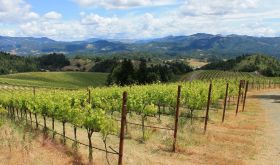
This past spring, they completely regrafted it over with Xarello (see above picture), the native white grape that is a key component in both cava as well as still wines in Penedès. The cuttings came from their Turó d'en Mota vineyard. For those unfamiliar with this vineyard, it makes their highest level wine of the same name that they age for over a decade prior to release. If the upcoming bottles released under the Cava de Paraje level are aspiring to this, then we'll all be in for a treat.
While starting just a few years ago, this movement to regraft and reclaim has steadily been gaining momentum as people find less and less need to incorporate the French crutch grapes into the blends. This is partly due to evolution in winemaking, but also the fact that people are appreciating these grapes and their innate characteristics more, realising that the every bottle of red wine doesn't need to uniformly taste like Cabernet Sauvignon.
Will French varieties disappear altogether from Catalonia or even Spain at some point? Probably not, as they're simply an ingrained part of the conversation when talking about wine in a global sense. But there is definitely a silent campaign behind the scenes to decrease their protagonism and let the local grapes be the stars.