Ramiro Smith writes originally from Argentina, I grew up surrounded by bold red wines shared around the asado table. Now based in Switzerland, I work as Chef de Bar at BG’s Grill in Hotel Bergwelt, an Alpine-design hotel with a strong reputation in fine hospitality and a restaurant awarded 15 Gault Millau points. Here, I explore the elegance of high-altitude wines like Humagne Blanc.
I’m a passionate wine lover, currently awaiting my WSET Level 3 results and preparing for both the Diploma WSET and the Court of Master Sommeliers Europe. I’m also studying for a degree in Hospitality and Tourism at the University of Belgrano in Buenos Aires. For me, wine is a cultural bridge, each glass connects place, story, and identity.
Grüezi!
More than just a grape, more than a variety, Humagne Blanc is a symbol.
It reflects both the contrast and the connection between two important places in my life. Far from the Argentine pampas, but close to the Andes.
Two high and open landscapes that have shaped who I am and how I understand wine.
In Argentina, I was raised with strong, expressive red wines.
They were always part of the table, especially during the asado.
Something to enjoy and something that stood proudly with the food, adding to the celebration.
In the Swiss Alps, where the silence is deeper, and time moves differently.
I discovered a grape that in many ways tells its own quiet story: Humagne Blanc.
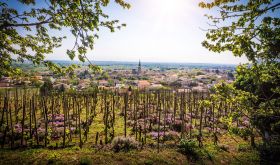
It grows with care in this mountain environment,
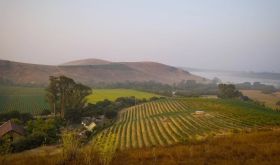
surrounded by green fields, grey rock, and the distant sound of cowbells echoing across the valleys.
There is peace in this place, and the grape reflects it.
Shaped by cold nights, long summer days, and gentle isolation,
Humagne Blanc matures slowly, holding onto its freshness, its floral character, and its fine acidity.
It is a grape with presence and depth, but also a delicate side.
It was nearly forgotten at one point in history,
but those who believed in it gave it time, and that time brought complexity and identity.
I tasted it during a traditional meal of Raclette du Valais, with boiled potatoes and pickles.
Simple and perfect.
What made the wine even more unique was its aging.
It had spent time at 3,454 meters above sea level,
at the highest station in Europe, right at the peak of the Alps.
In that moment I saw how altitude changes wine.
The air is thinner, the humidity is lower, and the cold is steady.
Oxidation slows down, so the wine keeps its freshness, its floral notes, and its acidity for longer.
It takes more time to evolve, but it does so with grace.
The result is something subtle, full of energy, and incredibly pure.
That wine is not only about taste, but also about place, patience, and care.
With Humagne Blanc, I felt that connection.
It reminded me that a grape, just like a person, needs the right environment to grow.
This is why I know wine will always be part of my path.
It keeps teaching me, surprising me, and connecting me to people, landscapes, and stories.
When nature and people work together with respect and curiosity,
there is always more to discover, even in places that seem quiet, remote, or forgotten.
The photo, taken in the Valais, Switzerland, is the author's own.