Postmodern Winemaking – Rethinking the Modern Science of an Ancient Craft
Clark Smith
University of California Press
£24.95/$34.95
Smith, an adjunct professor at Fresno State University, columnist with Wines & Vines, and winemaker at WineSmith Cellars and Diamond Ridge Vineyards, begins with a preface outlining his career to date while also acknowledging that much of what is recorded in this book is 'largely based on material compiled' from his monthly column in Wines & Vines and articles published by AppellationAmerica.com and Practical Winery & Vineyard.
Dividing his book into four sections concerning principles, practice, technology and the philosophy of postmodern winemaking, Clark sets out the manifesto for his own movement – the Postmodern Winemaking Movement (PWM), which 'seeks to reconnect with winemaking's ancient aesthetic, much of which was inadvertently left behind in the technology revolution' following the Second World War. Clark's essential view is that the typical winemaker today tends not to say too much about the job of winemaking, particularly as he/she has to answer to corporate concerns which don't necessarily want their winemakers talking too much about the final wine and how it was really made and that this has confused the consumer. Clark maintains that into this vacuum have stepped wine critics, who, instead of having the scientific wherewithal to answer properly the consumers' questions, have put forward their own thoughts without any serious winemaking knowledge. It's a bold, forceful statement that is sort of undermined by its own essence. One of the jobs of the wine critic is to act as a conduit between the story and the reader.
That said, there is an agenda at play here that might better have been kept on a back burner, or at least kept until we got through the important and imposing substantive issues raised in the book proper. Before we even get out of the preface, Clark takes a pop at the media. 'In this volume, my task is to articulate the grinding principles of a new view of our work to my fellow winemakers. But the language is plain English, because it is essential to make this discussion accessible to a broader readership. Tragically, today's consumer environment has become hostile to an honest discussion of production winemaking. Winemakers lie low while the Luddite paparazzi fire live ammo over their heads. Honesty is nowhere to be found, and platitudes like "we do the minimum" are standard fare'. This probably isn't a very good example of 'plain English'. I've never really come across 'Luddite paparazzi who fire live ammo' in the wine press corps or anywhere else, and I use the word 'corps' advisably as I'm commenting on words such as 'hostile, live ammo, lie low'. Am I missing a trick? This sounds like language you'd associate with the NRA (National Rifle Association) as opposed to the language directed at wine writers. And as for 'Luddite paparazzi'? Give me a break!
Another problem is that Smith occasionally takes his time getting to the point, often going the long way around when he could easily just cut through the field. One suspects that that might just be the postmodern way. He frequently suggests that nobody is in the wine business for the money. This is surely not true. While there are individuals who are in the industry in their spare time or on a small artisanal basis, and people do lose money trying to make a go of unsustainable vineyards, you can't say in an industry that is a multi-billion global phenomenon that 'nobody' is in it for the money. According to recent figures supplied by the lobby group Vin & Société, the French wine industry alone, for instance, employs half a million people. Surely they can't all be entirely uninterested in whether it pays?
There's also a little of the 'us and them' about Clark's writing. The references to 'lay readers' presumably meaning those – his potential readership other than his fellow winemakers – who might not have the requisite technical knowledge to keep up with what he is saying is a little condescending. Meanwhile the incision of such pearls of wisdom as 'I sometimes picture us postmodern types as spouting technical poetry' suggests a delusional hierarchy of thinkers. Oh, did I mention what Smith means by postmodern winemaking? In a nutshell: 'the practical art of touching the human soul with the soul of a place by rendering its grapes into liquid music'. With that the prosecution rests.
However, despite this sidetrack, or soundtrack, this shouldn't necessarily affect one's enjoyment of this fascinating proclamation. And there is a sadness in Clark's words too for he occasionally yearns for what he regards as better times, when there was a greater honesty in the endeavours of say, wine journalists, who 'seldom uttered a discouraging word'. He decries modern wine culture in which 'the willingness to go for the kill shot is somehow perceived as a hallmark of objectivity'.
Putting all these reservations aside, Smith knows his stuff when it comes to winemaking, particularly when it is innovative. He views postmodern winemaking as being fundamentally mysterious and encourages his profession to move beyond the scientific approach and apply an 'artistic aesthetic'. The postmodern winemaker should be an aesthetic without a manual, he argues. As an authority on the enhancement of wine structure and a vocal proponent of living soil over the years, he has developed such winemaking techniques as the use of reverse osmosis to optimise wine grape maturity and micro-oxygenation to refine tannins. And this razor-sharp missive comes from a confident and bombastic pen that's not afraid to set out the manifesto for post-modern winemaking. Looking at where winemaking went wrong, Smith analyses how the march towards technological innovation began after the Second World War. He makes passing reference to 'the father of post-modern winemaking' Patrick Ducournau, who, in 1991, while working with the exceptionally tannic Tannat grape variety in Madiran, developed the process we now know as micro-oxygenation – the process used in winemaking that introduces very small amounts of oxygen into wine under controlled conditions.
He goes on to consider why it is wrong to say that scientific oenology begins with the idea that wine is a chemical solution; how wine used to be more exciting; and how post-war modernity has cost us 50 years of clean and comparatively soulless wines. Clark touches on numerous facets of winemaking, making animated use of his abundant knowledge, and filling in the back-story at every turn. If this evidence is anything to go by, students at his lectures must never be bored. Topics covered include the fundamental limitations of oenology; how winemaking is the ultimate slow-food; the philosophy of the living soil and how solutions of petrochemical ingredients have damaged it; how wine has a life energy; why tannin is an asset and not a defect; the seven functions of oak; how Vernon Singleton (expert wine chemist and professor at UC Davis's department of viticulture and enology) did a great job elucidating oxygen's role in red wine structure and it is high time we digest his discovery; the fact that certain wines have an energetic buzz, almost like an electric current – a nervous raciness similar to acidity, with which it often confused; to master brett management is to understand what red wine really is; today's challenge is to link reductionist science to holistic winemaking goals; what is at the heart of the natural-wine debate – what matters most, terroir expression or authenticity?; and what has possessed Michel Chapoutier, the Benziger family and Jim Fetzer to bury the horn? (see next review).
There are also doses of humour such as the suggestion to 'never buy another new barrel. But don't tell anybody, because barrel producers throw really great parties, invitation only'. Or, 'in this chapter, we finally confront the greatest fear of modern winemakers. That would be chicken wire'. Or another one: 'my goal in this chapter is not to defend biodynamics. It sounds nuts to me'.
As well as taking on the biodynamic lobby, the book is a denunciation of the natural-wine movement, taking, in particular, a well-argued swipe at the views of wine writer Alice Feiring, a vocal advocate of the phenomenon, making the point that the natural-wine movement can't really articulate its core beliefs. This intriguing book is this and much, much more.
In essence, leaving aside the early bluster and the occasional outburst against the 'Luddite paparazzi' in the press, this is still a really enjoyable manifesto and one that is passionately argued. However, you'll have to make your own mind up whether you agree with it or not. Whatever you do, don't ask a journalist!
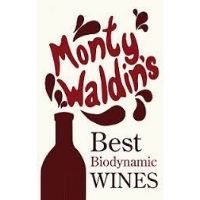
Monty's Waldin's Best Biodynamic Wines
Monty Waldin
Floris Books
£16.99/$26.95
 Showcasing the best of biodynamic wines variety by variety in white, rosé and red as well as taking a look at champagne and sparkling wines, Waldin begins with an analysis of biodynamic wine and its philosophy, touching on the problem with artificial fertilisers, the philosophy of Rudolf Steiner, the benefits of being self-sufficient, biodynamic preparations, and the benefits of horn manure and horn silica 501. There are also comments on reducing additives in viniculture, the importance of lunar and other celestial cycles, and the various movements that have sprung up in response to the growing community that takes all of this seriously.
Into the bulk of the book, and variety by variety, Waldin offers examples of vineyards working with, say, Chardonnay, who have embraced biodynamic or organic philosophy, offering name, address, phone number and website, followed by the story of each establishment vis-à-vis their pedigree as 'biodynamicists', what sort of grapes they are growing other than their mainstay, hectarage, and the number of bottles they produce. Producers featured include Marc Kreydenweiss in Alsace, Yalumba in South Australia, Sedlescombe in Sussex in England, Domaine de la Romanée-Conti in Burgundy, Michel Chapoutier in the Rhône, and Viñedos Emiliana in Colchagua in Chile. Rather surprisingly, only a single line is given to Nicolas Joly's Coulée de Serrant under 'other biodynamic estates making Chenin Blanc wines'. In essence, though, this is a well-written book that will interest disciples of biodynamic wines.