I may have qualified as a Master of Wine and have been immersed in wine professionally since the end of 1975 but I’d never style myself a wine expert. Even before 2016 when Michael Gove, very much a UK government spokesman then, declared that ‘the people of this country have had enough of experts’, Britons were already suspicious of expertise.
Suspicion all too easily turns to delighted ridicule when that expertise involves something such as art or wine that is not widely understood, or seen as elitist. ‘Fake Ming vase fools dealers’ or ‘Cheap Cava confused with champagne’ are the sort of headlines guaranteed to please.
But there’s a new sort of headline (often confusing computational statistics with what is so loosely called artificial intelligence) suggesting that machines will be able to replicate humans in every endeavour. Setting aside the threat of ChatGPT et al to those of us who write for a living, I feel moved to defend wine professionals in general and the need to retain the personal touch in much of what we do.
Information technology has obvious applications in vine-growing, from helping to select suitable vineyard sites, through monitoring vine growth and the amount of water needed, early warning of pest and disease threats, predicting crop levels as well as the likely quality and composition of grapes. Already smart, robotic vineyard machinery has been developed that is capable of performing all sorts of tasks that not enough people are willing to do, including picking grapes and gathering and analysing information.
There are even systems that claim to predict fine-wine prices and quality solely on the basis of meteorology. A team from the University of Cambridge claimed in the preface to their 2022 paper about bordeaux, ‘Here we provide a predictive model of wine prices, based only on weather data. We establish that it predicts a vintage’s long-term quality more accurately than a world-class expert rating this same vintage in the year following its production.’ This last is a reference to the scores awarded by ‘experts’ during the questionable en primeur tastings when, every spring, the world’s wine commentators and merchants are invited to Bordeaux to assess cask samples of wines many months before they are bottled, and years before they are designed to be drunk. Far too early in my view.
Winemaking in many a winery today involves setting a computer to control press cycles, fermentation temperatures and much more, but – here comes the crucial bit. All but the most industrial producers would insist that any decision on the final wine should be based on a winemaker’s palate, meaning their tasting equipment in the mouth, and the all-important nose that is so much more sensitive than what’s in our mouths. (Scientists insist we also have taste receptors in the throat so we wine tasters who religiously spit out our tasting samples have presumably been registering an incomplete picture.)
There have been many attempts to construct an artificial nose and they do rely on artificial intelligence rather than just information gathering and storing. They generally involve building up a set of reference aromas and training the artificial nose to identify them, so the more aromas that can be included, the more useful the machine will be. But humans, I’m delighted to report, are able to detect up to a trillion aromas, many of them extremely subtle. Surely it would be difficult to programme an artificial nose with all of them and the ability to interpret every combination of them (quite apart from the fact that wines evolve with time, which adds yet another layer of complication).
I’m certainly hoping so, as I want to keep my job of tasting, assessing and describing wine. Wine tasting is not just a question of identifying aromas. We tasters have to marry our impressions of their aromas with their characteristics sensed in our mouths, working out how well-balanced and integrated they are, whether all these impressions make a harmonious whole, and notice how long the wine lasts in the mouth, how evolved the wine is, to what extent it relates to other vintages of the same wine and evokes memories of other wines and other flavours altogether.
It’s taken almost 50 years’ programming to get my palate to where it is so that I can do all this without even making a conscious effort. Please don’t tell me it would take only a few hours to construct a machine that could do what I do. The popular Vivino app, which analyses the tasting notes of its 60 million users, comes up with barely 20 flavours, for example.
And how dull it would be if there were only one way to taste wine. We need our individual tastes, sensitivities and preferences to add colour to the wine landscape. Imagine a world in which there was just one way of assessing a wine, film, book or any work of art. We consumers would presumably be characterised and there would be just one product for each market segment. No thanks.
And then there’s the question of practicalities. The most practical use I can think of for a machine that can objectively analyse wine is to help stamp out wine fraud. Every now and then someone claims to have devised a means of definitively telling where a wine comes from, but it’s usually someone ignorant of the complexities of wine. As Maureen Downey of Chai Consulting Services, a specialist in authenticating wine on the basis of minute observation and experience, points out about the latest ‘AI tool with a nose for fraudulent wine’, as The Guardian headlined a recent account of it, ‘it cannot tell the difference between DRC’s Romanée-Conti and de Montille’s Vosne-Romanée, Malconsorts, which are grown only metres away from one another but are regarded as a universe away for consumers’.
The tool would need to have analysed multiple previous and subsequent vintages of these super-expensive wines, and it would involve some extremely expensive kit. Plus, as Cecilia Muldoon, who spent several years trying similarly to analyse wine through the glass (so without the need to open the bottle), discovered, ‘30% of the time, the spectrometer just couldn’t gather enough signal’ because of the variation in glass quality. She has now turned to assessing, for diagnostic purposes, a liquid that is just as complex as wine but is much cheaper and easier to sample: urine.
Any wine analysed has to come from a bottle that has already been bought by the person seeking authentication. The tool might be useful for a big company to check that, say, a wine they were buying in vast quantity really was what the vendor claimed, but it would hardly work for the sort of fine wines that are most often counterfeited.
So, although grape pickers have already been replaced by machines (mechanical harvesters are responsible for more than 80% of all bordeaux), it seems to me that humans are still needed to assess wine. Preferably people with expertise – even if we don’t call ourselves ‘experts’.
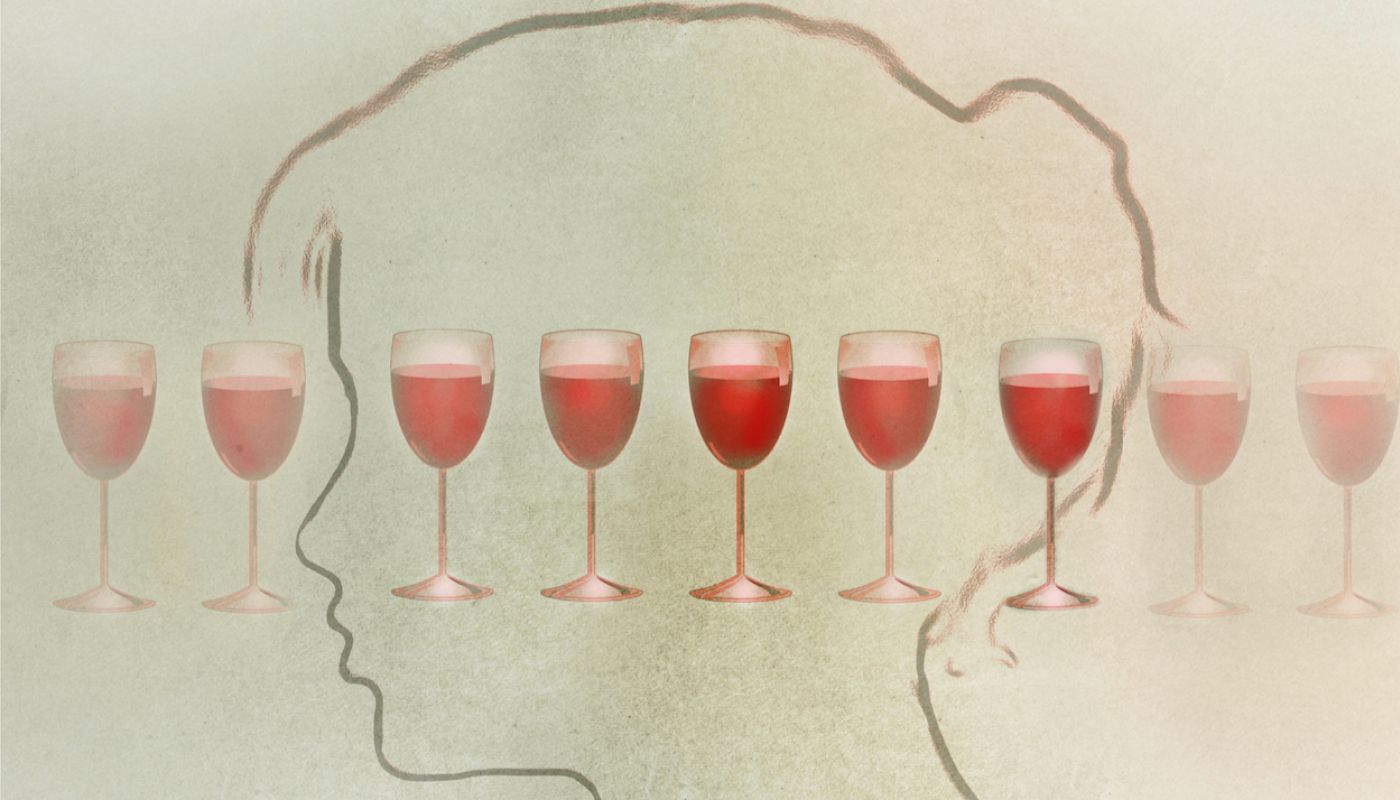
Image courtesy of Fanatic Studio/Gary Waters/Science Photo Library via Getty Images.