By profession I'm a crime enforcement attorney specialising in tracking down counterfeiters in China. I have different personal identities, nationalities, various business cards and websites. I infiltrate counterfeiters to gather evidence and, when this is complete, I work with the Chinese public authorities to raid and close factories.
The previous few months in China had not been without their complications, which, coupled with some last-minute leaks, put our operation and staff at a critical level of risk. Despite this, we did succeed in our objectives and were away in one piece; the Wine Fair was to be a welcome decompression chamber.
The fair was strictly for trade only. Puzzled staff examined my business card, huddled in conversation and eventually printed a pass based on my explanation that the proposed mission was to unearth crimes against the wine industry, which seemed quite reasonable to me given that few Hong Kong business fairs pass without some counterfeit issues. Anyway, all was now set for a day of privilege in what was to me then the relatively unknown world of wine.
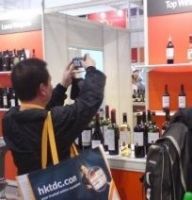
Not 30 minutes later I rounded a corner to find a Chinese man busily scrutinising booths and photographing wine bottles. I decided to follow him. He was accompanied by two women collaborators who had clearly been detailed to distract staff, gathering business cards and brochures, while he snapped away. As they wandered I stayed close enough to hear their conversation in the mainland China dialect of Mandarin about copying labels, wine sales in China and the money to be made from counterfeiting. Their conversation was unguarded as they obviously did not reckon on me, as a foreigner, or anyone around them, understanding them since the language of Hong Kong and Canton in south China is the quite different dialect of Cantonese.
Wandering further I discovered more mainlanders kitted out with cameras energetically firing off shots in booths that had obviously been pre-selected from fair catalogues. Surprisingly, staff didn't appear the slightest bit concerned. Hong Kong fairs usually have No Photography signs around the halls due to historical counterfeiting risks, but clearly not this one.
In time there was little more to be gained gumshoeing the fair so, catching up with friends, I continued with the original plan of tasting the many wine offerings from around the globe. Staying in Hong Kong is an expensive affair, as is exhibiting at fairs, and consequently booths were pleasingly at maximum attention level – meaning we were never without a glass of wine.
Some days later I returned to Europe but curiosity got the better of me. It was impossible that my experiences with these mainlanders were isolated incidents. The exponential rise in the Chinese wine market was hitting all headlines and, China being China, surely no big opportunity was being ignored by counterfeiters. Wine growers from all around the globe were at the fair, wide-eyed and innocently promoting their wine but from my viewpoint, some, maybe many, were about to have their investments and aspirations trashed.
Having consumed as much as I could of the World Atlas of Wine, I left for China in February 2010 on a self-financed investigation of wine-growing areas and selected cities where I imagined wine sales would be high. After 25 years in China, I thought I had seen almost everything, but little did I know what the next three years held in store.
The one-month tour started in supermarkets, small liquor shops and warehouses in Beijing. Then came a three-hour car ride north west to the wine-growing areas of Zhangjiakou followed by a 700 km plane trip to the heavily vine-populated east coast of Shandong province. From there I headed south through eastern China, stopping at the densely populated cities of Qingdao, Shanghai, Ningbo, Wenzhou, Xiamen, Guangzhou and then Shenzhen just north of Hong Kong.
Wherever I saw a wine being made or sold, I stopped. For the wine-growing areas this was a challenge as, unlike other wine-producing countries, most wine producers there don't have signboards, don't advertise, don't do tastings, don't welcome cold callers and anyway foreigners are from planet Mars. Each visit involved a tiresome softening-up routine before I could start probing for truths.
On the other hand, locating wine wholesalers and shops in towns and cities was less of a lottery, even if finding them in Yellow Pages or on the internet was largely useless as many were so new, and their information was slow to be published. Driving around streets and asking restaurants and hotels became my most useful source of up-to-date information.
In the Zhangjiakou area it was common to find many growers with tiny plots of poorly maintained, huddled vines selling their grapes to small wineries with pitifully little wine knowledge, despite the authoritative wording and brands on their labels.
The wine-growing areas of Yantai and Penglai, in Shandong province on the east coast, were substantially similar, apart from the bigger state-owned producers. But now factories with gaudy 'Château' bolt-on façades were sprouting. In one I was met with a full-size poster of Jancis Robinson, who had unlawfully been adopted as their consultant winemaker [news to me – JR]. Brochures had her signature accompanied by flowery quotes of her supposed praise, but within a few days I did stop this misuse. [Thank you, Nick – JR]
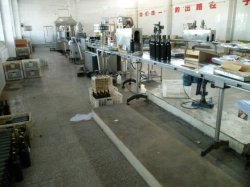 In and out of some 15 wineries and bottling plants, I saw evidence of counterfeit labels and packaging with brands and appellations that were clearly copies, as crucially there was no evidence of imported barrels, flexi tanks or facilities to process imported bulk wine. But why would there be? I was in winemaking territory and also in China, home of the most prolific counterfeiters in the world.
Many of these places boasted non-existent joint ventures with foreign wine producers, or they self-created letters confirming import rights to China. Very often there were plaques on office walls claiming fake awards of excellence from foreign panels of judges. Brochures had long romantic stories of royal wine producers in France whose heirs were now fortunate enough to be associated with Chinese wineries. Counterfeiters' imagination and the extremes to which they were prepared to go were extraordinary by anyone's standards.
Shops and wholesale outlets had shelves stocked with a sea of wines including some obvious fakes, often distinguishable by a variety of appellations on the same label. Very often they were mixed with other bottles that appeared to be original brands. This problem was more in the second- and third-level cities. In downtown Beijing and Shanghai, the problems were far less, due in part to the number of foreign residents who might have some knowledge of wine and so blow the whistle.
Clutches of Rothschild arrows proliferated, along with the words Bordeaux and Lafite (or the more creative 'Laftel Queen' as on this carton) at the price of an everyday wine. Of the 100 or so shops I visited, only a handful had Château Lafite at prices anywhere close to the then market equivalent of €2,000. Casually examining these bottles attracted little staff attention, but then again their real value was probably only €2 a bottle.
While some counterfeits were reasonable copies, the vast majority were appalling, but sold well since most wine buyers, both trade and retail, had little knowledge of wine-growing countries, appellations, brands or even that mixers were not for wine. For example, I saw  one wine brand named Bordeaux Port. Another confidently advertised the Syrah grape from Bordeaux while one Languedoc wine was apparently from Alsace, which was, according to the label, in Italy. Although 1998 was not outstanding for French wines, it was favoured by counterfeiters, presumably due to the Chinese belief that 9 indicates harmony and 8 is wealth.
Glass bottles provided another tell-tale sign in that the quality of many was poor, some had an unstable wobble, and were very obviously manufactured from tired, grossly over-used moulds.
Most extraordinary of all were the prices being charged. Convenience stores, mini markets, liquor stores and supermarkets had no shame in charging prices starting at the equivalent of €20 for the most basic sort of wine whose production costs would have been less than those of a bottle of water. The attitude was: the more expensive, the more believable. But the hidden danger was the wrong benchmark being created for drinkers who had never met wine before.
An example of the exponential interest in wine was a street in east-coast Qingdao (see China 6 – shopping areas and the photo below) that the local mayor unilaterally changed from Yan'an Road to Red Wine Street. Over 25 shops instantly opened under the local initiative, the only drawback being that most had little knowledge and could talk of their wine only in meaningless, superficial terms.
To be continued!
















